 look news india

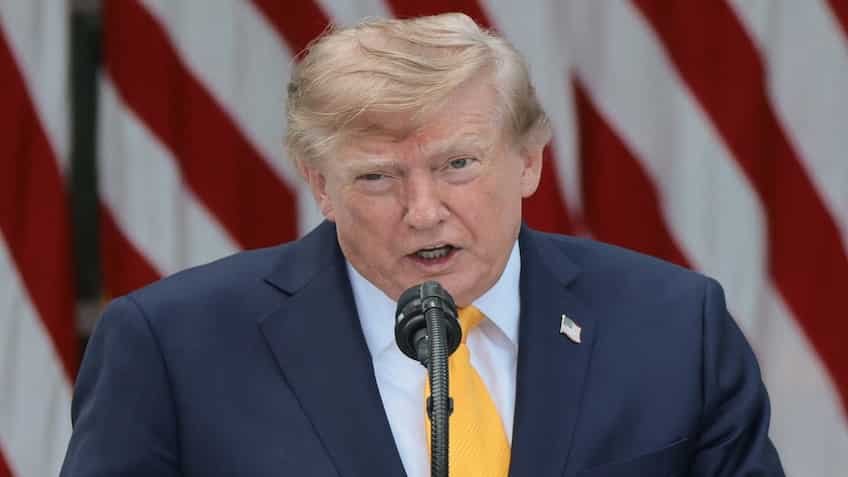
Amidst the ongoing fierce military tension between America, Israel and Iran in the Middle East, US President Donald Trump has given a very important diplomatic and strategic signal. According to various international media reports and an interview with Fox News, President Trump has postponed the decision to launch a new comprehensive military strike against Iran. Speaking to media on the sidelines of the Asia-Pacific Economic Cooperation (APEC) summit in Shenzhen, China, Trump said the New Year was approaching and Washington would “watch after January 1 to see what happens next”. Although Trump has not revealed any specific strategic or diplomatic reason behind the date of January 1, his statement seems to put to rest for some time the fears of an immediate major military confrontation in the Gulf region.
American newspaper The New York Times And according to reports from international news agencies, Israeli Prime Minister Benjamin Netanyahu and Roman Goffman, head of the Israeli intelligence agency Mossad, are continuously pressuring Washington to jointly launch new and major air strikes against Iran. Israel believes that this is the right time to completely destroy Iran’s military and nuclear infrastructure. Despite this, the Trump administration believes that the ongoing US naval blockade and stringent economic sanctions since February 2026 have severely weakened the Iranian economy. US Secretary of State Marco Rubio also recently clarified that the economic pressure being exerted on the Iranian regime is so great that there is no immediate need for a new military attack.
During the interview, President Trump made new claims about Iran’s secret weapons programs, but also advised the general public not to panic. Trump said that American intelligence agencies have received indications that after heavy damage to nuclear facilities, Iran is now looking towards developing chemical and biological weapons. However, rejecting reports of a so-called ‘dirty bomb’ attack on Washington, Trump said that the people of the US capital need not worry. On the other hand, Iran’s Foreign Ministry has completely rejected all these allegations of the US President and termed them completely baseless. Tehran says that America is making such false claims only to create an atmosphere of fear in the region and to justify future military actions.
Its huge economic cost has also become a major reason behind the ongoing debate in America about continuing or stopping this war. A senior Pentagon official informed the US Senate Armed Services Committee that till November 13, 2026, this conflict has cost America an estimated $ 48.3 billion (about more than Rs 4 lakh crore). This huge sum only covers the cost of replenishment of military operations, ammunition and equipment; To this, the estimate of billions of dollars of damage caused by Iranian missile and drone attacks on American military bases located in West Asia is yet to be added. Although the US Senate on Thursday once again rejected a proposal to limit Trump’s war powers, lawmakers have demanded full details of the rising costs and losses of the war.
President Trump’s decision to postpone major military attacks till January 1 is going to have a direct impact on the global energy market and fast-growing economies like India. Crude oil supply has already been affected due to the ongoing tension and blockade in the Strait of Hormuz. India imports more than 80 percent of its total crude oil needs, with the Gulf countries accounting for the largest share. Market experts from major economic and industrial centers like New Delhi, Mumbai and Lucknow believe that if the new military conflict between America and Iran is averted for the time being, then the prices of crude oil will stabilize in the international market. This will reduce the pressure on petrol and diesel prices in India, will help in controlling inflation and will also provide some relief to the concerns regarding the safety of millions of Indian expatriates working in Gulf countries.