 look news india

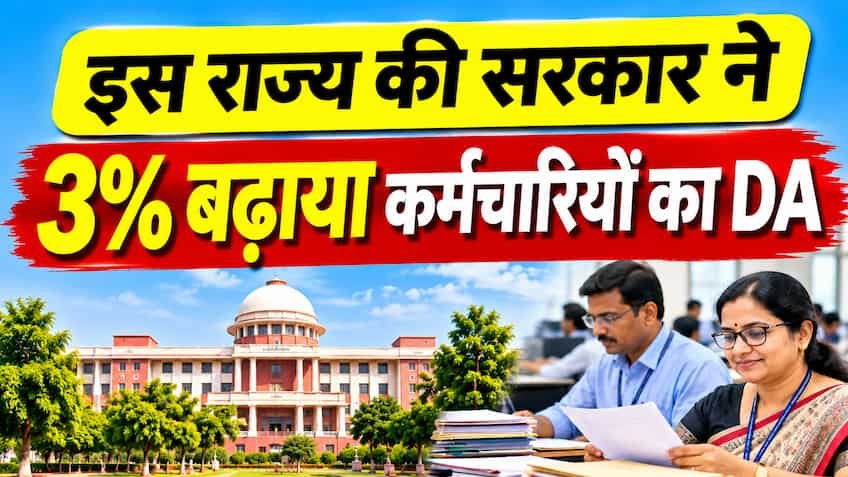
Relief news has emerged for lakhs of government employees and pensioners of the country. Amidst rising inflation, state governments have taken a big decision to provide huge financial relief to their employees by increasing Dearness Allowance (DA) and Dearness Relief (DR) by 3 percent. After this important decision, now the total dearness allowance of the state government employees has directly increased from 60 percent to 63 percent. Ever since the Central Government increased the dearness allowance of its employees, employees and teachers organizations of various states were demanding increase in the allowance on similar lines in their respective states. Now the state governments of Uttar Pradesh, Odisha and Jharkhand have approved this demand and spread smiles on the faces of lakhs of families. This decision will directly benefit the regular employees of the state, teachers, employees of autonomous institutions and lakhs of pensioners.
According to the government order, this 3 percent increase in dearness allowance will be considered effective from July 1, 2026. This simply means that the employees will not only get the increased salary in the coming months, but will also receive the outstanding arrears of the previous months. Yogi Adityanath government of Uttar Pradesh, Mohan Charan Majhi government of Odisha and the state government of Jharkhand have taken this big step in the interest of the employees despite the additional financial burden on their respective exchequers. Under the guidelines issued from the secretariats of Lucknow, Ranchi and Bhubaneswar, the Finance Department has prepared a blueprint for the payment process. According to the rules, the arrears for the months of July, August, September and October can be deposited in the General Provident Fund (GPF) account of the employees or it can be given in cash in installments, while the process of cash payment at an increased rate will start with the salary for the month of November. At the same time, the amount of increased dearness relief will be transferred directly to the pensioners in their pension account.
How much impact this 3 percent increase in dearness allowance will have on the monthly income of employees can be understood with an easy example. Under the recommendations of the 7th Pay Commission, dearness allowance is calculated on the basis of the basic salary of the employee. If the minimum basic salary of a state employee is Rs 18,000 per month, then earlier he used to get dearness allowance of Rs 10,800 at the rate of 60 percent. Now after the implementation of the new rate of 63 percent, his dearness allowance will increase to Rs 11,340. That means there will be a direct increase of Rs 540 in the salary of that employee every month and on annual basis he will get an additional benefit of Rs 6,480. Similarly, if the basic salary of a senior employee or officer is Rs 50,000 per month, then a 3 percent increase will increase his monthly salary by Rs 1,500, which is equivalent to an additional income of Rs 18,000 in a year. Employees whose basic salary is Rs 80,000 or more are going to get direct benefits ranging from Rs 2,400 to Rs 4,000 every month.
This decision of the government will not only improve the bank balance of the employees, but will also give new momentum to the local economy of the states. In Uttar Pradesh alone, approximately 16 lakh state employees and more than 12 lakh pensioners will directly benefit from this decision. At the same time, lakhs of working government employees and retired employees in Odisha and Jharkhand will also come under its purview. When extra cash comes into the hands of such a large population, it has a direct impact on purchases in the local markets. Cities ranging from Lucknow, Kanpur, Varanasi, Prayagraj, Gorakhpur to Ranchi, Jamshedpur, Bhubaneswar and Cuttack are witnessing a boom in retail trade, real estate, automobiles and sales of everyday goods. Economic experts believe that this increase in dearness allowance increases consumer spending, which indirectly leads to an increase in the GST collection of the states.
Dearness allowance is a very important part of the salary structure of government employees. Its main objective is to reduce the impact of rising inflation and maintain the standard of living of the employees. The central and state governments review dearness allowance twice a year based on All India Consumer Price Index (AICPI-IW) data. The first increase comes into effect from January 1 and the second increase is considered effective from July 1. It is decided by what percentage the allowance will be increased under a certain formula based on the average of the last six months of the Consumer Price Index of Industrial Workers issued by the Labor Bureau. Since a slight jump in the inflation rate was recorded in the last half-yearly data, the government has approved an increase of 3 percent.
After this order of the state government, it is natural that the question arises in the minds of the employees whether they will have to make any kind of application to get the increased salary and arrears. According to Finance Department officials, no employee is required to fill any separate form or apply for this. This process is completely automated. Drawing and Disbursing Officers (DDOs) and treasury offices of the concerned departments update the new rates in the software. For employees who have National Pension System (NPS), a part of their arrears amount is deposited in their Tier-1 account and the government also matches its contribution, while the remaining amount is sent to the bank account as cash payment. Employees can easily check the details of their revised salary and arrears by logging into their pay-slip or the official website of Manav Sampada portal and treasury of the respective state. There is an atmosphere of enthusiasm among the employee organizations due to this decision and they have welcomed this step of the government and called it an employee friendly decision.