 look news india

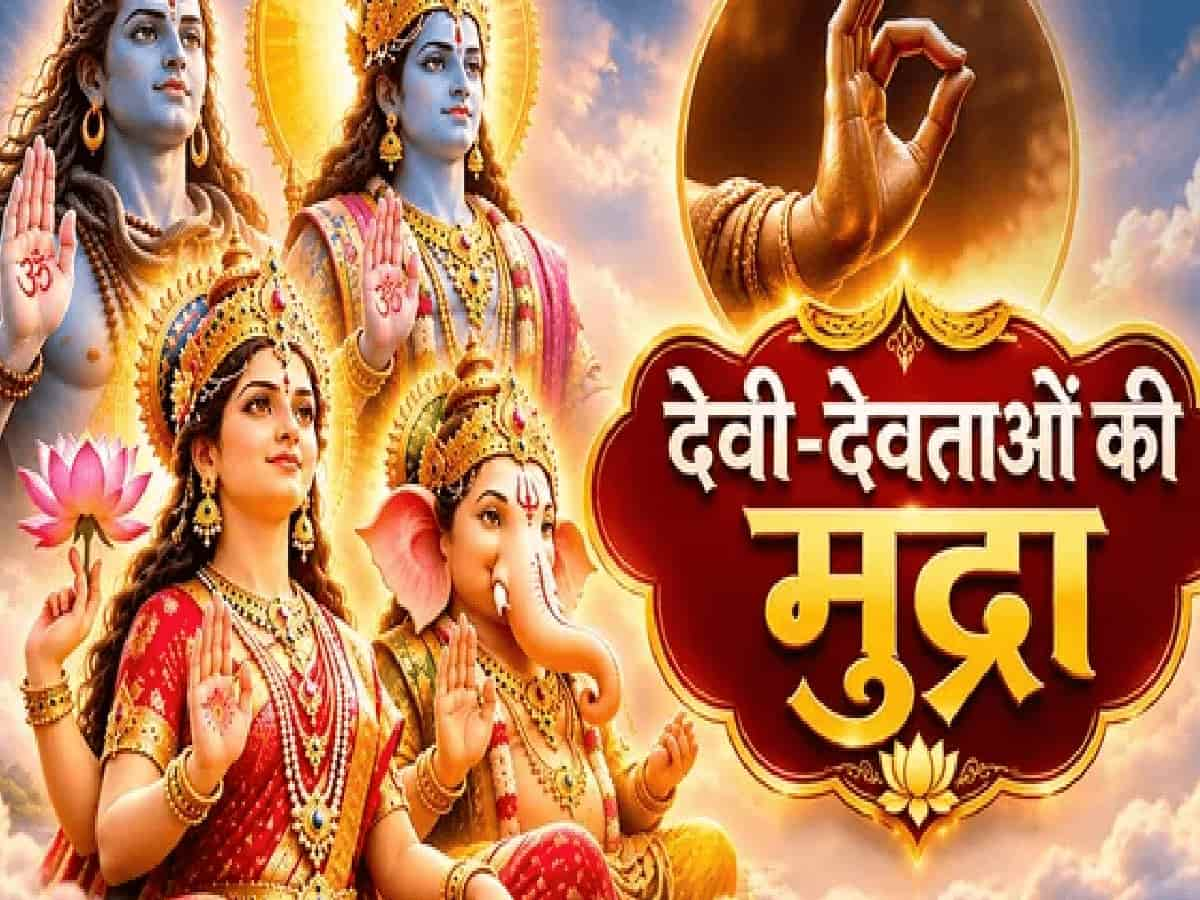
In the world of Indian culture, Sanatan tradition and sculpture, the statues of Gods and Goddesses are not mere combinations of stone, metal or colours, but they are living expressions of deep philosophical and spiritual messages. When we look carefully at the statues and paintings installed in any temple, museum or religious place, the question often arises in our mind that why is the hand of some statue raised upwards and why is the hand of another bent downwards? Somewhere Lord Shri Krishna is seen engrossed in the sweet tune of the flute, while somewhere Lord Shiva is seen seated in a state of deep trance and meditation. While Goddess Lakshmi is seen bestowing blessings on the devotees, the hands of Lord Ganesha also depict special expressions. In Indian sculpture, the symbolic meaning of the posture is more important than the external beauty or attractive appearance of the statue. Through these hand postures, subtle expressions like love, compassion, knowledge, peace, fearlessness, dedication and self-realization are explained, hence the statues should not be understood only from the artistic point of view but with their deep spiritual core.
The main reason behind the hands being raised and bent down in the idols of Gods and Goddesses is the difference between Abhaya Mudra and Varada Mudra. ‘Abhaya Mudra’ is considered very famous in both Sanatan tradition and Buddhist art. ‘Abhay’ simply means freedom from fear or fearlessness. In this posture, one hand of the God or Goddess remains raised upwards and the palm is open towards the front. Abhaya Mudra can be clearly seen in many statues of Lord Shiva, Lord Vishnu, Lord Ganesha, Maa Durga and Lord Buddha. This mudra gives a feeling of protection, security and mental assurance to the devotees. Its basic message is that the devotee need not be afraid of any crisis or fear, but should maintain courage, faith and patience even in adverse circumstances. In contrast, ‘Varad Mudra’ means a position granting boon or grace. In this, the hand is downwards and the palm remains open towards the devotee, which is considered a symbol of blessings, kindness, generosity and compassion. In many statues of Goddess Lakshmi, she is depicted in Varada Mudra, and at many places, golden coins are seen flowing from her hands, which are a symbol of wealth, prosperity and opulence. This sentiment is also seen in the idols of Lord Ganesha.
In the Indian spiritual tradition, the practice of yoga and meditation has been given the highest importance, and Gyan Mudra and Dhyana Mudra are related to this. In ‘Gyan Mudra’ the ends of the thumb and index finger of the hand of the seeker or the deity are joined together, while the remaining three fingers remain straight and relaxed. This posture appears prominently in the images of yogis, sages and meditators, and can also be seen in the Yogeshwar form of Lord Shiva. This combination of fingers is considered a symbol of knowledge, wisdom and awakening of consciousness. Whereas ‘Dhyana Mudra’ represents concentration, introspection and deep spiritual practice. In this posture, one sits in Padmasana or Sukhasana position with both the hands placed on the lap, where one palm is placed over the other palm. This posture is found in Lord Buddha, Lord Shiva and many meditative idols, which inspires man to take some time away from the external noise and hustle and bustle and look within himself and practice self-control.
Among other important hand postures, ‘Anjali Mudra’ and ‘Bhoomisparsh Mudra’ have their own special place. Anjali Mudra is a traditional method of salutation in Indian lifestyle and culture, in which both the palms are joined together in front of the heart or chest and the head is slightly bowed. In many statues of Lord Hanuman, he is depicted in this humble and devoted posture in front of Lord Shri Ram. This mudra expresses devotion, service and complete dedication, and also teaches a person to abandon ego and adopt a sense of humility and respect. On the other hand, ‘Bhoomisparsh Mudra’ is mainly associated with the statues of Lord Buddha, in which the right hand moves downwards above the knee and the fingers touch the earth. According to Buddhist tradition, when Lord Buddha faced many temptations and obstacles during his pursuit of enlightenment, he considered Mother Earth as his witness. This mudra symbolizes determination, devotion to the truth and self-confidence, which teaches that no matter what difficulties come in life, one should not deviate from one’s goal and the path of truth.