 look news india

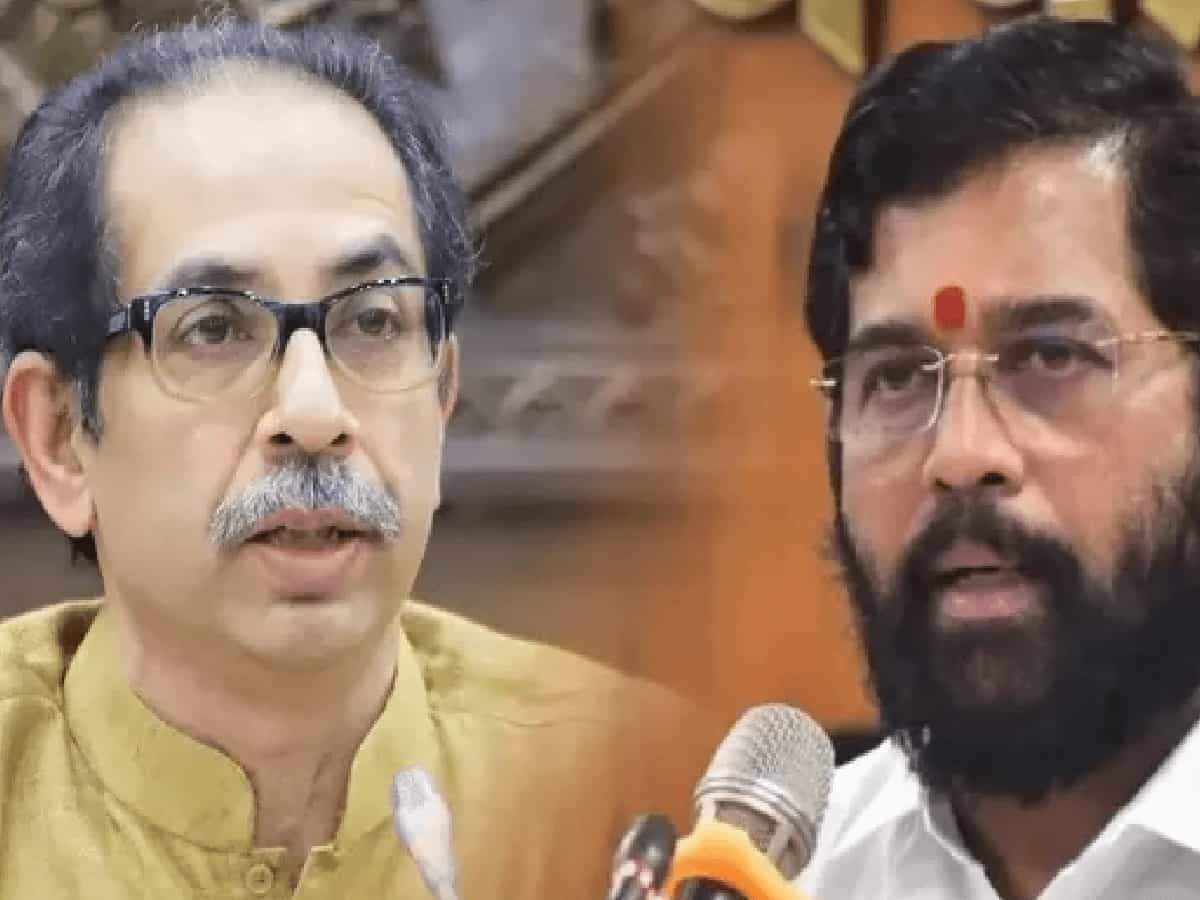
In the history of politics and constitutional law of Maharashtra, the issue related to the division of Shiv Sena and power struggle has once again come to the center of the highest court of the country i.e. Supreme Court of India. The faction led by Maharashtra Deputy Chief Minister Eknath Shinde presented very sharp and constitutionally important arguments in the Supreme Court on Wednesday, saying that the Uddhav Thackeray faction breaking ties with the Bharatiya Janata Party (BJP) in November 2019 and forming the Maha Vikas Aghadi (MVA) government with the Congress and the Nationalist Congress Party (NCP) was a departure from the basic ideological basis on which votes were sought from the public. Hearing on this sensitive matter is going on before the bench of Chief Justice Surya Kant, Justice Joymalya Bagchi and Justice V. Mohana and the debate on it is going to continue today i.e. on Thursday also. These arguments of the Shinde faction have once again sparked a new legal and political debate regarding Shiv Sena’s ideology, respect for the mandate and interpretation of anti-defection law.
Senior advocate Dhruv Mehta, appearing for the Shinde faction before the Supreme Court bench, defended the political developments that took place in June 2022, saying that the MLAs who rebelled against Uddhav Thackeray had not left Shiv Sena, but were trying to restore the party’s original ideological identity and pre-poll political alliance. Supporting the Maharashtra Assembly Speaker’s stand, Mehta said the purpose of the Tenth Schedule of the Constitution is not to enforce internal discipline within the party or to run the day-to-day functioning of the party. Taking his arguments further, he said that no party leadership can use constitutional provisions to suppress the collective protest of MLAs by threatening to disqualify them. According to him, the tussle over leadership between rival leaders is the party’s own internal matter, in which the Assembly Speaker has no role.
Senior advocate Dhruv Mehta placed the rebellion of the MLAs in the context of the political situation created after the 2019 Maharashtra Assembly elections. He told the court that Shiv Sena had contested the elections in a pre-poll alliance with BJP, in which Shiv Sena had won 56 seats and BJP had won 105 seats. This alliance had a total of 161 seats in the 288-member Maharashtra Assembly. Mehta alleged that after the election results, Uddhav Thackeray’s decision to break the alliance with BJP and form the MVA government with Congress and NCP was not liked by the grassroots workers. According to the Shinde faction, there was deep dissatisfaction among party workers and MLAs with this change in alliance and they felt that the party was moving away from the Hindutva ideology associated with its founder Balasaheb Thackeray.
Further strengthening his argument, Dhruv Mehta said that this is not just a matter of sentiments, but a serious question of constitutional importance. He argued that the electoral mandate is based on the name of a political party, its election symbol and the agenda that it puts before the voters. Therefore, ideology within the framework of the Tenth Schedule is not a trivial matter, rather it is the very basis of the mandate that this Schedule is designed to protect. Mehta also said that the resolution passed on June 21, 2022—re-declaring Eknath Shinde as Shiv Sena Legislature Party leader and appointing Bharat Gogavale as chief whip—was not defection, but a move to reiterate the party’s core ideological position. Earlier on Tuesday also, Shinde faction had said that disagreement with the leadership does not mean defection and an MLA can oppose the wrong direction even while being in the party.
If we look at the roots of this entire legal battle, earlier on behalf of the Shinde faction, senior lawyer NK Kaul had defended the decision of the Election Commission of India (ECI), in which the Shinde faction was recognized as the real Shiv Sena and the party’s traditional ‘bow and arrow’ election symbol was allotted. On the other hand, the main petition filed by Sunil Prabhu of the Uddhav Thackeray faction has challenged the Maharashtra Assembly Speaker’s order dated January 10, 2024, in which the MLAs of the Shinde faction were refused disqualification under the Tenth Schedule. Additionally, another related petition by Uddhav Thackeray has challenged the Election Commission’s decision to accept the Shinde faction’s claim on the election symbol and party name. The eyes of the entire country and the politics of Maharashtra are fixed on the further debate to be held in the Supreme Court today.