look news india

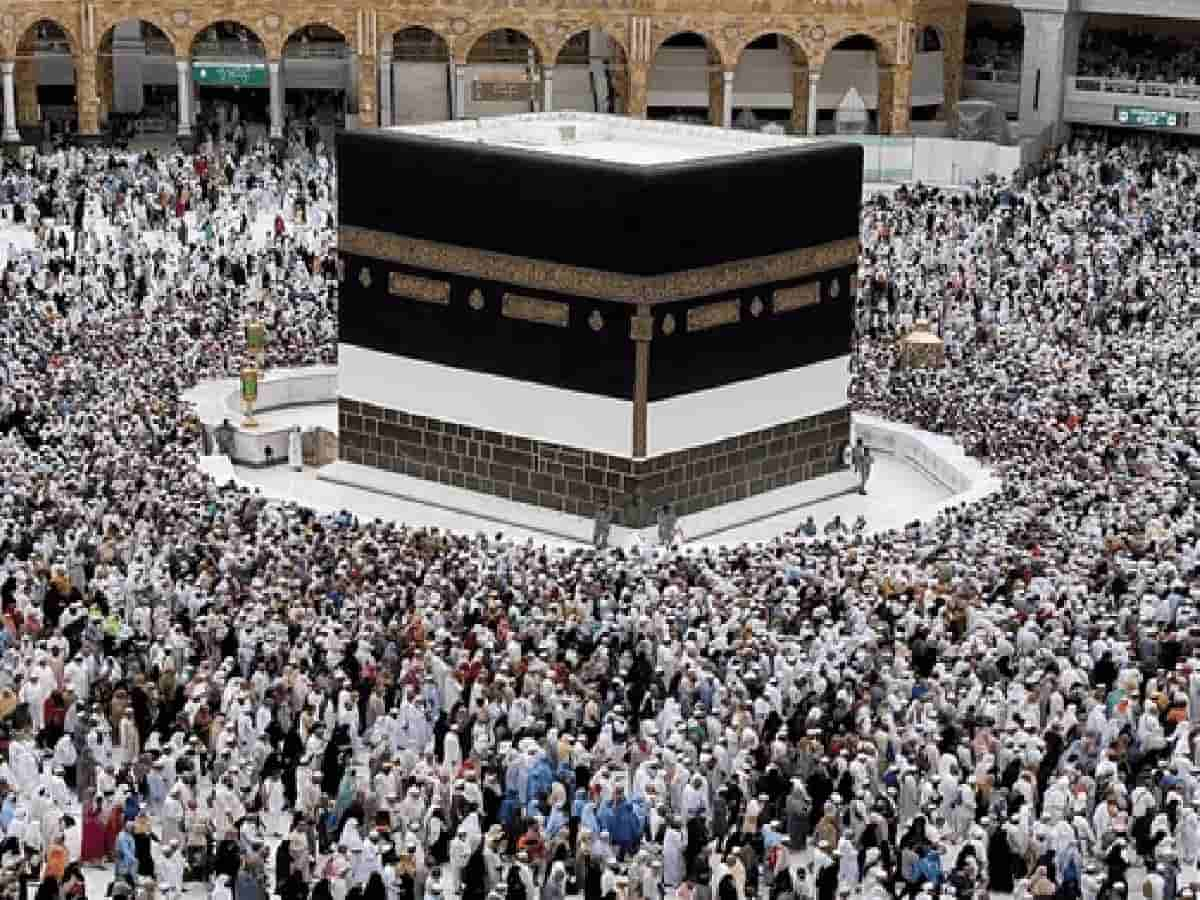
A recent and detailed report by the international think tank ‘Pew Research Center’, which keeps an eye on global demography and the changing social equations of the world, has sparked a new debate all over the world. This institute, which has been releasing authentic data on the population of religions around the world and their demographic changes for the last 25 years, on Wednesday presented projected figures from the year 2020 to 2070. According to this report, in less than a decade i.e. by the year 2035, the number of followers of Islam will overtake the population of Christianity and Islam will become the largest religion in the world. The study clarifies that although the population of both Christian and Muslim communities is continuously expanding in the world, the pace of growth of Muslim population is much faster than that of all other religious groups. In this comprehensive project of Pew Research, the latest trends of changing fertility rates, youth population, religious conversion and international migration have been analyzed in depth at the global level, the shocking results of which are now in front of everyone.
Conrad Hackett, senior demographer at Pew Research Center, explains the main scientific and social reasons behind this rapidly changing global religious landscape. According to him, the biggest reason for this rapid increase in Muslim population is the higher number of children and higher fertility rate in Muslim families as compared to other religious groups. He also made it clear that events like religious conversion or changing religious identity play a very minor role in this major change, while the real difference is arising from the birth rate. If we look at the data, during the period from 2020 to 2025, the average fertility rate of Muslim women has been recorded at 3.1 children per woman, whereas in comparison, the fertility rate of Christian women was 2.5 children per woman. At the same time, the average fertility rate of women of all other religions of the world has come down to just 1.6, which is much less than the ‘replacement level’ of 2.1 which is considered essential to maintain the population of any generation.
According to Pew’s latest demographic estimates, the total population of Christians across the world in the year 2020 was around 2.27 billion, while the number of Muslims was around 2.02 billion. But due to the rapid growth rate, the number of Muslims worldwide will increase to 2.57 billion by the year 2035, while the population of Christians is likely to be 2.52 billion. If these global trends continue, then by the year 2070 the total population of Muslims in the world will cross the figure of 3.6 billion, while the population of Christians will remain slightly less than 3 billion. Another very shocking conclusion of this report is regarding the United States. Pew estimates that Christianity will no longer be a majority in America within the next 40 years. At present, the share of Christians in the total population of America is about 62 percent, which will come down to below the 50 percent mark by the year 2065. In terms of numbers, the population of Christians in America is estimated to decline from about 217 million in 2020 to about 174 million in 2070, although Professor Jeffrey Brad of California State-Sacrmato believes that recent political and social changes may also improve the situation of some denominations.
The total world population is estimated to increase by approximately 29 percent between 2020 and 2070. During this period, the population of Christians is likely to increase by 30 percent and the number of Muslims by about 80 percent. On the other hand, despite the numerical increase in the total population of Hindus and Jews, their percentage share in the global population is estimated to be somewhat less. At the same time, due to the possible decline in the total population of countries like China, Japan and South Korea, both the number of followers of Buddhism and their global share will be recorded. Talking about Europe, by 2070 the total population there will decline by 17 percent and the number of Christians will decrease by one-third from 505 million to 324 million, while the share of Muslims in Europe will increase from 6 percent to 13 percent. Birth rate figures show that between 2020-2025, about 252 million children were born to Muslim mothers, while 208 million children were born to Christian mothers. If we look at the countries, currently Indonesia has the highest number of Muslims, but by 2070, Pakistan will become the country with the largest Muslim population in the world, followed by India, Nigeria and Indonesia.
Parallel to these major fluctuations in religious population, in many developed countries of the world, the number of people who consider themselves atheist, agnostic or have no affiliation with any organized religion is also increasing rapidly. According to a Pew Research analysis, excluding China—where the share of such people is already high but the total population is projected to decline sharply—the number of people with no religion in the rest of the world will increase by more than 180 million by 2070. Currently, such people form the majority of the population in 10 countries of the world, including Czech Republic, Japan, Netherlands, New Zealand, Uruguay and Vietnam, and it is estimated that by the year 2070, major countries like South Korea, France and Britain will also join this list. Gina Zurlo, senior researcher at Harvard Divinity School, believes that in this era of changing demographics, mutual dialogue and harmony between Christian and Muslim communities is extremely important, because global peace can be ensured only by removing notions and misunderstandings like ‘clash of civilizations’.