 look news india

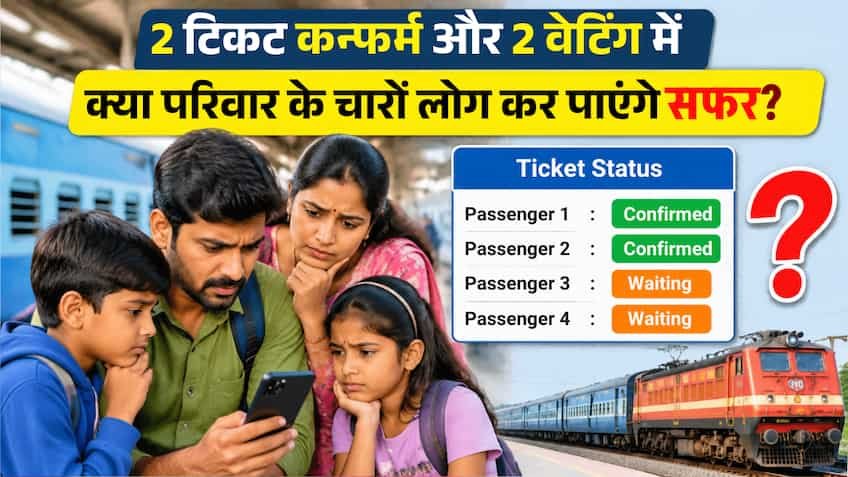
Everyone likes to travel in a group with family or friends through Indian Railways, but during festivals or busy seasons, it often becomes difficult for all the passengers to get confirmed berths together. In such a situation, many times when tickets of four people are booked on the same PNR (Passenger Name Record) number, even after the chart is prepared, the seats of two passengers become confirmed or RAC, while the remaining two passengers remain in the waiting list (WL). This situation is called ‘Partially Confirmed Ticket’ in railway language. Every day, thousands of passengers at major railway stations of the country including Delhi, Lucknow, Patna, Mumbai, Kolkata and Jaipur face the dilemma whether all four people can board the train together on such a ticket or whether the waiting passengers are not allowed to travel.
As per the official rules of Indian Railways and IRCTC, if you have booked tickets for four passengers on the same PNR and after chart preparation, two of them get confirmed (CNF) or RAC and two remain waiting (WL), then in such a case, different provisions apply for online and counter tickets. As per Railway guidelines, if your ticket is booked online i.e. through IRCTC website or app and is partially confirmed, the name of waitlisted passengers is not auto-cancelled, rather their name remains recorded in the waiting category in the chart. Under Indian Railways commercial rules, a waiting companion is allowed to enter and travel in the reserved coach of the train if at least one passenger on the same PNR has a confirmed or RAC ticket, provided they are accommodated and travel in the same seat as the companion with a confirmed ticket.
Although Railway rules make it clear that waitlisted passengers on partially confirmed tickets can travel with their confirmed or RAC companion, they do not have the right to occupy any vacant seat separately. After the train starts, when the ticket examiner i.e. TTE comes to check the coach, he confirms the PNR status. If any berth in the coach remains vacant due to no-show, you can request the TTE and the berth may be allotted to the waitlisted co-passenger, if available, as per the priority order of the Railways. Keep in mind that if all the four tickets of the entire PNR remain in the waiting list (Full Waiting), then the ticket booked online gets automatically canceled and such passengers are not allowed to board the sleeper or AC coach at all.
Many times, in long distance journeys, it is not practically possible for four people to travel on two berths and passengers want either everyone to travel together or the tickets of waiting passengers to be cancelled. Indian Railways has made very transparent refund rules for this situation. If you wish to cancel the ticket of only two waiting passengers out of a partially confirmed PNR or cancel all four tickets, it is mandatory for you to cancel the ticket or file an online TDR (TDR – Ticket Deposit Receipt) at least 30 minutes before the scheduled departure of the train. In case of cancellation 30 minutes before the scheduled time, Railways refunds the full fare for waiting passengers (only after deducting nominal clerk charges) and for confirmed passengers as per rules.
While traveling on a partially confirmed ticket, it is mandatory for all passengers to have their original ID proof such as Aadhar Card, Voter ID, PAN Card or Driving License. Along with this, keep a copy of the e-ticket or IRCTC SMS and chart status in your mobile, so that the PNR can be confirmed immediately after checking by the TTE. If you are using PRS ticket taken from the counter and the waiting passengers are not travelling, then it is necessary to go to the reservation counter of the station half an hour before the departure of the train and cancel the tickets of the waiting passengers and get the travel certificate for the remaining passengers. By knowing the correct rules, you can not only avoid fines but can also make your train journey stress-free.