 look news india

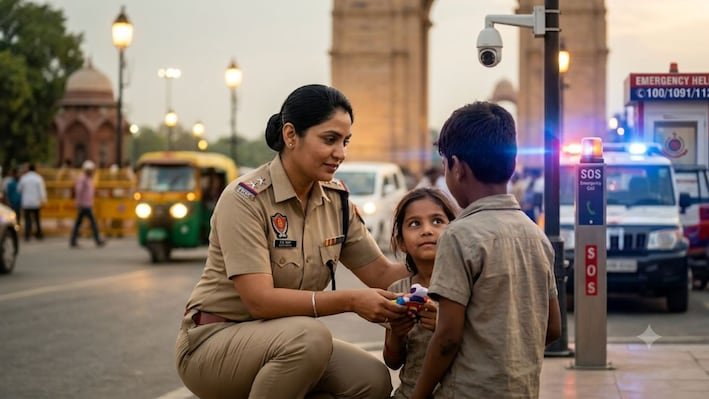
A very important and shocking official report has come out regarding the safety of women and children in the country’s capital Delhi. According to this detailed report submitted by Delhi Police to the Union Ministry of Home Affairs, a total of 1,225 cases of rape and child sexual abuse have been registered in Delhi between the first 10 months of the year 2026 i.e. from January 1 to October 31. However, with these figures, a positive aspect of the police’s prompt action has also emerged. Delhi Police has informed the Home Ministry that in 81 percent of these 1,225 registered cases, investigation has been completed and chargesheets have been filed in the court. This comprehensive report has been prepared following the instructions of the high-level review meeting held by Union Home Minister Amit Shah with Lieutenant Governor Taranjit Singh Sandhu and senior officials at Delhi Police Headquarters (PHQ) last month.
In this report of Delhi Police, a comparative analysis of crime statistics of the last decade has also been presented, which shows the changing picture of law and order in the capital. According to the report, there has been a significant decline of about 25 percent in the registration of rape and sexual crimes against children in Delhi as compared to the year 2016. If we understand this through statistics, while 2,155 such cases were reported in the year 2016, this number has reduced to 1,608 in the year 2025. Apart from this, a huge reduction has also been seen in other crimes against women. The report clarifies that during the last nine years, there has been a huge decline of 63 percent in molestation cases in Delhi and 59 percent decline in crimes related to outraging the dignity of women.
Delhi Police has initiated major changes in the infrastructure with the aim of making public places completely safe for women and children. According to the report, more than 6,000 CCTV cameras have been installed across Delhi so far. Along with this, 19,822 such dark spots i.e. dark spots have been identified across the city, where the possibility of crime is high. The work of installing new CCTV cameras and improving the street lighting system in these identified areas is going on at a fast pace. Police have completed the security audit of 1,635 public parks in the capital. The administration has set a deadline of 26 January 2027 to complete fencing, boundary walls and adequate lighting arrangements in all the parks. At present, strict patrolling is being done throughout the day by deploying PCR vans at the entrances of 503 big parks.
To provide immediate help to women in distress, Delhi Police has made its response system more modern and sensitive. According to the information given to the Home Ministry, the average time for police to reach the spot after receiving a call on emergency number 112 (ERSS) has now reduced from 11 minutes 53 seconds to just 8 minutes 2 seconds. 178 pink scooties have been deployed to patrol crowded markets and narrow streets, patrolling on an average 7.4 hours per day. Apart from this, 35 all-women PCR vans are also deployed on the roads round the clock. On an average, 308 women are reaching the 125 special pink booths operated in the capital every day with their complaints, which are being resolved promptly. Delhi Police has set an ambitious target of increasing the share of women in its total police force from the current 17.3 percent to 25 percent by the year 2030.
To curb crime, Delhi Police has paid special attention not only to legal action but also to community awareness. The report states that 17,387 etiquette campaigns were conducted to crack down on miscreants and anti-social elements in public places, under which legal action has been taken against more than 1.24 lakh suspects. To ensure the safety of girl students, women police personnel are visiting girls’ schools, colleges and hostels about 3,514 times every week. Along with this, the police has established direct communication with about 15.9 lakh citizens through 22,662 public awareness programs. Under these campaigns, 5.7 lakh women and girl students have been given special training in self-defense, while 3.4 lakh people have been made aware about sensitive issues like child safety and good touch-bad touch.