 look news india

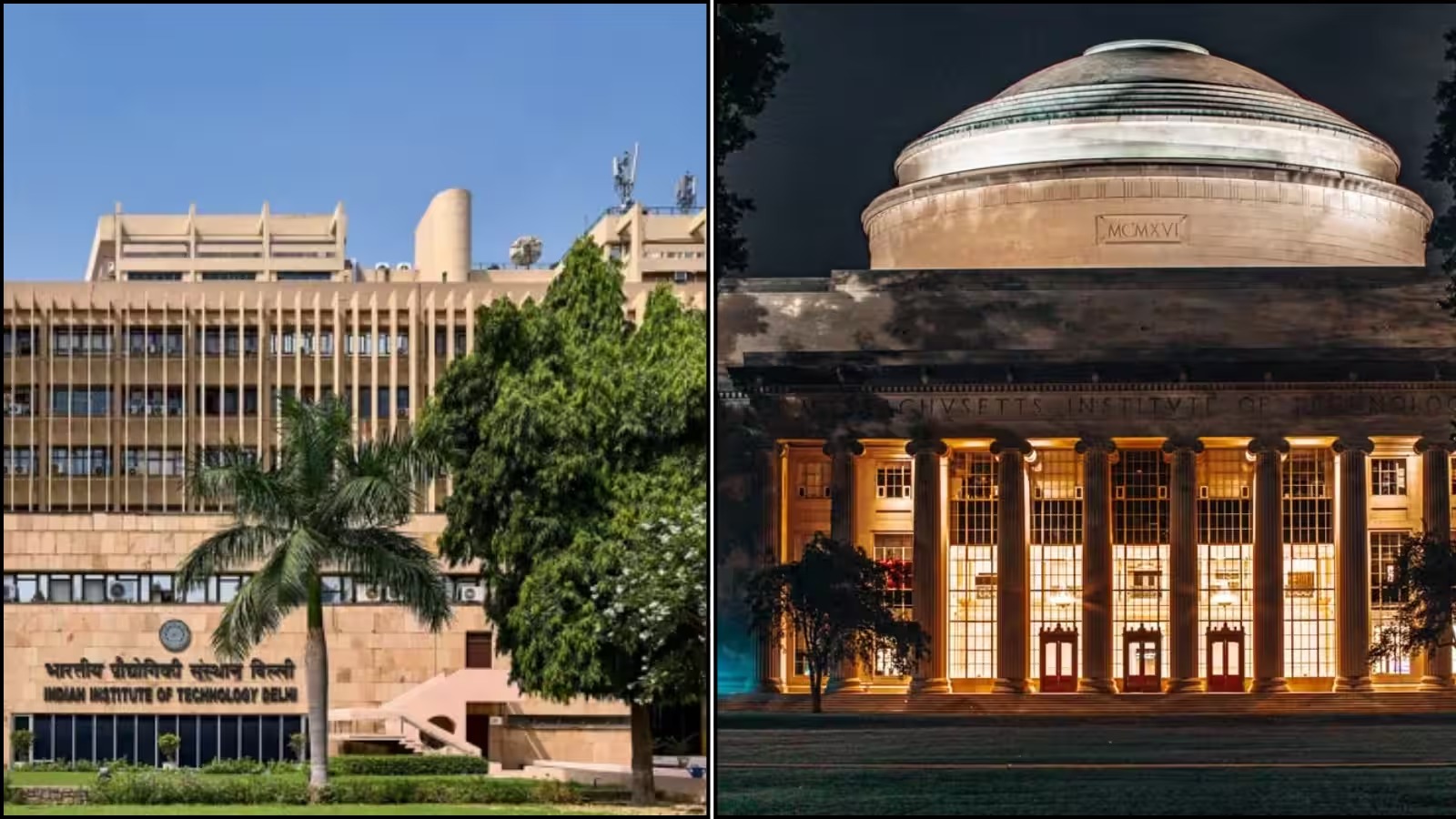
Whenever there is talk of the world’s best institutions in the field of engineering and technical education, the first names that are taken are the Indian Institute of Technology (IIT) of India and the Massachusetts Institute of Technology (MIT) of America. Both the institutions are known for their academic excellence, research and their brilliant alumni network spread across the world. But the biggest question always remains in the minds of students and parents that which of these two institutions is more difficult to get admission in? Is India’s tough entrance exam tougher or America’s holistic selection process? When we analyze in depth the acceptance rates and admission procedures of both the institutions, many surprising facts come to light.
If we look at the percentage figures only, at first MIT in America may seem more difficult because the general acceptance rate there is around 4 to 5 percent. In contrast, if one looks at the ratio of total seats in India’s IITs to the number of students appearing for the exam, the rate is around 1 to 2 percent or even less. However, there is a world of difference in the selection process of both the institutions. Students from all over the world apply to MIT who are already Olympiad winners, researchers or have exceptional profiles in their countries. Whereas in India, every year more than fifteen lakh students enter this battle through Joint Entrance Examination (JEE Main & Advanced), where only a few thousand students get admission in the desired IIT.
The path to admission into IITs completely depends on the score and rank of a very difficult examination i.e. ‘JEE Advanced’. Your family background, sports or other hobbies don’t matter here; Only your understanding of Mathematics, Physics and Chemistry and your ability to handle the exam pressure decides your future. In contrast, America’s MIT does not select students on the basis of only one examination. There is a ‘Holistic Review’ process, which closely evaluates the student’s SAT/ACT scores, academic grades, essays, letters of recommendation (LORs), and exceptional social or leadership work. There are very limited seats in MIT for Indian students, due to which the level of competition there goes much higher than at the international level.
After getting admission, the environment and challenges of both the institutions are completely different. As difficult as it is to get into the IITs, one has to work hard during their academic studies, and the fees are quite affordable for Indian families. On the other hand, MIT’s fees and living expenses are very high, although there is also a transparent system of financial aid and scholarships. MIT is at the top in the world in terms of global ranking and research, while the status of IIT is unique in Asia and within the country. Education experts believe that the nature of difficulty of both the institutions is different – at one place the ideological firepower of the examination is a challenge, while at the other place proving your complete personality on the global stage is the biggest test.