 look news india

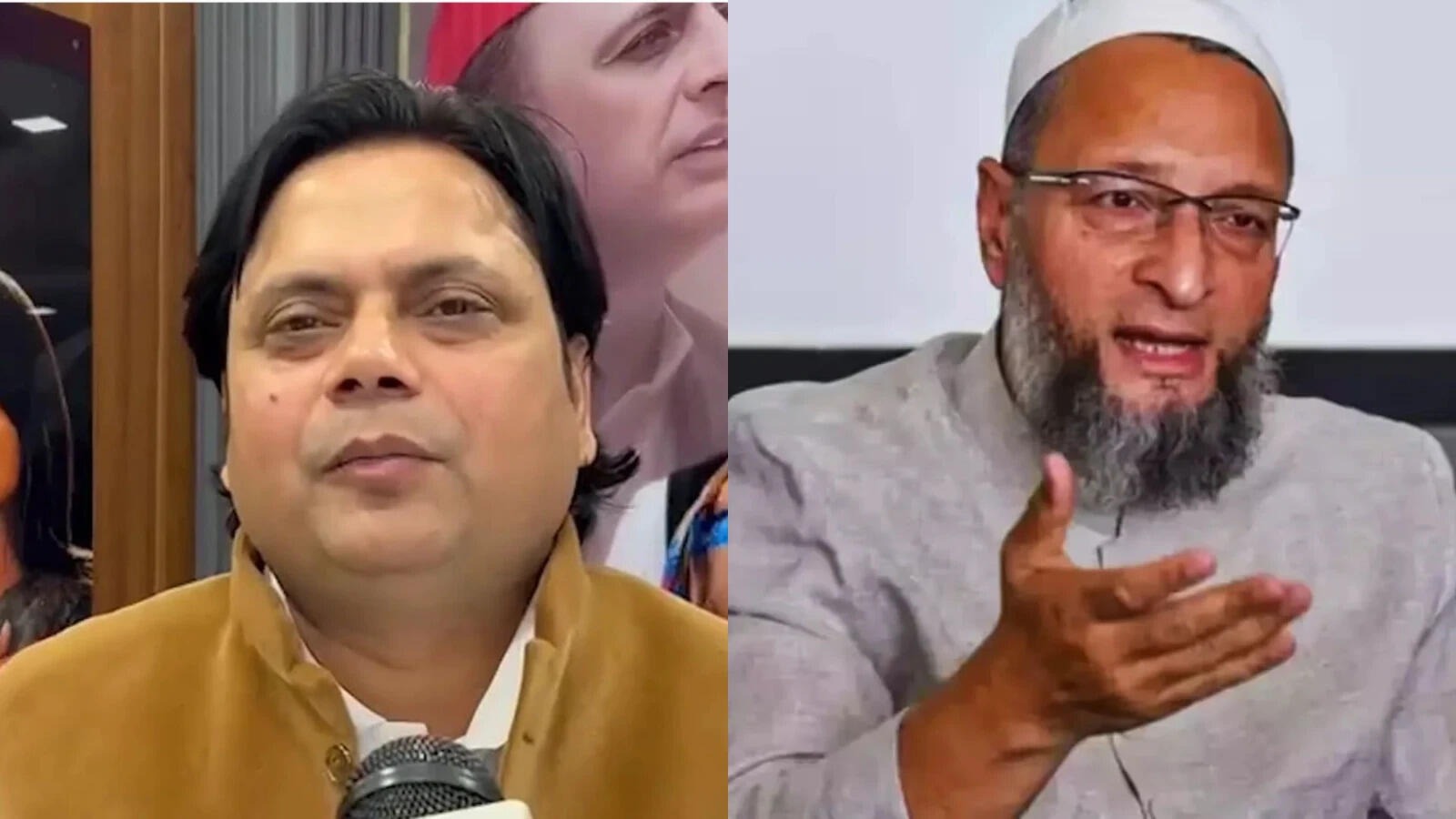
These days, a lot of statements are being fired at each other in the Indian political circles and especially in the politics of Uttar Pradesh. With the buzz of upcoming assembly elections in the state, the attitude of political parties is becoming sharper. Recently, All India Majlis-e-Ittehadul Muslimeen (AIMIM) national president and MP Asaduddin Owaisi had made a sharp and political attack on Samajwadi Party (SP) national president and former Chief Minister of Uttar Pradesh Akhilesh Yadav. There was a stir in the opposition camp after that comment of Owaisi and Samajwadi Party has also taken a strong stand on this. Samajwadi Party’s chief spokesperson Fakhrul Hasan Chand has reacted very aggressively to this statement of Owaisi and targeted him fiercely. After this statement of SP spokesperson, a new debate has started in the state politics regarding the equation of Muslim votes and the strategies of political parties.
Samajwadi Party spokesperson Fakhrul Hasan Chand has completely rejected the statements of Asaduddin Owaisi and taken him to task. Fakhrul Hasan Chand said in strong words that Asaduddin Owaisi is only an election season leader who comes to Uttar Pradesh or other election-bound states only as a ‘tourist’. He further said that Owaisi and his party have no real support base on the ground, rather they are active during elections only to do politics of statements and divert public attention. The SP spokesperson sarcastically said that when it is time for struggle among the public, Owaisi and his party leaders are nowhere to be seen, but as soon as the elections come near, they jump into the fray to mislead the public. It has become clear from this sharp statement that Samajwadi Party is now in a completely aggressive mood to respond to any attack by AIMIM and it is standing firm on every front to protect its political interests.
There is still some time left for the assembly elections to be held in Uttar Pradesh in the year 2027, but political parties have already started laying their chessboard. All the major parties are preparing their own strategies to gain power in the state. While the Bharatiya Janata Party (BJP) is claiming to return to power for the third time on the basis of its schemes and development works, the Samajwadi Party is busy strengthening its ground through the ‘PDA’ (Backward, Dalit and Minority) formula. Meanwhile, parties like AIMIM are also making continuous efforts to make inroads in the political arena of Uttar Pradesh, due to which the tussle for votes is clearly visible among the opposition parties. Political analysts are seeing Owaisi’s continuous questioning of the Samajwadi Party and its leadership as a deliberate strategy to make a dent in the Muslim vote bank. This is the reason why Samajwadi Party now does not want to leave any statement without reply and is counterattacking aggressively.
Muslim vote bank has always been a major deciding factor in Indian politics and in Uttar Pradesh its role is considered even more important. Asaduddin Owaisi has often been accusing Samajwadi Party and other opposition parties in his meetings and speeches that they have only used Muslims as their vote bank but have not worked on the ground for their rights. Recently, Owaisi had taken a sharp jibe at Akhilesh Yadav regarding some of his statements and proposed tours, after which the political atmosphere has become quite heated. Samajwadi Party clearly believes that Owaisi’s party enters the electoral fray to indirectly benefit the Bharatiya Janata Party and tries to divide the secular votes. This latest statement of SP spokesperson Fakhrul Hasan Chand is part of this political strategy, through which the party wants to send the message that the minority community of Uttar Pradesh is completely standing strongly with the Samajwadi Party and its leadership and Owaisi’s statements are not going to have any impact on the ground reality of the state. In the coming days, as the election dates approach, there is every possibility that this political rhetoric will become more intense, due to which the political temperature of the state will continue to rise.