 look news india

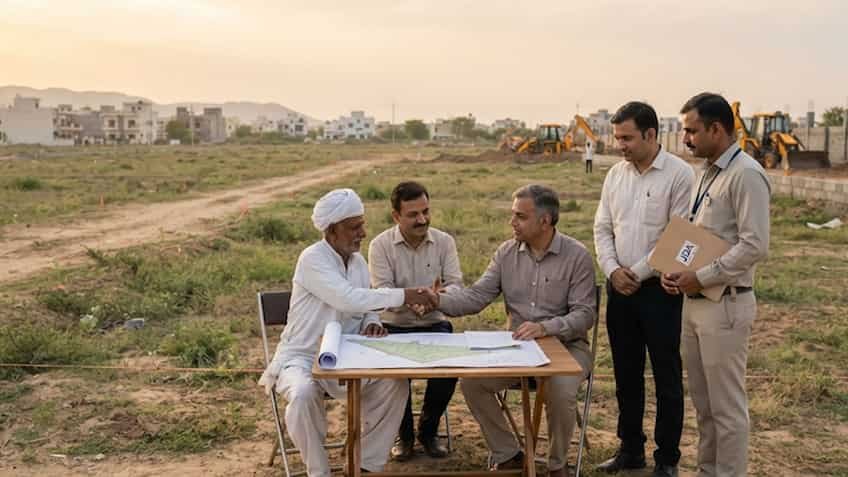
The traditional way of land deals in the real estate sector of the country is now changing rapidly. Earlier, to start any residential or commercial project, builders had to spend crores of rupees to buy land outright and land owners had to worry about heavy capital gains tax and investment of money after selling their ancestral or valuable land, now such a ‘win-win’ model has become superhit in the market, in which neither the land owner has to bear the hassle of selling his land nor The builder has to invest huge capital in the beginning. According to the latest data from real estate consultancy firms and the property market, every fourth major land deal (about 25 to 28 percent of deals) across the country, from major metros to fast-emerging tier-2 cities like Lucknow, Kanpur, Noida, Gurugram, Bengaluru, Hyderabad, Pune and Mumbai, is now done under Joint Development Agreement (JDA) and Revenue Sharing Model. Has been. Through this model, land owners are earning crores of rupees in the form of ready-made luxury flats, commercial space or a huge share in the total sale of the project while retaining the ownership rights of their land.
In simple words, Joint Development Agreement (JDA) is a legally binding contract between the landowner and the real estate developer. Under this arrangement, the land owner hands over his vacant or old property to the builder for development, while the builder bears the entire responsibility and financial expenses of getting the map passed (RERA and local authority approval), carrying out construction work, marketing the project and selling the flats or shops on that land. In exchange for the cost of the land, the owner is given a small refundable or non-refundable security deposit initially and when the project is ready, either the constructed flats/commercial units are given in a pre-determined ratio (Area Sharing) or a direct share in the total sales revenue of the project (Revenue Sharing).
In the last two years, land prices across the country have increased by 30 to 60 percent, making it financially difficult for even the biggest developers to purchase land outright at prime locations. On the other hand, land owners have also realized that by selling the land once, they get only today’s value, whereas through the JDA model, they can directly benefit from the increased future value of a modern project to be built on that land.
| Comparison Factor | Outright Land Sale | Joint Development Model (JDA / Revenue Share) |
|---|---|---|
| ownership of land | Land owner’s rights end as soon as registration is done | Control over the land until the project is completed and the share is received. |
| builder’s initial capital | 50-60% of the capital gets stuck in buying land. | Initial capital is saved, which is used for faster construction. |
| Land owner’s income | Only one lump sum fixed price is available | A hefty share of 35% to 55% of the finished property or sales revenue. |
| Tax liability (Capital Gains) | Heavy capital gains tax has to be paid immediately after the sale | Tax liability on completion of project under Section 45(5A) of Income Tax |
| Benefits of inflation and market growth | There is no benefit of future rise after selling the land | As property prices increase, the value of the land owner’s share also increases. |
According to property market experts, the share ratio is decided based on the local market demand and availability of land in different areas of the country. Around 35 to 40 per cent of total land deals in South Indian cities like Bengaluru, Hyderabad and Chennai are based on the JDA model, where the ratio between the land owner and the builder is usually 40:60 or 45:55. At the same time, large-scale land owners on prime corridors like Gomti Nagar Extension, Shaheed Path, Sultanpur Road, Ayodhya Road and Kisan Path in Delhi-NCR (Noida, Greater Noida, Gurugram, Ghaziabad) and Lucknow, the capital of Uttar Pradesh, are now entering into revenue sharing and area sharing agreements with renowned builders instead of selling their land. In these markets of North India, depending on the location of the land, the owner can easily get a share ranging from 35 percent to 50 percent, due to which he is getting manifold returns sitting at home without any construction risk.
Till a few years ago, land owners were reluctant to partner with builders because their rights were not protected in case of project delays or disputes. But the strict laws of the Real Estate Regulatory Authority (RERA) have completely changed this picture. Now under the rules of RERA, in any JDA project, the landowner is given the status of ‘Landowner Promoter’ and the money coming into the project is monitored through an Escrow Account, due to which the builder cannot divert that money to any other project. Additionally, under Section 45(5A) of the Income Tax Act, individual and Hindu Undivided Family (HUF) land owners are required to pay capital gains tax not at the time of signing the JDA agreement but in the financial year in which the completion certificate of the project is issued by the competent authority.
Although this model is extremely attractive and profitable, legal experts believe that land owners should exercise utmost caution before joining hands with any builder. First of all, thoroughly check the developer’s track record, financial capability, history of timely project delivery and its credentials with RERA. It is mandatory in the agreement to clearly mention the maximum time limit for completion of the project, the penalty clause to be imposed on the builder in case of delay, the quality of construction (specifications) and the distribution of flats or revenue to be shared by both the parties. Additionally, the land owner should give the builder only a limited power of attorney (Limited GPA) for the development and marketing of the project and not uncontrolled rights to mortgage or sell the entire land. With the right legal advice and transparent contracts, this model has become the safest and most profitable way for land owners today to create generational wealth without having to sell their land.