 look news india

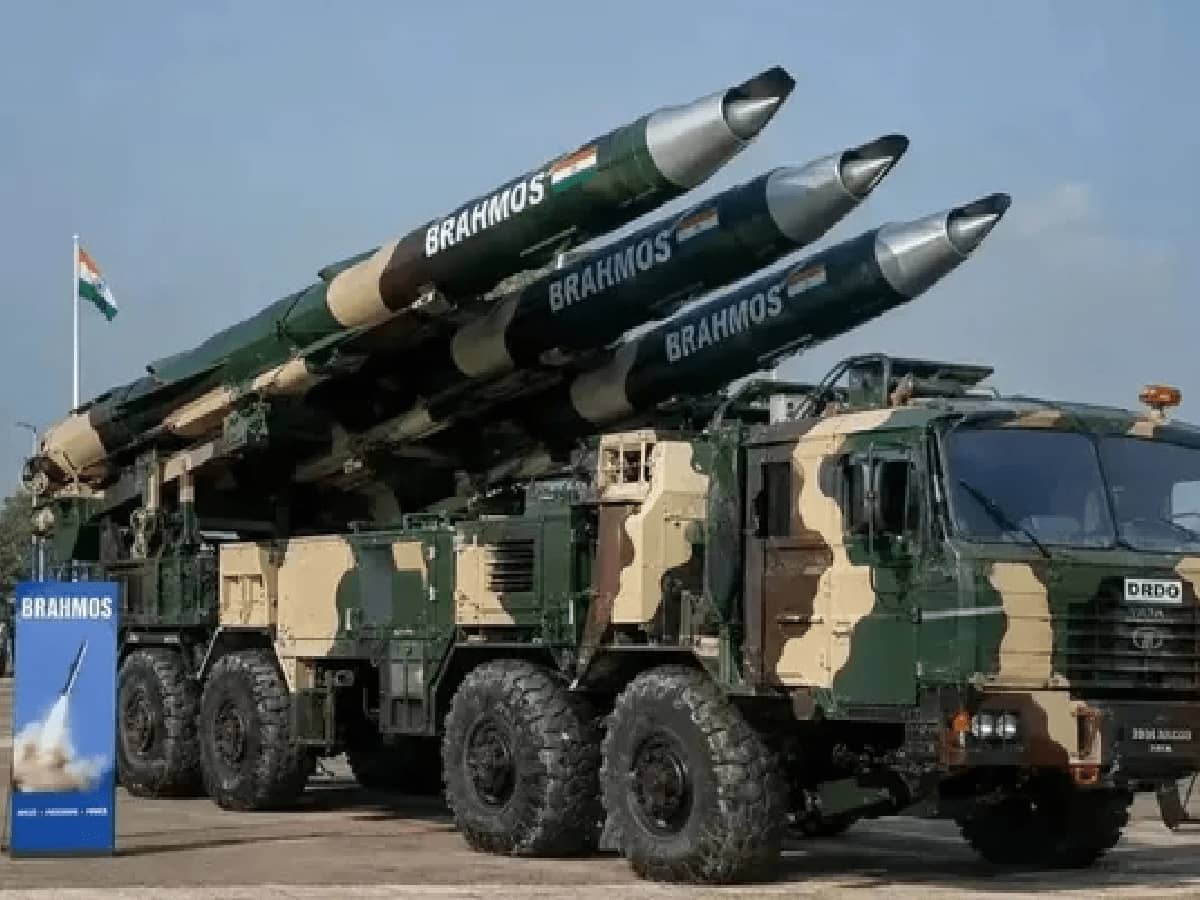
India’s indigenous supersonic cruise missile ‘BrahMos’, which has become the biggest identity of Indian defense manufacturing and Self-reliant India campaign, is now rapidly expanding its reach in the global defense market. Especially in the strategically important countries of South-East Asia, there is a tremendous surge in the demand for this accurate and deadly missile system. After the successful supply of BrahMos missile system to the Philippines and the signing of the historic agreement with Vietnam, now many other major countries in the region are also in the final stages of talks with India to purchase this advanced missile system.
Chief Executive Officer (CEO) and Managing Director (MD), BrahMos Aerospace, speaking to reporters in Hyderabad on Friday, November 13, 2026. Joshi (Jaytirth R. Joshi) shared important information on this topic. He said that export negotiations with other interested friendly countries are progressing in a very positive direction and as soon as these deals receive formal approval from the Government of India, new export agreements will be signed and finalized. He said in clear words that we are fully ready to make agreements with the concerned countries as soon as we get the green signal from the government.
Its exceptional performance in recent military operations has been the main reason behind the growing attraction of global defense experts and armies of various countries towards the BrahMos missile. CEO Jayateertha R. Joshi revealed that after ‘Operation Sindoor’, international interest in this indigenous missile system has increased manifold. He shared a very important fact that when these missiles were manufactured, no sudden and challenging situation like ‘Operation Sindoor’ was even imagined, and some of the missiles used in this operation were 10, 15 or 20 years old.
He said with pride that despite being manufactured two decades ago and kept in storage for years, these missiles proved to be 100 per cent reliable and as soon as they were taken out of storage and fired, they hit their designated targets with pinpoint accuracy. According to Joshi, the entire credit for this amazing reliability and accuracy of decades old missiles goes to the modern ‘Non-Destructive Testing’ i.e. NDT technology, which kept their functionality intact for a long time.
‘Non-Destructive Testing’ (NDT) is a very advanced and essential testing method in the field of defense and aerospace science. In this scientific process, the internal and external structure of any important material, complex part or sensitive military equipment is thoroughly examined without causing any kind of physical damage or breaking it. This technology helps in early detection of minute defects, internal cracks, structural weaknesses and wear and tear over time, thereby ensuring that critical defense systems are fully ready for immediate use in case of any emergency.
The importance of NDT technology in the military and aerospace sector is also considered to be utmost because high-tech military equipment and missiles are kept in secure depots and storage for many years or even decades before being deployed on the actual front. In such a situation, regular NDT tests conducted from time to time help in accurately assessing their actual technical condition, propulsive capability and combat reliability, as the world witnessed firsthand in the case of BrahMos during Operation Sindoor.
BrahMos, jointly developed by India’s Defense Research and Development Organization (DRDO) and Russia’s prestigious organization NPO Mashinostroyenia, is today counted among the world’s fastest, most accurate and deadly supersonic cruise missiles. Technically, it is a two-stage supersonic cruise missile system, which can be fired from every platform i.e. land, sea, submarine and fighter aircraft.
If we look at the working of this missile, in the initial moments of launch, it uses a powerful Solid Propellant Booster to achieve supersonic speed, which provides it high velocity in the atmosphere in the blink of an eye. After this, the first stage separates and the state-of-the-art Liquid-Fuel Ramjet Engine installed in it gets activated, which enables this missile to fly towards its target at a tremendous and unstoppable speed of about 3,400 kilometers per hour (Mach 2.8 to 3.0) and completely destroy it by penetrating the enemy’s air defense system.