 look news india

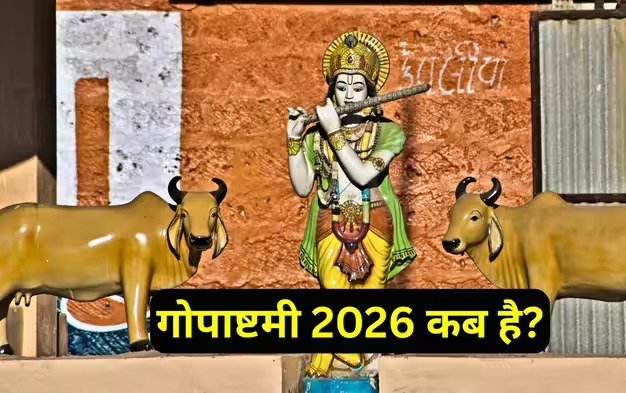
In Sanatan Dharma and Indian culture, immense reverence and respect for nature, animals and especially mother cow has always been the basic foundation of our culture. One such very sacred and important festival related to the childhood life of Lord Shri Krishna is ‘Gopashtami’ (Gopashtami 2026), which has a huge place in the Hindu calendar. Cows are especially worshiped on this festival celebrated on the Ashtami Tithi of Shukla Paksha of Kartik month, because according to mythology, on this day Lord Shri Krishna started the practice of cow herding (cow grazing) and he received the title of ‘Govinda’ and ‘Gopal’. This day is celebrated as a big festival in cowsheds and temples across the country. Let us know on which date this holy festival of Gopashtami is falling in the year 2026, what is the auspicious time of worship and what is its historical and spiritual significance.
According to the calendar and astrological calculations, Gopashtami is celebrated every year on the Ashtami date of Shukla Paksha of Kartik month. There is an atmosphere of excitement among the devotees regarding the exact date of Gopashtami in the year 2026. Based on the differences of the Panchang and Udaya Tithi, the method of worshiping Mother Cow after taking bath and meditation in the morning on this day is considered to be the best.
According to pundits and Acharyas, on the day of Gopashtami, from Brahma Muhurta till early morning, the mother cow is bathed and adorned. One gets the special virtue of serving the cows throughout the day and circling them in the evening at dusk. Worship done at the right time brings happiness, peace and prosperity in the life of the seeker and destroys all sins.
The mythological stories related to the festival of Gopashtami are described in various religious texts and Shrimad Bhagwat Mahapuran. According to the story, when Lord Krishna was a child, he used to go to the forest only to graze the calves. But when he grew up and he insisted to Mother Yashoda and Baba Nand that now he would go to the forest to graze the huge cows, then on the Ashtami Tithi of Shukla Paksha of Kartik month, he formally started the Cow Charan Leela.
Earlier, he and Dauji (Balram ji) had worshiped Lord Surya and Mother Cow after taking blessings from Mother Gomti and elders. The tradition of celebrating Gopashtami has been going on since that day. By worshiping Mother Cow on this day, one not only gets the blessings of Lord Shri Krishna and Mother Lakshmi, but also easily gets the blessings of 33 crore Gods and Goddesses.
The rituals of Gopashtami day start in the morning from sunrise. Fasters and devotees wake up early in the morning and take bath and wear clean clothes. After this, go to the cowshed or bathe the cows near your house and bathe them with clean water. Impressions are made with turmeric, kumkum and henna on the body parts of the mother cow and their horns are decorated with gold or colours.
Cow and calf are garlanded with flowers and aarti is performed after lighting incense sticks. After this, they are offered jaggery, green fodder, wheat bread and flour. It is believed that just by caressing the back of Mother Cow, one gets the virtuous results of visiting all the holy places. In the evening, when the cows return from grazing (which is called twilight), it is considered very beneficial to apply the dust of their feet on the forehead.
The medicinal properties of Panchagavya (milk, curd, ghee, cow urine and cow dung) have also been proven by modern science. This holy festival of Gopashtami inspires us to take a pledge that we should come forward not only for one day but for the whole year for the protection, conservation and proper maintenance of the cow progeny. If every citizen of the society contributes to this sacred work of cow service, then a new flow of love, compassion and positive energy will be seen in the country.