look news india

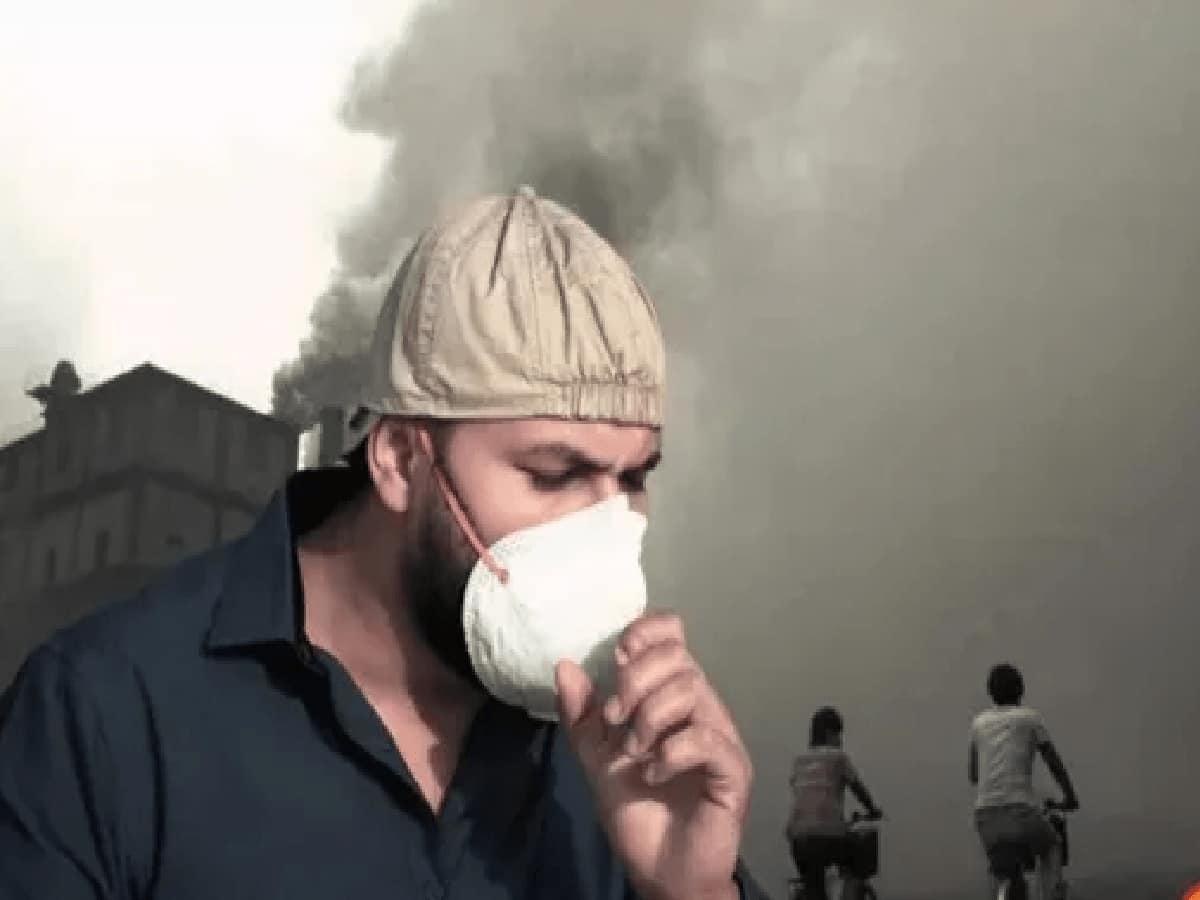
Despite a slight change in the weather patterns in Sonbhadra district of Uttar Pradesh, which is rich in energy and natural resources, only slight improvement has been recorded in the level of air pollution. The climate of this area surrounded by dense forests and hills remains seriously unhealthy even today. Especially in the industrial city Anpara, the air quality is at a very worrying level. According to the latest data, on Wednesday evening the Air Quality Index (AQI) of Anpara remained at the level of 260, which is kept in the ‘poor’ category as per environmental and health standards. Black smoke and flying ash emanating from the chimneys of power houses and industrial units established in this lush green area is continuously poisoning the breath of the local residents.
The seriousness of the situation can be gauged from the fact that just a few days before Diwali, the AQI level of Anpara had crossed the dangerous figure of 350. According to environmental experts, a pollution level above 350 is considered more dangerous than an area turning into a ‘gas chamber’, which directly affects not only the patients but also the lungs and heart of a completely healthy person. The surprising thing is that despite this obvious threat to the health of the general public, the concerned government departments and industrial companies are busy fulfilling only paper tasks in the name of pollution control.
The environment of Sonbhadra district, rich in natural resources, water, forests and mountains, should have been much cleaner and better than other plain districts of the country, but the ground reality appears to be exactly the opposite. On one hand, nature is providing its unique beauty to this area, on the other hand, human negligence and ignoring industrial rules and regulations are polluting the clean air of Sonanchal. Local citizens believe that it is not at all true that this pollution cannot be controlled, all that is required is that the administration and companies take concrete initiatives on the ground with complete honesty and strictness.
But when the ashes of negligence accumulate in the eyes of responsible departments and management officials, then the general public has to bear the brunt of it. It is alleged that due to the negligence of the management of the companies and the officials of the Pollution Control Department, the ‘ash transportation syndicate’ has become so dominant in the area that it has no fear of law or rules. Due to transportation of ash in overloaded vehicles without covering, there is a layer of ash on the roads all the time. According to the local people, this dire situation has arisen due to the arbitrariness and lack of monitoring at the level of major industrial units like Renusagar, NCL and NTPC.
Medical experts have also expressed deep concern over the adverse effects of increasing air pollution in Anpara and surrounding areas. Former Head of the Department of TB and Chest Diseases, Institute of Medical Sciences (IMS) of Kashi Hindu University (BHU), Professor S.K. Aggarwal says that due to continuous dust blowing on the roads, ash falling from open vehicles and operation of excessive number of heavy trucks contrary to the prescribed standards, the level of micro pollutant particles in the environment increases rapidly. He clearly said that the way AQI level remains continuously high in Anpara is a very worrying sign for public health.
According to Professor Aggarwal, the worst and immediate effect of this poisonous air falls on small children, elderly people and patients already suffering from asthma or respiratory diseases, due to which their problems can increase manifold. He has demanded from the district administration to take this issue seriously and take immediate and effective steps to curb the factors causing pollution.
It is very important for common citizens to understand the different levels of Air Quality Index (AQI) and their health effects. When the AQI of an area is between 0 and 50, it is considered ‘good’ and has minimal or no negative effects on health. A level between 51 and 100 falls in the ‘satisfactory’ range, in which only highly sensitive people may experience mild breathing problems. If AQI reaches between 101 to 200, it is called ‘moderate’ category, in which patients suffering from asthma, lung and heart diseases start suffering.
Further, an AQI between 201 and 300 (as currently recorded at 260 in Anpara) falls in the ‘poor’ category, with prolonged exposure causing difficulty in breathing and sore throat even for most normal people. When this figure reaches between 301 and 400, the air becomes ‘very bad’ and the risk of serious respiratory diseases increases, while the level between 401 and 500 is in the ‘severe’ category, which can make even completely healthy people sick and trigger a serious health alert.