 look news india

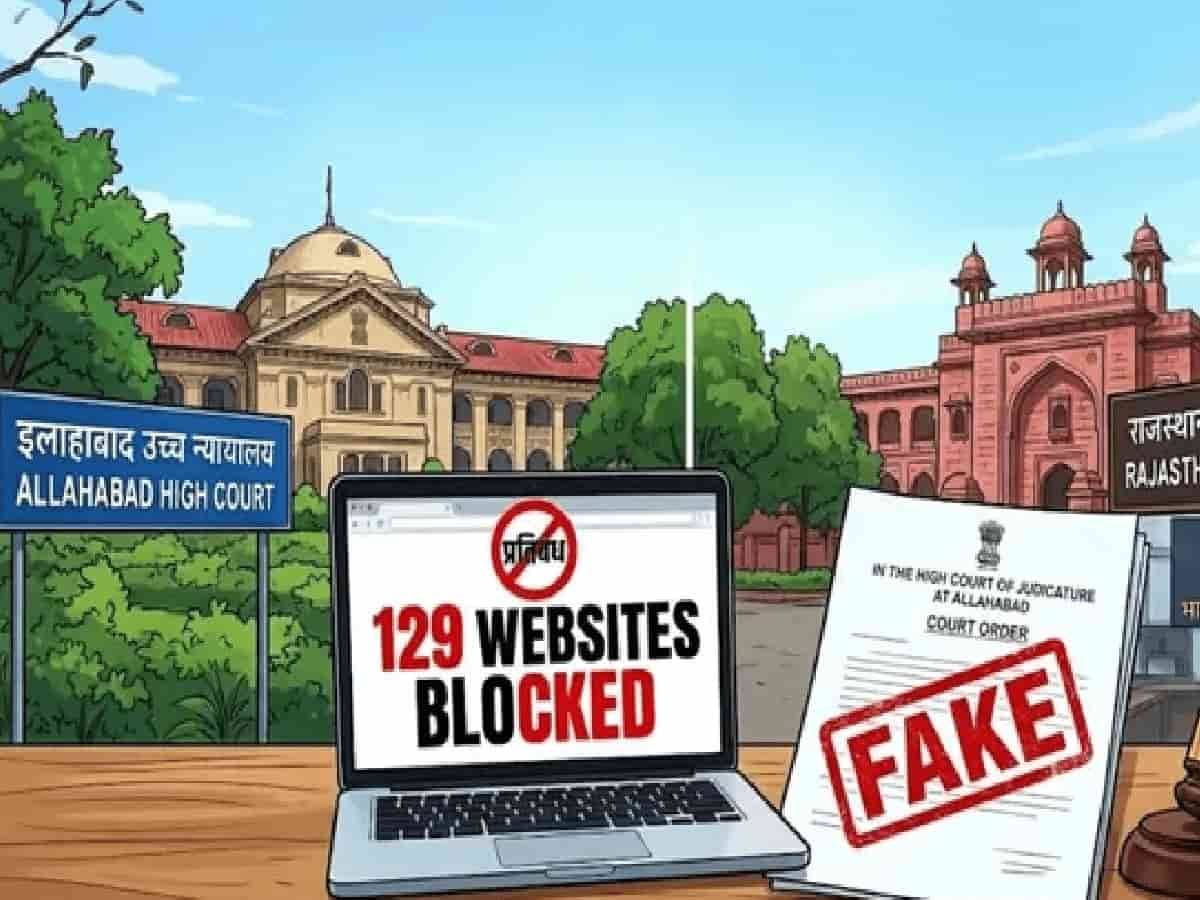
A very shocking fraud has come to light which has shaken the judicial and administrative system of the country. A total of 129 websites were blocked across the country by the Department of Telecommunications (DoT) of the Central Government on the basis of alleged orders of High Courts, but now a detailed investigation has sensationally revealed that both those court orders were completely fake and fabricated. Misusing the name of Rajasthan High Court and Allahabad High Court, the vicious fraudsters not only prepared fake judicial orders but also got these websites banned through Internet Service Providers (ISPs) by blackmailing the government machinery.
The main objective of this entire conspiracy was to mislead the officials of the Department of Telecommunications, so that they issue instructions to immediately block the concerned websites without any doubt. Under this scheme, the Department of Telecommunications had issued two separate blocking instructions on July 21 and September 2. The documents that were sent to the department through email looked exactly like the official orders issued by the respective High Courts. But when the official digital records and servers of both the courts were thoroughly examined, the fact was revealed that no such cases or orders had ever been registered in the history of the court.
According to an investigative report by the international news agency Reuters, very clever methods were adopted to carry out this high-tech fraud. Both forged court orders were sealed with blue colored seals bearing the national emblem of India (Ashoka Pillar) and appearing exactly like genuine court seals. This incident has exposed the misuse of Artificial Intelligence (AI) and digital editing in copying judicial documents as well as serious flaws in the verification mechanism in place in government departments before blocking any website.
Analysis of the documents revealed that the first fake order prepared in the name of Rajasthan High Court was emailed to the Department of Telecommunications at 8:59 pm on July 19. In this fake letter, strict instructions were written to the officials to take action within 24 hours. It was signed by someone named ‘Aryan Chaudhary’, who described himself as the advocate-on-record. Relying on this fake document, the Department of Telecommunications on July 21 ordered internet companies to block 34 betting websites. Now Rajasthan High Court administration has officially confirmed that this order was completely fake, no such record exists on their server and the court is going to take strict legal action against this serious fraud.
On the same lines, another big game was played to get the websites removed by misusing the name of Allahabad High Court, which is among the biggest High Courts of the country. The fraudsters prepared an alleged order of Allahabad High Court dated August 14, 2026 and, citing it, demanded blocking of 95 websites related to online gambling, after which the department took action on September 2. When Reuters contacted the Allahabad High Court administration to know the authenticity of this alleged order, the whole story was exposed.
After the matter was brought to the notice of the Honorable Chief Justice of Allahabad High Court, he immediately ordered the Registrar General and the Computer Section of the Court to check the authenticity of the document. Court System Manager Arindam Lahiri carefully examined the court’s digital server and central database and submitted his official report on 3 November 2026. In this investigation report, it became clear that the case ‘Writ Petition No. 30480/2026’ which was referred to in the fake order, was never registered in the court records. Apart from this, no such order was uploaded on the official portal of the Court on 14 August 2026 and the private secretary of the concerned judge also confirmed in writing that the judge never gave any such decision.
In the internal investigation of Allahabad High Court, it became clear that an unknown person posing as a lawyer had emailed fake documents in a very planned manner so that 95 websites could be shut down. After the official confirmation of the forgery, the Registrar General, following the instructions of the Chief Justice, ordered immediate police action on 5 November. The very next day i.e. on 6th November, on the written complaint of the Joint Registrar (Civil) of the High Court, a case was registered against unknown fraudsters at the Cantt Police Station in Prayagraj, Uttar Pradesh.
Prayagraj Police has registered a case of this serious cyber and judicial fraud under sections 318 (2) (fraud), 336 (2) and 336 (3) (forgery), 337 (forgery of court records), 338 and 340 (2) (using a forged document as genuine) of the Indian Justice Code (BNS) as well as relevant sections of the Information Technology (IT) Act. Have done. Now police and cyber cell teams are tracking the email IDs and IP addresses using which these fake orders were sent to the Department of Telecommunications.