 look news india

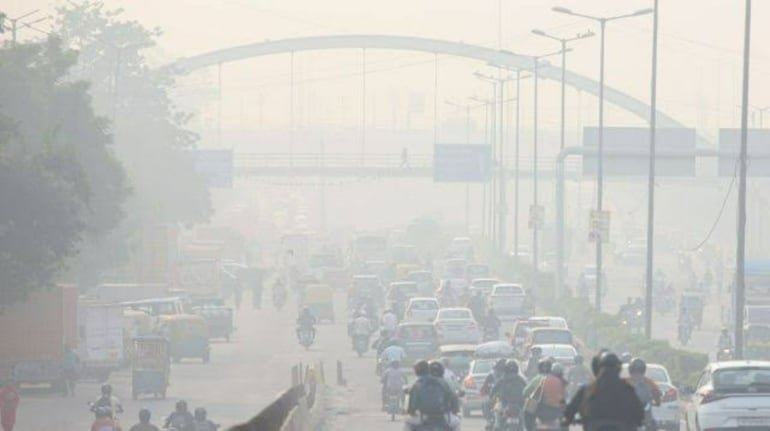
The air quality in the national capital Delhi and its surrounding NCR areas continues to remain a matter of concern. When Delhiites woke up on Thursday morning, they saw a dense blanket of poisonous smog and fog covering the entire city. Due to the mixture of micro pollutant particles and moisture present in the atmosphere, a huge decline in visibility has been recorded, which is having a direct impact on the traffic and normal life on the roads in the morning. According to the latest data from the Central Pollution Control Board (CPCB) and Delhi Pollution Control Committee (DPCC), Delhi’s average air quality index (AQI) was recorded at 321 on Thursday morning, which falls in the ‘Very Poor’ category. Compared to yesterday, the pollution level of the capital has increased by 21 points, which shows that instead of slowing down, the pace of poisoning of the air has increased.
If we look at the data of 57 out of total 59 air monitoring stations in the capital, the air remains suffocating in almost every corner of Delhi. The worst situation was seen in South Delhi’s IIT Delhi area, where the AQI was recorded at 414. This figure beyond 400 falls in the ‘severe’ category, which is extremely dangerous even for healthy people. Apart from this, AQI was recorded at 399 at NSUT Jaffarpur near Najafgarh, 397 at ITO in Central Delhi, 394 at North Campus of Delhi University and 387 at Chandni Chowk. Besides, AQI is also swinging between 300 to 390 in major residential and industrial areas like Wazirpur, Rohini, Bawana, Burari, Dwarka Sector-8, Ashok Vihar and Nehru Nagar. The situation in Noida, Ghaziabad, Gurugram and Faridabad adjacent to Delhi is no different, where the amount of PM 2.5 and PM 10 in the air remains many times more than the standard level.
According to environmental experts and the Indian Meteorological Department (IMD), the reason behind this level of pollution in Delhi is the dual effect of local emissions and seasonal conditions. With the onset of winter, the temperature has dropped and the humidity in the air in the morning has reached close to 95 to 100 percent. Along with this, the speed of surface winds has become very slow (about 0 to 5 kilometers per hour). When the wind speed stops and the temperature decreases, a situation of ‘Temperature Inversion’ is created. In this process, cold air gets trapped near the ground below and a layer of hot air is formed above, due to which vehicle smoke, construction dust, industrial emissions and stubble smoke coming from nearby states are not able to rise into the atmosphere. As a result, these toxic particles form a dense smog chamber just a few feet above the ground. PM 2.5, which has the ability to directly enter the lungs and bloodstream, has been recorded as the main pollutant at more than 48 monitoring centers in Delhi.
Restrictions under Stage-II of the Graded Response Action Plan (GRAP) are already in place in Delhi-NCR by the Commission for Air Quality Management (CAQM). Under this, mechanical sweeping and water sprinkling has been intensified to prevent dust from flying on the roads. Water cannons are being used at major intersections and construction sites through anti-smog guns. Additionally, strict controls have been placed on the use of diesel generator sets and parking charges have been increased to encourage people to use public transport (metro and electric buses) rather than private vehicles. The administration has also appealed to the citizens not to burn garbage or dry leaves in the open and to immediately report any pollution causing activity to the concerned control room or Green Delhi app.
This air, which is continuously in the ‘very poor’ and ‘severe’ category, has become a serious challenge for the health of people of every age group. Health experts and pulmonologists say that at present there has been a rapid increase in the number of patients suffering from shortness of breath, sore throat, burning eyes, persistent cough and asthma attacks in the OPD of the hospital. Children, the elderly, pregnant women and people already suffering from heart or lung disease are most at risk from this poisonous air. Doctors have advised to completely avoid outdoor exercise, morning walks or jogging in the early morning and late evening, when smog levels are at their peak. When going out of the house, use only good quality N95 or N99 masks instead of normal cloth masks. Use air purifiers to keep the indoor air clean, drink enough lukewarm water to keep the body hydrated and include fruits and vegetables rich in vitamin C and antioxidants in your diet.