 look news india

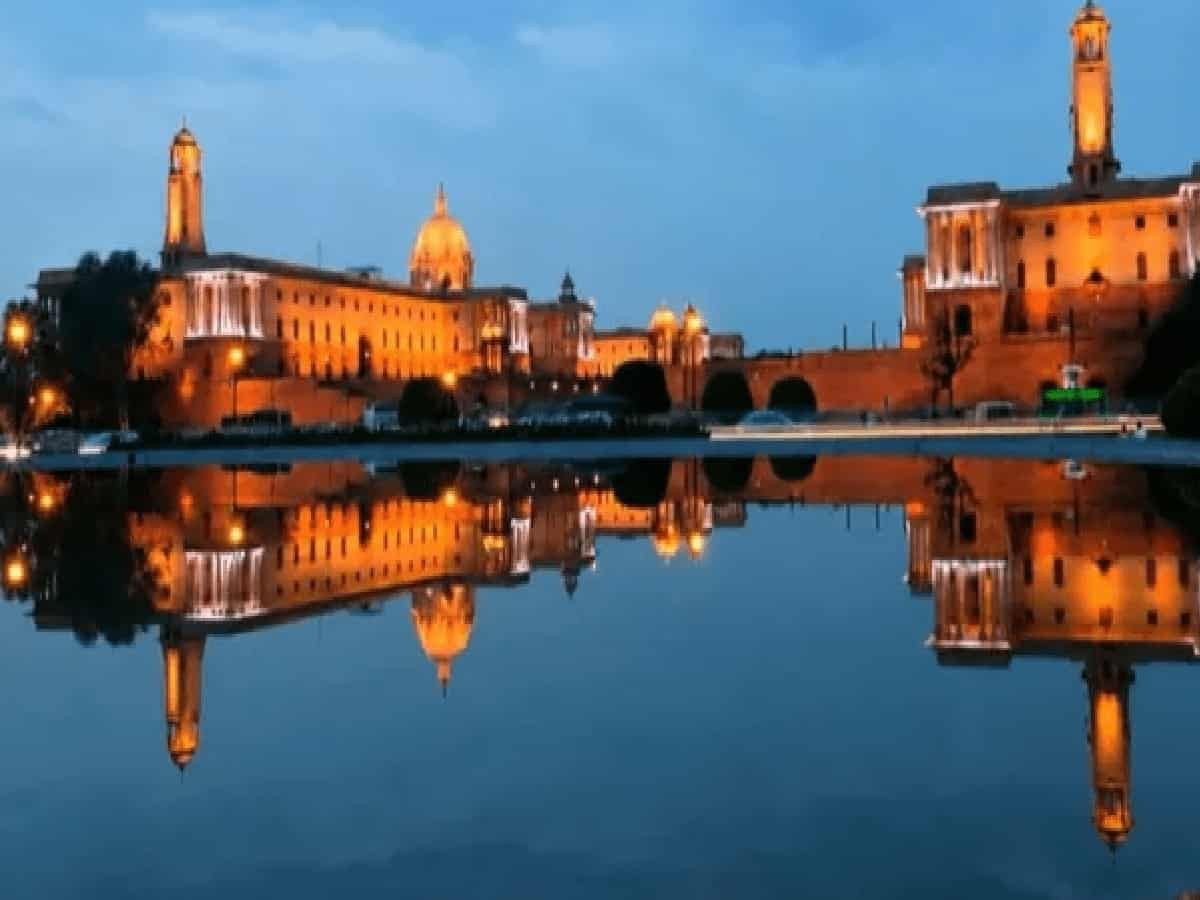
Located in the heart of the national capital New Delhi and on the historic power corridor of the country i.e. Raisina Hills, the North and South Block campuses are now going to gain a new identity as a global witness to India’s ancient knowledge tradition, spiritual consciousness and glorious history. In the meeting of the Cabinet Committee on Economic Affairs (CCEA) held on Wednesday, 11 November 2026 under the chairmanship of Prime Minister Narendra Modi, official approval has been given for the construction of the country’s largest cultural project ‘Yuge Yugeen Bharat National Museum’. The Central Government has approved a total financial budget of Rs 3,230 crore for this ambitious project. This approval, received after technical and financial evaluation by the Public Investment Board (PIB), has paved the way for India’s history to attain the top position on the global stage.
The National Museum will be spread over a total of 1,78,509 square meters of built-up area, making it a grand cultural center with the largest active display area of any museum in the world. The biggest feature of this project is that it is based on the scientific principle of ‘Adaptive Reuse’ of the heritage buildings of North and South Block built during the British period. The original classical architecture, heritage look and grandeur of historic red sandstone of both the buildings will be completely intact during the construction and renovation. These historic buildings, vacated after the relocation of the Ministries of Home, Finance, Defense and External Affairs to the modern integrated Central Secretariat complexes, will now be decorated as a global platform bringing alive India’s civilizational journey spanning over 5,000 years.
This grandest museum of India is being developed as a living document of knowledge, research and civilization instead of just a building of bricks and stones. According to the Ministry of Culture, more than 18 lakh rare and historical artefacts have been identified from across the country to be displayed in this museum. In this huge cultural treasure, the heritage of the National Museum located at Janpath, Delhi, various national institutions working under the Ministry of Culture, 52 regional site museums of the Archaeological Survey of India (ASI), state museums of all the states and historical materials of many prestigious private collections will be included. This will be the first time when priceless objects ranging from the Indus-Saraswati civilization of the Harappan period to the democratic journey of modern India will be presented to the world under one roof.
This huge and complex project will be implemented in a phased manner over a total period of five years from the financial year 2026-27 to 2030-31. According to the outline of the project, the first gallery based on the theme of ‘Ornamentation’ in the North Block will be opened for the common citizens of the country and the world in the second half of the year 2027. After this, other thematic galleries will be inaugurated, which are being designed on unique and informative topics like Ancient Indian Architecture and City Landscape, Mathematics and Vedic Astronomy, Ancient Languages and Scripts of India, Sanatan Faith and Spirituality and ‘Global Connectivity: Business and Thought’. The museum will use immersive technologies like 3D holographic projection, Virtual Reality (VR) and Augmented Reality (AR), allowing visitors to experience the vibrant atmosphere of ancient India.
In terms of modern and visitor-centric facilities, this museum will have the potential to leave behind the Louvre in Paris and the British Museum in London. Under this project, world-class infrastructure is being developed to welcome and manage more than one crore (10 million) domestic and foreign tourists every year. International level audio-guides, digital kiosks, accessible pathways for specially abled persons, modern amphitheater and interactive learning zones for children will be created in the campus. The operation of the museum is expected to generate huge government revenues through ticket sales, guided heritage tours, special cultural programmes, food courts of Indian cuisine and retail sale of souvenirs, which will make it economically self-reliant in the long run.
From the economic and social point of view, this project will prove to be not just a tourist destination but a new engine for the educational, research and employment system of the country. Its construction and operation will create high level employment opportunities for thousands of traditional artisans, sculptors, historians, researchers, translators, IT experts, art conservators and modern museum experts from across the country. It is noteworthy that on the occasion of International Museum Day, Prime Minister Narendra Modi had presented before the country the historic concept of establishing this global museum from Pragati Maidan on 18 May 2023. With this approval of the Cabinet, this national resolution of India has now moved rapidly towards becoming a concrete and grand reality.