 look news india

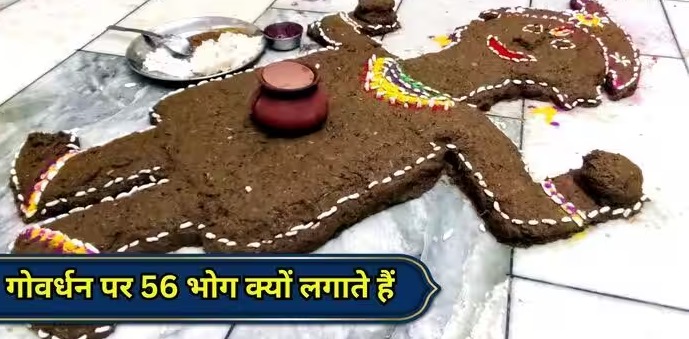
In Sanatan Dharma, Goverdhan Puja or Annakoot festival, celebrated on the next day of Diwali, has a huge place from cultural and religious point of view. On this day, Lord Shri Krishna, cows growing in the lap of nature and Govardhan Mountain are worshipped. On this auspicious occasion, ‘Chhappan Bhog’ (56 Bhog) is prepared and offered to God in a grand manner in all the temples and homes of the country. This tradition of Chhappan Bhog has been going on for centuries and there is a very deep mythological history and scientific reasons related to health hidden behind it. When the people of Braj were attacked by Lord Indra and created havoc due to torrential rains, Lord Krishna protected everyone by lifting Govardhan Mountain on his little finger. After this, the people of Braj had offered fifty-six types of dishes to please God after the fatigue of seven days and seven nights, since then this tradition has become an essential part of Sanatan culture.
What is the secret behind 56 offerings and why are such a variety of things offered?
According to religious beliefs and ancient stories, Lord Shri Krishna used to have food at eight o’clock every day. When the people of Braj and Mother Yashoda were worried that Kanhaiya remained without eating or drinking anything for seven days due to continuously carrying the Govardhan mountain, they prepared a total of 56 types of different and delicious dishes according to those seven days and eight hours. These dishes included sweets, snacks, fruits, grains and dry fruits, which were offered together to the Lord. Apart from this, number 56 is also considered to have a special significance in terms of numerology and astronomy. Chhappan Bhog is not just a plate of dishes, but it is a unique medium of expressing gratitude towards all the precious things given by nature – grains, vegetables, milk, ghee, fruits and honey – which provide energy and nourishment to our lives.
56 What are the main things included in the Bhog plate?
When it comes to Chhappan Bhog, a question often arises in people’s mind as to which things are mandatory to be kept in that particular thali or prasad. Traditionally a balanced mixture of different types of food items is prepared in Chhappan Bhog. It mainly consists of Annakoot sabzi (which is made by mixing all types of green vegetables and fresh crops), rice, puri, kachori, and millet bread. Apart from this, dishes made from milk like rabri, malai, kheer, paneer, chhena sweets and various types of pedas or barfi are kept. Fruits include banana, apple, grapes, pomegranate and seasonal fruits, while almonds, cashews, raisins and pistachios have a special place among dry fruits. Among the beverages, buttermilk, lassi, panchamrit and water are also considered an important part of this offering.
There are many scientific and Ayurvedic benefits of eating Annakoot Prasad.
Consumption of Chhappan Bhog prepared on the day of Govardhan Puja and especially ‘Annakut’ (Annakut Prasad) is considered very beneficial not only from the religious point of view but also from the health point of view. In order to strengthen the body’s immunity during this transition period between the arrival of autumn and the beginning of winter, Ayurveda recommends the consumption of various types of grains, spices and vegetables. Many such seasonal vegetables and spices are added to Annakoot vegetable which keeps the digestive system healthy and makes the body energetic from within. When devotees consume this Prasad together, it not only strengthens mutual love and brotherhood, but also spreads the message of harmony in the society. Thus, this festival of Govardhan Puja presents a wonderful coordination of our rich cultural heritage and scientific lifestyle.