 look news india

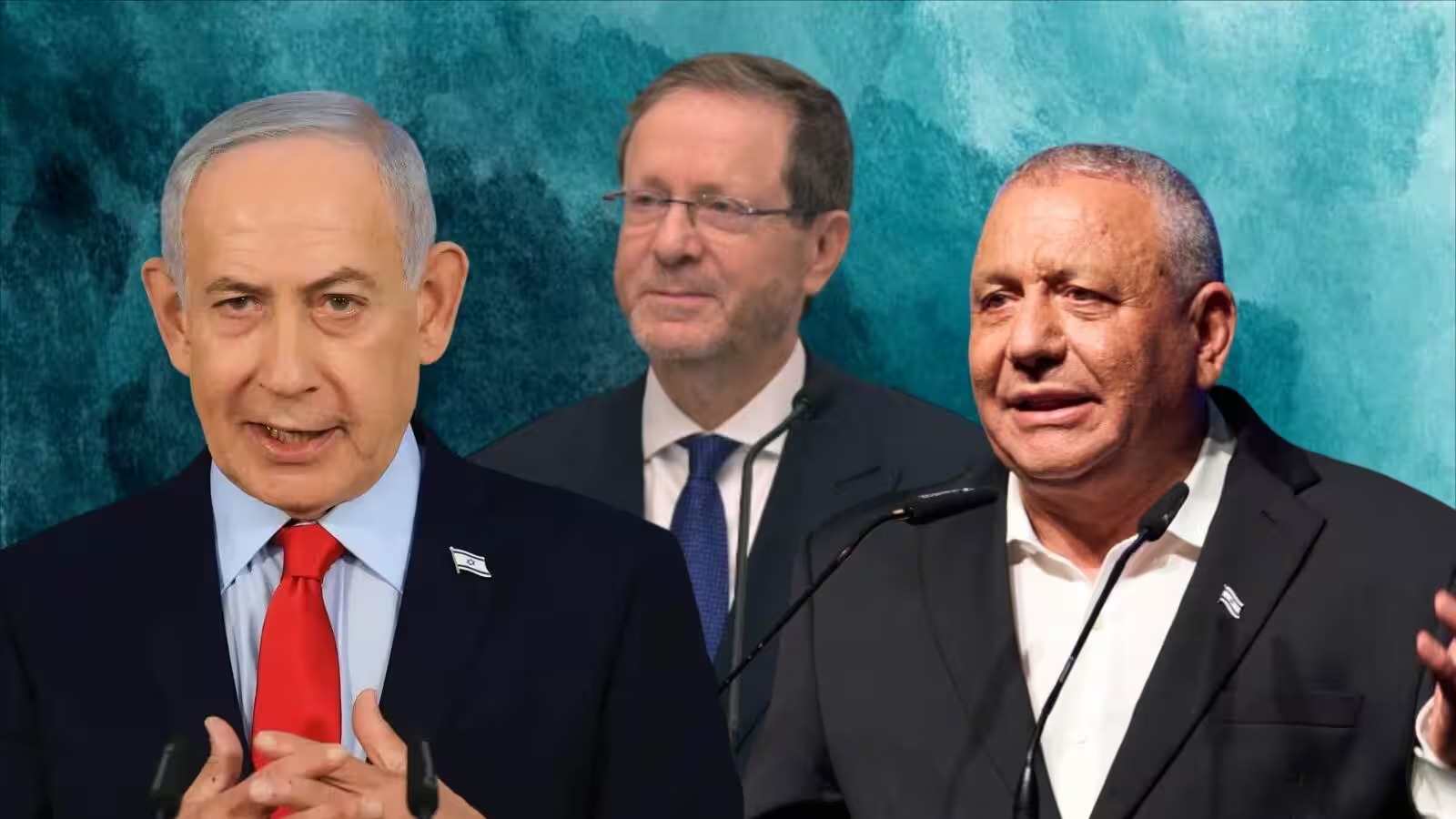
There is an earthquake in Israeli politics these days and the country is standing at a very historic and decisive juncture. After the recently concluded general elections, the deadlock between political parties has increased to such an extent that now all eyes are on Rashtrapati Bhavan. This tug of power between Prime Minister Benjamin Netanyahu and his main political rival and former military chief Gadi Eizenkot has reached its peak. Israeli President Isaac Herzog has completed marathon consultation meetings with leaders of various political parties and has made it clear that he will officially announce on Sunday who will be invited to form the next government in the country. Amidst this political upheaval, it will be very interesting to see whether the command of the country remains with Netanyahu, who has been in power for a long time, or whether a new political era is ushered in Israel by handing over the keys of power to the opposition.
President Isaac Herzog’s marathon meetings and the positions of political parties
The election results remained hung due to no party getting a clear majority in Israel’s 120-member Knesset (Parliament). After this, President Isaac Herzog started a series of talks with the heads of all elected parties in accordance with the Constitution. Unexpected equations have been seen in Israeli politics during the consultation period. On one hand, the right-wing religious coalition led by acting Prime Minister Benjamin Netanyahu has the support of a total of 53 seats, while on the other hand, the opposition parties and Gadi Eizenkot’s camp have received major support from various parties and Arab majority parties. President Herzog is mulling over which leader has the real potential to muster a majority in Parliament and deliver a stable government. The entire political fabric of Israel’s future hinges on this upcoming decision of the President.
Gadi Eizenkot got huge support and the mathematics of number of MPs
This time in the political equations, opposition candidate and leader of ‘Yashaar’ party Gadi Eysenkot has gained an unexpected lead. A total of 67 MPs (MKs) have submitted recommendations in favor of Gadi Aizenkot in the ongoing meetings before the President. In this, along with opposition parties, Arab-led parties such as ‘Ra’am’ and ‘Joint List’ have also announced their support in favor of Eysenckott. Eiseenkot may have gone far ahead of Netanyahu in this figure of numerical strength, but analysts believe that it will not be easy for him to bring together the ideologically divided parties and form a permanent coalition with a magical majority of 61. Despite this, after receiving such a large number of names, there is a strong possibility from the Presidency that they will get the first chance to form the government.
Benjamin Netanyahu’s troubles increase and future challenges
On the other hand, for Prime Minister Benjamin Netanyahu, who has ruled the country for a long time, this period is becoming the biggest battle of political survival. His party ‘Likud’ has won 27 seats in the elections as the largest single party, but including its traditional allies the total figure is reduced to 53 seats. Additionally, Netanyahu’s clan appears to be weakening due to the change in stance of some ultra-Orthodox and fundamentalist parties and the lack of immediate support by United Torah Judaism (UTJ). Although the Netanyahu camp is continuously claiming that only they can provide strong security to the country, but the way the opposition has mobilized, their path has become very difficult. If President Herzog invites the opposition camp to form a government on Sunday, the decades-old equation in Israeli politics could change forever.