 look news india

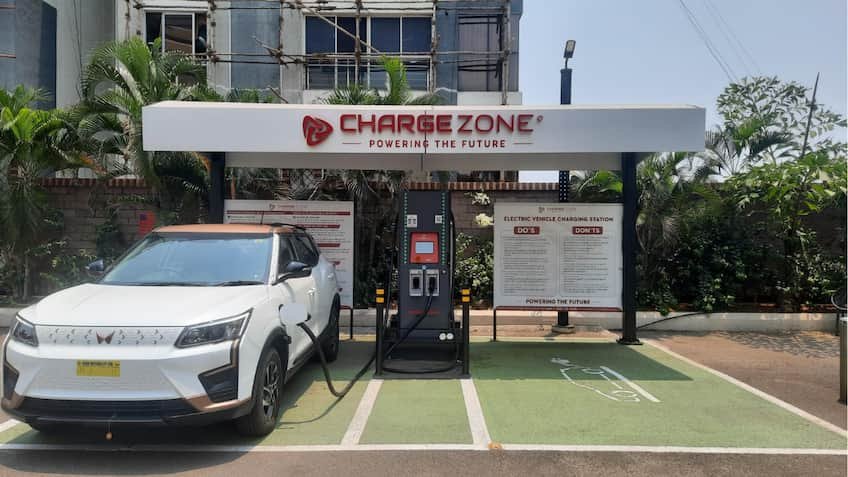
The pace of adoption of clean energy and electric mobility in India is creating new records every month. In this series, to give new strength to the electric vehicle (EV) infrastructure of the country, the leading EV charging solution company has officially announced a big investment and expansion plan at the national level. According to the company’s latest roadmap, 1,000 new public charging stations will be installed in major cities, national expressways and interstate highway corridors across the country in the coming financial year. The biggest feature of this ambitious project is its state-of-the-art charging capability, which will include super-fast and ultra-fast direct current (DC) fast chargers of up to 480 kilowatts (kW). Till now, most of the charging infrastructure in India was based on limited capacity ranging from 30 kW to 120 kW, due to which vehicles had to wait for a long time of one to one and a half hours to get fully charged. This new infrastructure of the company is going to prove to be a milestone towards eliminating the biggest concerns of passenger car owners and heavy commercial fleet operators who travel long distances on the highways i.e. ‘range anxiety’ and ‘charging down-time’.
Chargers with 480 kW capacity will be a game-changer to fully support the 800-volt architecture used in modern electric cars. The direct practical benefit of this ultra-fast capability will be that premium and modern generation electric cars with compatible compatibility will be able to charge from 10% to 80% during a brief T-break of just 10 to 15 minutes. This charging experience will come very close to the time taken to fill fuel at a conventional petrol or diesel pump. These stations are using liquid-cooled charging cables and dynamic power-sharing architecture, whereby when more than one vehicle is plugged in simultaneously, the system will supply power to each vehicle at its maximum permitted speed, intelligently balancing the grid load. Along with this, full care has been taken of universal compatibility in these chargers, under which along with CCS2 (Combined Charging System) standards, necessary charging ports for two-wheelers and three-wheelers will also be made available, so that every category of EV user can avail the uninterrupted charging facility without any technical interruption.
The biggest hesitation of customers buying electric vehicles in India has been the lack of charging points on the highways when leaving the city. The company has based its location strategy entirely on data and traffic density. Of the 1,000 new charging stations, more than 60 per cent will be installed on major national highways, greenfield expressways and industrial logistics corridors. These charging hubs will be ready at a distance of every 40 to 50 kilometers on the busiest stretches of Delhi-Mumbai Expressway, Delhi-Agra-Lucknow Expressway, Mumbai-Pune Expressway, Bengaluru-Chennai Highway, Hyderabad-Vijayawada Corridor and Golden Quadrilateral. These highway hubs are not being made just a simple plug-in point, but are being developed as comprehensive amenity zones. There will be facilities like restaurants, clean washrooms, 24-hour security monitoring, Wi-Fi and children’s play area, so that passengers can refresh themselves comfortably within 15-20 minutes of charging the vehicle.
Apart from highways, urban charging grid will be expanded in major metropolitan and tier-1 cities like Delhi-NCR, Mumbai, Bengaluru, Hyderabad, Ahmedabad, Chennai, Kolkata, Pune, Lucknow, Jaipur, Indore and Kochi. In parallel, at least 300 stations have also been planned in Tier-2 and Tier-3 cities, so that local customers in small towns and intercity cab services can easily switch to EVs. Within the cities, these stations are being set up in partnership with major malls, tech-parks, metro stations parking, multi-level car parking, major hospital complexes and large petrol retail outlets. The facility of geo-tagging and real-time slot booking of these stations at the local level will be available through the company’s mobile application, through which users will be able to check the status of empty charger at their nearest station and pre-book their charging slot even before leaving home.
All 1,000 stations will be operated on the latest version of Open Charge Point Protocol (OCPP) to make the charging process free and seamless from human intervention. Along with its mobile app, the company is also syncing data with the Government of India’s Gati Shakti Portal and National EV Charging Dashboard. State-of-the-art ‘Plug & Charge’ technology will be available at these stations. In this technology, as soon as the user plugs the cable of his compatible vehicle into the port, the station will automatically recognize the vehicle’s chassis and owner ID and charging will start immediately without any QR code scanning or OTP. On completion of charging, the fixed amount will be automatically deducted from the user’s linked wallet, UPI auto-pay or credit card and the invoice will be immediately sent to WhatsApp and email. Apart from this, to deal with power cuts, these stations are being connected to dedicated high-tension grid transformers and solar-rooftop hybrid backup, so that even in case of grid failure, the charging service remains operational 24×7 without any interruption.
This massive expansion not only brings relief to individual car owners, but will also provide unprecedented speed to the operations of India’s fast-growing e-commerce delivery network, commercial taxi fleets and interstate electric buses. Heavy commercial vehicles and electric buses plying on intercity routes of 300 to 400 kilometers will be able to get the required battery backup in just 30 to 40 minutes from the 480 kW charger, which will directly increase both fleet utilization and earnings of operators. This private initiative will be a milestone in meeting the country’s net-zero carbon emissions target and its Paris Climate Agreement commitments. It is estimated that the commissioning of these 1,000 new ultra-fast stations will save millions of liters of fossil fuel (petrol-diesel) consumption in the very first year and directly reduce thousands of tonnes of carbon dioxide emissions annually, paving the way for making the future of Indian transport greener, cleaner and economically more sustainable.