 look news india

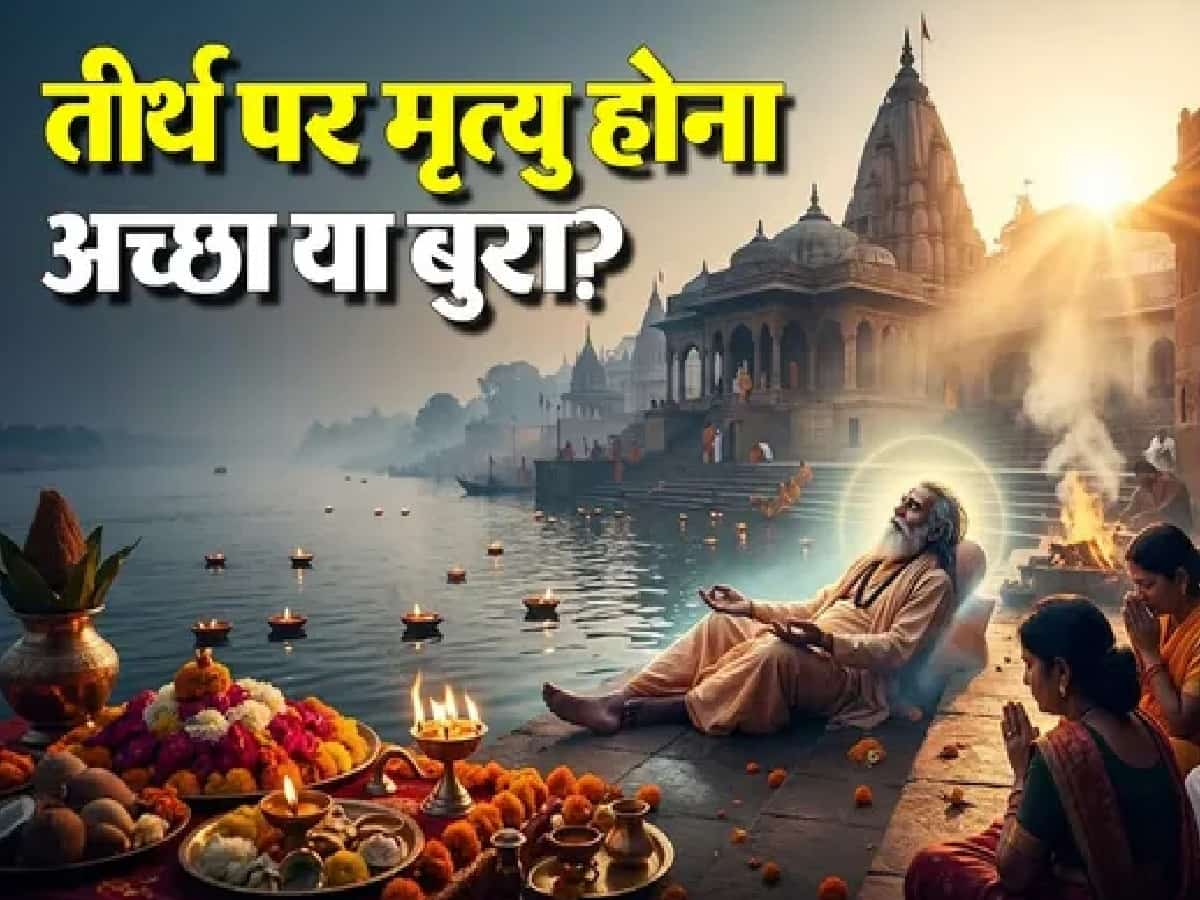
The cycle of life and death is explained in great depth in Sanatan culture, spiritual traditions and the mysteries of Garuda Purana. In this fast-paced world, every person wants to know what is the ultimate truth of this mortal body and in what direction the journey of the soul progresses after this. Often this question comes to our mind that if a person dies at a holy pilgrimage site, on the banks of Ganga or in the courtyard of an ancient temple, then what happens to his soul? Does a living being attain salvation directly by leaving his body at the doorstep of the pilgrimage or does he have to suffer the consequences according to his deeds? Considered the most authentic scriptures of Sanatan Dharma Garuda Purana A very beautiful and logical description of all these mysteries is found in. In today’s detailed article, let us know what is the fate of the living beings who sacrifice their lives at the holy places according to Garuda Purana and which are the 7 Mokshadayini Tirthas which are considered supreme in Sanatan Dharma.
Garuda Purana and Lord Vishnu’s dialogue: Does dying on a pilgrimage really bring salvation?
According to the chapters of Garuda Purana, once the great devotee of Lord Vishnu, the bird king Garuda had asked the Lord this very deep question that by the effect of what kind of charity, virtue and pilgrimage in his life, a man becomes free from this bondage of birth and death. Garuda ji wanted to know which are those holy lands or places where if any living being leaves his body, he does not have to return to this world again.
Lord Vishnu, while solving this doubt of Garuda ji, explained in detail that on this Bhoolok (Earth) there are some sacred and sacred lands rich in divine energy, which are considered to be the gateway to real salvation. The geographical and spiritual glory of these places is so great that a person who sacrifices his life there directly attains Vaikuntha Loka, the supreme abode of Lord Vishnu and is not reborn. However, along with this, it has also been made clear in the scriptures that merely being physically present in a pilgrimage is not enough, but the inner feeling of the person and his lifestyle also matter a lot.
7 sacred cities mentioned in Garuda Purana: where one does not have to take rebirth after death
In the Sanatan tradition, there is a description of seven such special cities, which are known as Saptapuris or Mokshadayini Tirthas. According to Garuda Purana, a person who leaves his body in these seven holy places gets eternal salvation. Those seven holy places are as follows:
-
Ayodhya: Ayodhya, the birthplace of Maryada Purushottam Lord Shri Ram, is considered to be a divine city situated on the banks of river Saryu, where the energy of the name Ram is present in every particle. The person who sacrifices his life here attains God in person.
-
Mathura: Mathura, the sacred place of Lord Krishna and situated on the banks of river Yamuna, is also considered as the place that provides salvation.
-
Haridwar: It is considered extremely fortunate to die in Haridwar (Mayapuri), the main gate of Devbhoomi Uttarakhand and the land of incarnation of Mother Ganga. People from all over the country and abroad come here in the last moments with the desire of salvation.
-
Kashi (Varanasi): The city of Lord Shiva and this abode of Baba Vishwanath is considered to be the most unique among the Triloki. There is an unwavering belief that Mahadev himself preaches Tarak Mantra in the ears of every living being who dies in Kashi, due to which he gets salvation.
-
Kanchi (Kanchipuram): This historical and religious city of South India is famous for its distinctive architecture and Shaktipeeths, which has been called Mokshadayini in Garuda Purana.
-
Avantika (Ujjain): Ujjain, the city of Mahakal (Avantika Puri situated on the banks of river Shipra) holds a special place among the Saptapuris, where there is a confluence of salvation and timeless practices.
-
Dwarka: By leaving the body in Dwarka, the golden city inhabited by Lord Krishna, which is situated on the coast of the sea, the soul gets the blessing of being immersed in the ocean of life.
Miraculous importance of Shaligram Shila, Dwarvati Shila and Tulsi
Garuda Purana not only mentions the places of pilgrimage, but also gives great importance to the influence of sacred objects present in the house or surroundings. According to the scripture, whatever house or place is sacred Shaligram Shila Or Dwarvati Rock If someone dies at that place, then that living being does not have to face the troubles of Yamraj and gets salvation.
Apart from this, serving the Tulsi plant, worshiping it, offering water to it, touching it and regularly praising the virtues of Tulsi plant, destroys the sins of man from many births. The one who has Tulsi leaves and Ganga water in his mouth at the last moment is considered to be sure of his salvation.
Can one attain virtue just by going to a pilgrimage? Parable of Lord Vishnu
Many times this question arises in the minds of people that will a person attain salvation just by reaching a pilgrimage site, even if his deeds are bad? Clearing this doubt, Lord Vishnu has given a very beautiful and practical example.
Lord Vishnu explained to Garuda ji that in ancient times some fishermen used to wake up every morning and visit the holy Narmada river, but still they did not attain Shivalok or salvation. The main reason for this was that the purpose of those fishermen was not to have reverence or devotion towards the river, rather their only purpose was to go to the river and catch fish and hunt them. The deep message of this parable is that merely being physically present at a holy place is not enough, but the man’s mind, his pure feelings, his intentions and his intentions are equally important.
Those holy places where death leads to a long journey to heaven.
Some other such sacred areas have also been mentioned in Garuda Purana, which do not lead to salvation, but make the living being experience heavenly happiness for a long time. By sacrificing life at these places, virtuous souls attain a high place in the heavenly world, however, after completion of one Kalpa (one day) of Lord Brahma, that soul may have to be born again on earth for the remaining journey. The main areas are:
-
Kurukshetra: This historical ground, witness to Mahabharata and Geeta, is a land of religion and action.
-
Bhrigu Kshetra and Prabhas Kshetra: Both these places of sacred mythological importance are known for devotees and holy festivals.
-
Srisailam and Mount Abu: These spiritual centers are blessed with natural beauty and ancient temples.
-
Pushkar: Pushkar, the city of Brahma ji, where the lake and temple are unique in the world.
-
Shivkshetra: Various sacred and secret areas associated with Lord Shiva.
Apart from pilgrimage, which actions bring ultimate welfare to man?
If a person’s life ends at a time when he cannot be at a pilgrimage site, it does not at all mean that he cannot attain salvation. Garuda Purana places special emphasis on the fact that a man’s best deeds are his greatest wealth.
According to the scripture, serving the needy and poor Brahmins, donating food and clothes, constructing ponds or big water bodies on the way, constructing beautiful gardens and temples, performing the last rites of an orphan or destitute person as per the rituals and following kindness, charity, religion and meditation in one’s life – all these deeds are so powerful that they provide ultimate peace and well-being to a person while alive and even after death. Therefore, pilgrimage has its own importance, but human feelings and good deeds are always paramount.