 look news india

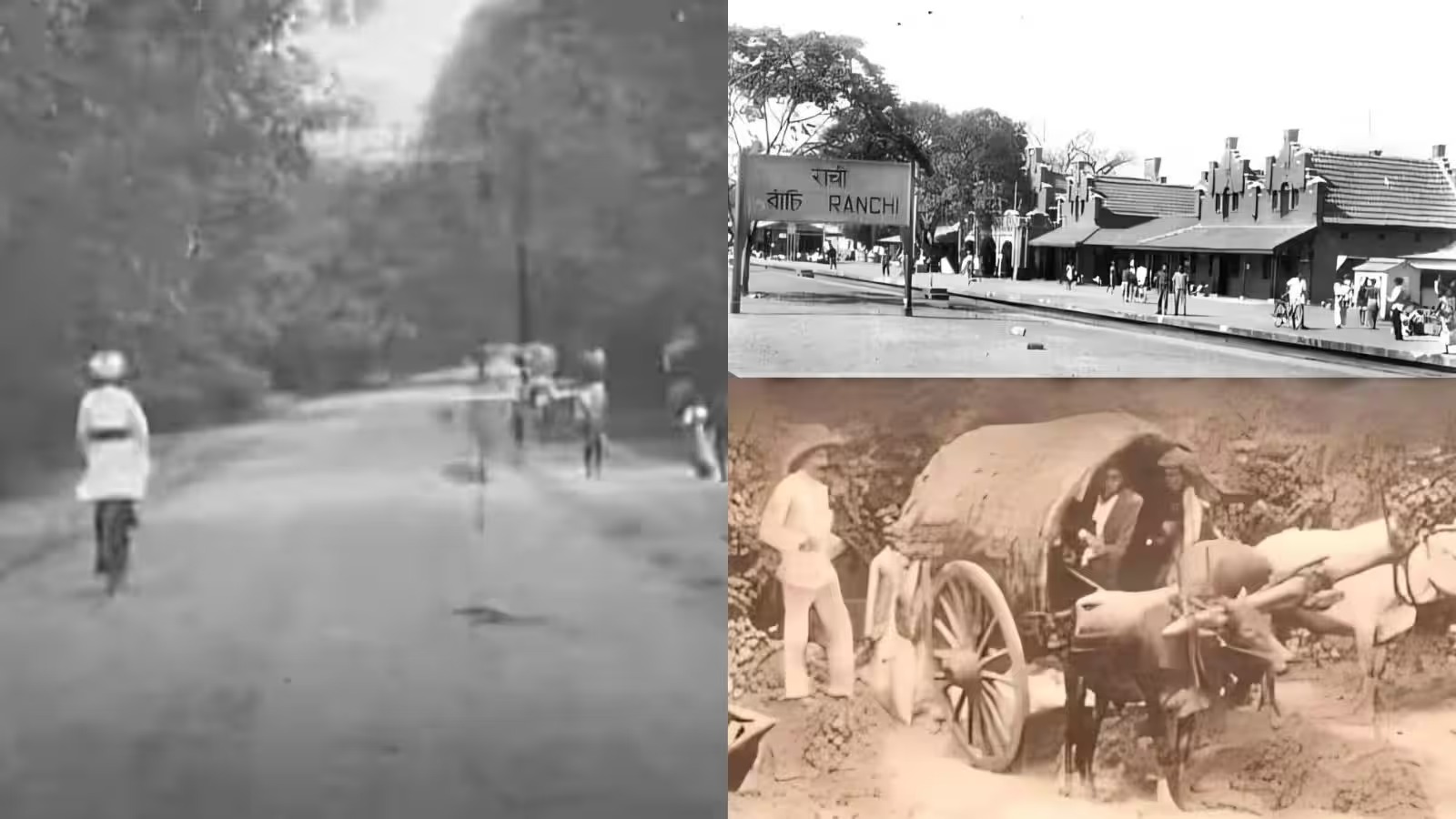
In today’s modern and fast-paced era, when we have to go to the capital Delhi, Kolkata or any part of the country, we can travel within a few hours by flight, Vande Bharat train or luxury expressway. But just imagine that exactly 120 years ago, i.e. at the beginning of the twentieth century, when there were neither paved roads in the country, nor buses running nor high-speed trains available like today, how would people from Jharkhand’s capital Ranchi and surrounding areas travel to Delhi or other big metros? If we turn the pages of history, we come to know that long before the introduction of motor vehicles or bus services, people had to either take the help of railway tracks for long distances or had to travel miles on foot and by bullock carts. Everyone is surprised to know the early transport history of Ranchi and this interesting story buried in the memories of the elders that at that time, going from one city to another was no less than a big challenge.
#1. How was Ranchi’s transport infrastructure 120 years ago? When there were no buses, bullock carts and walking were the main means of transport.
In the early decades of the twentieth century, the geographical area of Chhota Nagpur Plateau and Ranchi was considered quite rugged, surrounded by forests and inaccessible. There were no roads at that time, nor were there any public bus services like today. When administrative needs increased during the British period, efforts began to connect Ranchi with the outside world. The common people and local traders depended entirely on foot, palanquins, horses or wooden-wheeled bullock carts to move from one place to another. It would take several days just to reach small towns or villages from Ranchi, and if one had to travel to remote areas, the journey would take months.
#1. Before the arrival of bus service, rail travel became a lifeline: Know how the train journey started in Ranchi
The biggest revolutionary change in the field of transportation for the people of Ranchi came when the area was connected to the railway network. Long before the advent of roads and buses, a network of railway tracks began to be laid for freight and administrative movement to and from Calcutta and other business centers during the British rule. When the trains connecting Bengal and Bihar via Chhota Nagpur hit the tracks, people got great relief for the first time in long distance travel. The introduction of narrow gauge train service between Ranchi and Lohardaga made the lives of local residents easier. People going to Delhi or Calcutta earlier used to reach the main junctions through local trains and from there proceeded towards their destination through Imperial Mail or other express trains.
#1. Interesting stories of the long journey from Ranchi to Delhi and Kolkata on foot and by bullock cart.
According to historians and old documents, before the start of railway service, traveling from Ranchi to Calcutta (now Kolkata) or Delhi, the major religious and political center of North India, was like winning a war. People used to walk in groups to avoid wild animals and robbers. There were no bridges or roads to cross the dense forests, rivers and mountains on the way, rather people used to cross the river on foot following the flow of the river. It is recorded in the memoirs of many elders that it used to take months for bullock carts or foot travelers to cover the distance from Ranchi to Calcutta. Rest was taken at stops on the way and thirst was quenched with water from wells.
#1. Modern transport revolution and today’s speed: How much has travel changed from the past?
With time, technology changed and gradually motor vehicles, buses and eventually modern highways and airport developed in Ranchi. While today we can measure the distance from Ranchi to Delhi or Kolkata in a few hours, that 120 years old period of struggle makes us realize how many difficulties our ancestors faced and laid the foundation of this modern society. The transportation history of Ranchi is a witness to how human civilization has covered this long and wonderful journey from tracks to flights, overcoming every obstacle of nature for its ease and development.