 look news india

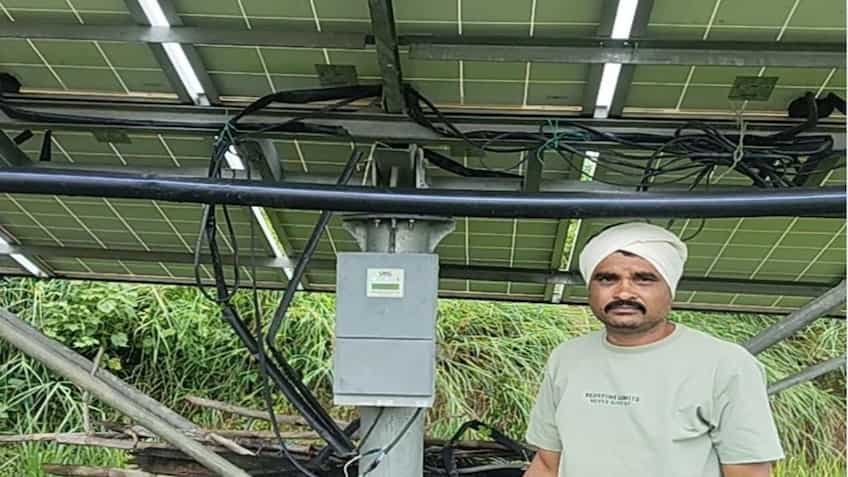
Stories of struggle and deprivation often emerge from the soil of rural India, but when traditional farming is combined with modern technology and solar energy, the same struggle becomes an example of spectacular success. Irrigation has always been the biggest headache for millions of farmers farming in rural areas of the country. Sometimes due to unannounced power cuts, sometimes burning of motors due to low voltage, sometimes due to skyrocketing diesel prices, the irrigation budget absorbed the entire agricultural cost. When a progressive farmer facing such a difficult situation decided to install a solar pump in his farm with government assistance, not only his farming method changed but also a revolutionary change was seen in his economic condition. Today, the same fields which once yearned for every drop of water and where pockets were empty in the name of running diesel pumps, are flourishing thanks to modern solar pumps and the annual income of the farmers has more than doubled compared to before.
Till a few years ago, farming in this area was proving to be a loss-making deal. The farmer had about four to five acres of fertile land, but no permanent and economical source of water was available. There was no fixed time for electricity received from the local electricity grid. Many times electricity came on at 2 o’clock in the night, due to which one had to stay awake at night to water the fields amidst the fear of bone-chilling cold or poisonous insects. When the transformer burnt out or the line remained out of order for weeks, we were forced to install a rented diesel engine or tractor-driven pump. With diesel prices being above ₹90 per litre, the direct expense for one-time irrigation of an acre of land was ₹800 to ₹1,000. By irrigating wheat, paddy or sugarcane four to six times in the entire season, lakhs of rupees were wasted in fuel alone. When the produce was sold in the market after the harvest, only the money left to cover the cost was left and the profit was negligible.
This big turning point in the life of the farmer came when he got information about the ‘Pradhan Mantri Kisan Energy Security and Upliftment Mahabhiyan’ i.e. PM-KUSUM scheme being run by the Central and State Government through the Agriculture Department. Under this ambitious government scheme, farmers are given huge financial assistance to install solar pumps in their fields. As per the provisions of the scheme, 30 per cent of the project cost is borne by the Central Government and 30 to 50 per cent is subsidized by the State Government. In this way, the government bears about 60 to 80 percent of the total cost in the form of subsidy and the farmer has to invest only 10 to 20 percent of the amount from himself, for which easy agricultural loans are available from banks. Without any delay, the farmer did online registration for 5 Horsepower (HP) capacity solar submersible pump. After departmental verification and paper formalities, the installation of gleaming solar panels and controller on his borewell was completed within a few weeks.
After the installation of solar pump, the entire atmosphere of the farm changed. Now the farmer does not have to wait for electricity to come late at night for irrigation, nor does he have to stand in queues at the petrol pump carrying a diesel can. As soon as the first rays of the morning sun fall on the solar panels, the inverter controller gets activated and the motor starts spewing water in a strong stream from the ground. Water is available continuously without any interruption from eight in the morning to five in the evening. The biggest thing is that there is no monthly electricity bill for this energy nor is there any daily expense of purchasing diesel. The brighter the sun, the better the water pressure. The farmer who was spending ₹ 15,000 to ₹ 20,000 only on diesel and electricity in the first month, his entire operating expenses reduced to almost zero. In the very first year, the farmer recorded a net savings of around ₹70,000 to ₹80,000 directly in his pocket.
The uninterrupted and free availability of water encouraged the farmers to move out of the traditional pattern of farming. Earlier, due to fear of water shortage, they used to grow only traditional crops like paddy and wheat, which required more water but had limited profits. Now that he had ample water available throughout the day, he started cultivating seasonal vegetables, cash crops like watermelon, melon, cucumber, tomato and capsicum in two acres of his land. Along with this, he also prepared the plantation of papaya and guavas on the ridges of the farm. Due to regular and timely irrigation, the quality and yield of crops increased by 25 to 30 percent. Whereas earlier it was difficult to grow even two crops in a year, now they are growing different crops in three to four cycles in the same year. They started getting cash income every week from the daily sale of vegetables in the local markets, which completely changed the standard of living of the family and their total agricultural income doubled from before.
The farmer showed another wisdom with the solar pump; Instead of providing water to the fields through open flow (flood irrigation), he added Micro-Irrigation system i.e. drip and sprinkler system. Even on this he got additional subsidy from the Horticulture Department. Through drip irrigation, water reaches the roots of the plants drop by drop, which saves more than 50 percent of groundwater and weeds do not grow in the field. Also, soluble fertilizer (fertigation) started being given through this drip pipeline, which prevented wastage of fertilizer and provided balanced nutrition to the plants. The controlled power of solar pump and precise drip irrigation together made the efficiency of farming of international level. The land which was once cracked due to drought, today remains covered with a green blanket for twelve months of the year.
This change is not limited only to the economic prosperity of a farmer, but it has also made a big contribution in the protection of the environment. The poisonous smoke and carbon dioxide released into the atmosphere by the burning of hundreds of liters of diesel every month has completely stopped. Solar pump is a silent and green energy system, which does not cause any noise or pollution. Apart from this, solar panels have a life span of 25 years and require very little maintenance; Just once a week the dust accumulated on the panels has to be washed with clean water. Seeing the miraculous success of this farmer, dozens of other farmers from nearby villages are also being inspired to replace diesel engines in their fields and install solar systems and their fields have now become like an agricultural study center at the local level.
If you are also a farmer and want to reduce your costs and increase your income by installing solar pumps in your fields, then it is very simple to apply under the PM-Kusum scheme. For this, it is necessary to have Khatauni of agricultural land in the name of the applicant and an already functioning borewell or water source. Documents required for the scheme include farmer’s Aadhar card, copy of bank passbook, land ownership documents (Khasra/Khatauni), passport size photo and mobile number. To apply, you have to go to the official portal of your state’s agriculture department or renewable energy development agency (like UPNEDA in Uttar Pradesh, RREC in Rajasthan, MPUVNL in Madhya Pradesh, etc.). After registering on the portal, you have to select 2 HP, 3 HP, 5 HP or 7.5 HP capacity as per your need. After selection by the government on lottery or first-come-first-served basis, the challan for farmer contribution is deposited and within a few weeks the entire solar system is installed on the farm by authorized vendors with free installation.