 look news india

In the months of December to February, when a bone-chilling cold wave starts spreading from the plains of the country to the hilly states of North India, normal life comes to a complete halt. In the mountains, when the mercury falls below zero to minus 5 degrees to minus 10 degrees, water pipelines freeze and several feet of white snow is spread all around, then most people are forced to huddle indoors with the help of heaters and bonfires. It is generally believed that the pace of work and business slows down in extreme cold, but in this snowy weather, there are some smart businessmen for whom this sub-zero temperature is no less than the treasure of Kubera. Amidst this severe cold in the major tourist destinations like Kullu-Manali, Rohtang, Shimla of Himachal Pradesh, Gulmarg and Pahalgam of Kashmir and Auli of Uttarakhand, the business of ‘Snow Gear, Winter Suit and Waterproof Boots Rental’ has become such a money printing machine, where by incurring a nominal one-time cost, the businessmen are putting the entire year’s huge income in their pockets in just three to four months of the season.
The biggest strength of this unique business is the human need of millions of tourists coming from the plains of the country and the inevitability of the weather. 95 percent of tourists coming to the mountains to witness snowfall from warm or temperate areas like Delhi, Mumbai, Gujarat, Rajasthan and Punjab do not have special clothing and technical equipment to walk in snow of minus 5 degrees. People reach Solang Valley in Manali or Gulmarg in Kashmir wearing normal jeans, sports shoes and light jackets, but as soon as their feet fall in two feet deep snow, the shoes get wet and the fingers start becoming numb due to the blood freezing cold. In such a situation, tourists have only two options—either they spend ₹8,000 to ₹15,000 from a branded store and buy heavy snow suits, waterproof trekking boots and snow goggles, which will be of no use when they return home, or they can rent all these items for the whole day from local shops by paying only ₹300 to ₹600. Just this immediate compulsion and convenience of the tourists turns this rental business into an industry with unlimited profits.
If we delve deeper into the economics and cost structure of this business, it is completely different from the traditional retail business because in this the goods do not expire after being sold, rather the same goods are returned to the shop several times a day after collecting rent. A typical snow kit includes an all-in-one waterproof jumpsuit (or jacket-pants set), long rubber gumboots, waterproof thermal gloves, and snow goggles with ultraviolet protection. The cost of purchasing a high quality waterproof snow suit comes to just between ₹700 to ₹1,000 when picked up in bulk from the wholesale markets of Ludhiana, Gandhi Nagar in Delhi or Surat. Whereas gumboots are easily available for ₹150 to ₹250 and gloves and goggles for ₹50 to ₹100. That means a complete snow kit can be prepared at a total cost of around ₹ 1,200 to ₹ 1,500. Now look at the mathematics of earning; During the peak winter season when there is fresh snowfall, a day’s rent for a kit ranges from ₹300 to ₹800. This simply means that after renting for just two to three days, the entire original cost of the kit is recovered. After this, every time that suit is rented for the next 90 to 120 days, 100% of the money goes directly into the shopkeeper’s coffers as pure profit.
The scale of this business in snowy tourist hubs can be gauged from ground data. Areas like Solang Valley, North Portal of Atal Tunnel, Kufri and Sonamarg receive 10,000 to 25,000 tourists every day during the season. If a mid-scale rental shop has a stock of 200 to 300 snow suits, there is not a single suit left vacant in the shop during the peak days of Saturday, Sunday and New Year or Christmas. Even if 250 suites are offered at an average rent of ₹400, the direct gross income for one day comes to ₹1,00,000 (one lakh rupees). Additionally, shopkeepers also rent out basic kits for sledding, tube riding, and skiing, which are charged separately at ₹300 to ₹500 per ride. There is a direct tie-up of 20-30% commission with local taxi drivers, guides and hotel agents, due to which tourist vehicles stop directly outside these identified shops. Thanks to this strong syndicate, even a small shop can easily achieve a net turnover of ₹20 lakh to ₹50 lakh from the end of November to the beginning of March.
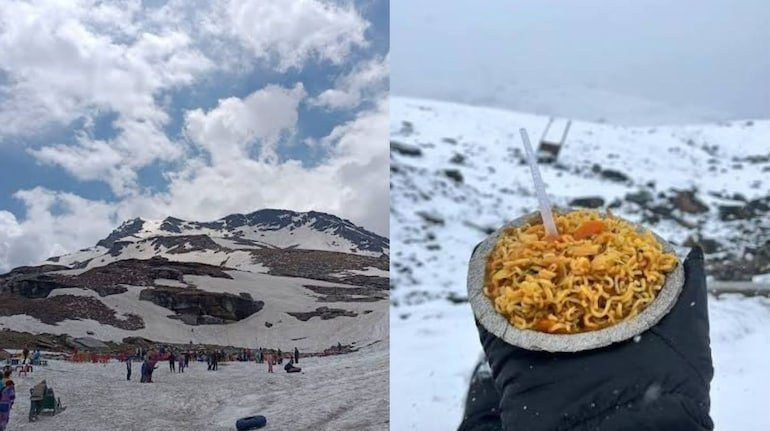
Along with snow dress rental, many other small businesses in the snowy valleys are also earning huge profits by taking full advantage of the minus 5 degree temperature. Hot tea, Kashmiri Kahwa, soup, corn and Maggi which can be made in two minutes are like nectar for the tourists shivering amidst snowfall. Tea Kulhar which is sold for ₹ 10 in the plains and Maggi which is priced at ₹ 14, is sold at the rate of ₹ 50 to ₹ 100 per plate at these snowy points. Due to extreme cold people constantly consume hot beverages to keep the body warm regardless of the cost. Additionally, hotels and homestays in hilly areas charge extra for ‘portable room heaters’ and traditional ‘Kangri’ or blowers using charcoal. Many local youth earn ₹ 500 to ₹ 1,000 in cash in just 10 minutes of work by giving ‘jump-start’ to the batteries of tourist vehicles when their batteries die in the snow and by tying iron chains (snow chains) to the wheels on icy roads.
Whereas earlier this business used to run only on roadside brokers and signboards, now the new generation of young entrepreneurs are giving a digital form to this traditional business. Businesses are now strengthening their digital visibility on Google My Business (Google Business Profile) by using local keywords like ‘Best Snow Dress Rental in Manali’ or ‘Gulmarg Ski Gear on Rent’. As soon as the Snowfall Alert is issued by the Meteorological Department, attractive reels of snow covered valleys are posted on social media and Instagram, due to which young tourists, influenced by this, make advance booking of snow suits and adventure packages as per their size through WhatsApp and websites. This modern digital strategy has eliminated middlemen’s commission and made shopkeepers’ profits more secure by receiving advance payments directly from customers.
If a person wants to try his hand in this lucrative and high profitable winter business, he has to take special care of some basic things. First of all the choice of location is very important; The shop should always be at the entrance of the main highway leading to the tourist destination, parking area or view point where vehicles slow down. The second most important aspect is cleanliness and hygiene. In the last few years, the awareness about cleanliness among the tourists has increased, hence it is important to have a commercial steam sanitizer and heavy-duty dryer machine in the shop, so that after using the suit by one tourist, it can be immediately sanitized and dried and given to the next customer with absolutely fresh fragrance. Apart from this, during off-season i.e. during summer, silica gel and vacuum storage bags should be used to store these clothes safely by protecting them from moisture and insects, so that the stock once purchased continues to earn bumper profits for at least 3 to 4 winter seasons without spoiling.