 look news india

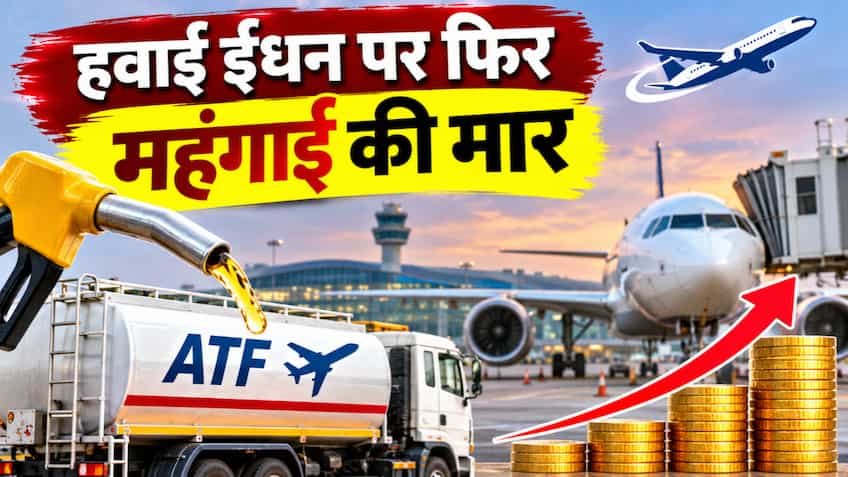
Just on the cusp of the festive season and winter holidays, air travelers have been dealt a major blow. Government oil marketing companies (OMCs) have increased the prices of Aviation Turbine Fuel (ATF) by 1% from November 1. This is the fourth consecutive month when aviation fuel prices have increased in the country. After August, September and October, now due to increase in jet fuel prices in November also, a big increase in the operating costs of airline companies is considered certain. Since fuel alone accounts for 40 to 45 percent of the total operating expenses of any airline, this latest decision of the oil companies is almost certain to have a direct impact on the ticket prices of domestic and international flights in the coming days.
According to the latest notification issued by the Indian Oil Corporation (IOCL), the price of aviation turbine fuel in Delhi has been increased by approximately ₹ 1.37 per liter (approximately 1%), after which the price of jet fuel in the capital has increased to the level of ₹ 138.50 per liter (approximately ₹ 1,38,500 per kiloliter). Major metros like Mumbai, Kolkata and Chennai have also seen a proportionate rise in prices due to different rates of local sales tax and value added tax (VAT) in different states. In the country’s financial capital Mumbai, ATF rates have now crossed ₹ 1,24,000 per kilolitre, while in Kolkata and Chennai too, airlines have to pay extra money for fuel due to local taxes. This cumulative increase over four consecutive months has significantly affected the financial mathematics of the aviation industry.
The prices of ATF and commercial gas cylinders are reviewed by domestic oil companies on the 1st of every month based on international benchmarks and foreign currency exchange rates (rupee vs dollar). Refining margins have remained under pressure due to fluctuations in Brent crude oil prices and geopolitical tensions in the global market for the last few weeks. Along with this, there has been a strengthening in the benchmark rates of aviation fuel in the international energy markets. Movements in the value of the Indian rupee against the US dollar have also increased the landing costs of imported crude oil and petroleum products. To balance these international factors, oil companies have to continuously revise the prices of ATF in the domestic market.
The demand for flights is already at its peak during the festive season for trips after Chhath, Diwali and winter vacation at the end of the year. In such a situation, due to the cost of jet fuel, there is direct pressure on the profits of airlines. Aviation experts say that budget airlines like IndiGo, SpiceJet and Akasa Air have no other option but to pass on this increase in operating costs to passengers. It is believed that in the coming days, instead of increasing the base fare, the airlines may increase the fuel surcharge on tickets by additional ₹ 300 to ₹ 600. Especially on busy routes like Delhi-Mumbai, Delhi-Bangalore, Mumbai-Goa and Delhi-Patna, the prices of tickets booked at the last minute may become more expensive by 10 to 15 percent.
The Indian aviation sector is already grappling with several structural challenges. On one hand, due to disruption in the supply chain of aircraft engines globally, many aircraft are grounded, while on the other hand, airport handling charges and lease rent are continuously increasing. At such a sensitive time, the increase in fuel prices for four consecutive months is adversely affecting the cash flow of airlines. Analysts believe that if international crude oil prices do not moderate, there may be a significant decline in the profit margins of airline companies in the third quarter (Q3) of the current financial year, which may slow down the pace of rapid recovery of the aviation industry.
In this latest price revision done on November 1, oil companies have not only made aviation fuel costlier, but have also increased the price of 19 kg commercial LPG cylinder used in hotels, restaurants and dhabas by ₹ 10. However, it is a matter of relief for the common domestic consumers that there has been no change in the prices of 14.2 kg domestic LPG cylinders. Along with this, retail prices of petrol and diesel have also remained completely stable across the country. In such a situation, the immediate shock of fuel inflation has been limited only to the aviation sector and commercial establishments related to outside eating and drinking.
If you are planning air travel in the coming weeks or for New Year celebrations, travel experts advise not to delay ticket booking any longer. Typically, as the date of travel approaches and the increased fuel prices are fully implemented into the system, last-minute dynamic fares skyrocket rapidly. Additionally, passengers can mitigate the impact of increased ticket rates to a great extent by choosing flights on non-peak days like Tuesday or Wednesday, taking connecting flights or using reward points and discount coupons available on various credit cards and travel portals.