 look news india

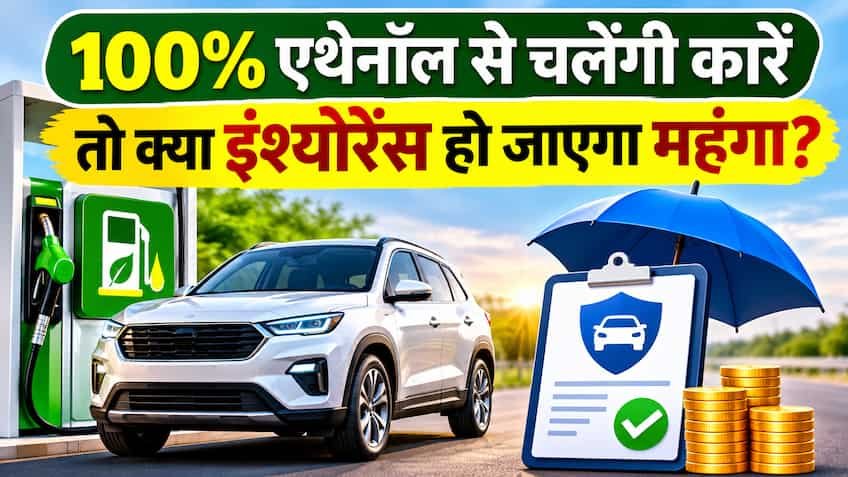
100% Bio-Ethanol (E100) powered Flex-Fuel Vehicles are being increasingly promoted by the Government of India to reduce dependence on crude oil imports and promote green energy. Automobile giants like Toyota, Maruti Suzuki and Tata are now preparing prototypes and flex-fuel engines running on 100% ethanol. While on one hand, cheaper alternative fuel will save common drivers from the heavy expenditure of petrol, on the other hand, a new technical and financial question has started arising in the minds of car buyers and vehicle owners: Will the insurance premium of cars running on 100% ethanol be more expensive than normal petrol-diesel cars? And will the ‘Engine Protect Add-on Cover’ available in the insurance policy be able to protect your pocket from any ethanol related damages?
As per insurance regulator IRDAI and the existing underwriting rules of motor insurance companies, third-party insurance rates are not increased directly based on the fuel type alone (Ethanol, CNG or Petrol). However, when it comes to ‘Own Damage’ premium, insurance companies may set a slightly additional premium for the following reasons:
-
Initial cost of new flex-fuel technology: Cars running on 100% ethanol are fitted with anti-corrosive fuel tanks, stainless steel fuel lines, special fuel pumps, special injectors and advanced electronic control units (ECU). The higher manufacturing cost of these specific parts increases the Insured Declared Value (IDV) of the car, which may result in a slight increase of 5% to 10% in the total premium.
-
Underwriting Risk of Mechanical Damage: Insurance companies classify new technological innovations as ‘higher risk’ in the initial years. Just as insurance companies initially charged additional premiums for electric vehicle (EV) batteries, a small additional burden may be imposed to offset the higher cost of spare parts and repair bills for ethanol engines.
Ethanol is basically an alcohol-based fuel prepared from sugarcane juice, corn and biomass. From a chemical perspective, ethanol presents two major challenges:
-
Hygroscopic Nature: Ethanol absorbs moisture i.e. water particles from the air very fast. If fuel is left in the tank for a long time, ‘phase separation’ can occur, which puts the fuel line and internal metal parts at risk of rusting.
-
Solvent Effect: Ethanol has a solvent-like effect on the rubber gaskets, seals and plastic hose pipes used in typical older cars, causing them to harden and crack over time. That’s why the company already uses ethanol-resistant metals and components in its factory-fitted 100% flex-fuel cars.
A normal comprehensive car insurance policy only covers the cost of the engine damaged due to road accident, fire, theft or natural calamities. If the car engine seizes due to rain water or lubricant leakage, the claim is rejected outright under the normal policy. right here Engine Protect Cover (Engine Protection Add-on) comes in use.
-
Hydrostatic lock protection: If water enters the engine via exhaust or intake while driving on waterlogged roads and engine seizes, Engine Protect Cover covers the cost of complete repair or replacement of piston, connecting rod and crankshaft.
-
Accidental Oil Leakage: If the oil chamber gets broken due to hitting a stone or bumper from below and the engine block gets jammed due to running without engine oil, then this add-on covers the bill worth lakhs of rupees.
-
Wrong Fuel Ingress: If non-compliant fuel is accidentally poured at the petrol pump and it suddenly chokes or seizes the engine, many premium insurance companies pass a claim for fuel system flushing and repair of parts under the Engine Protect add-on.
Here, vehicle owners need to understand an important legal and technical nuance. Insurance companies only cover any unexpected, sudden and accidental loss:
| type of loss | general insurance | With Engine Protect Add-on | Actual status of claim |
| Engine breakdown after accident | will cover | will cover | 100% approved |
| Engine seizes due to water entering flood/waterlogging | will not cover | will cover | Approved (main condition of add-on) |
| Sudden failure due to wrong filling of fuel | will not cover | covered in most | accepted subject to conditions |
| Gradual corrosion or wear in the fuel line over the years | will not cover | will not cover | Discard (Gradual Wear & Tear) |
| Forced filling of E100 despite not being compatible | will not cover | will not cover | Dismissed (Negligence) |
If your car is not 100% ethanol compatible from the factory (like older vehicles before 2023) and you fill it with high ethanol blend, which leads to wear and corrosion of pipes in the long run, then the surveyor will consider it as ‘Natural Wear and Tear’ or ‘Negligence’ and will reject the claim. But if your vehicle is a factory-built flex-fuel car and an accidental fuel system leakage or water ingress causes the engine to shut down, the Engine Protect add-on will completely save you from a blow of ₹50,000 to ₹2 lakh on your pocket.
Whenever you buy a flex-fuel or E100 compatible car in the future, it would be wisest to have these three add-ons along with your basic policy:
-
Engine Protect Cover: To provide financial protection to the internal mechanical parts of the engine, gearbox and differential.
-
Zero Depreciation: So that the insurance company does not make any deduction on replacement of plastic, fiber and rubber parts and gets full 100% claim.
-
Roadside Assistance (RSA): For immediate on-site mechanic and free towing facility in case of fuel choking or breakdown in any remote area.