 look news india

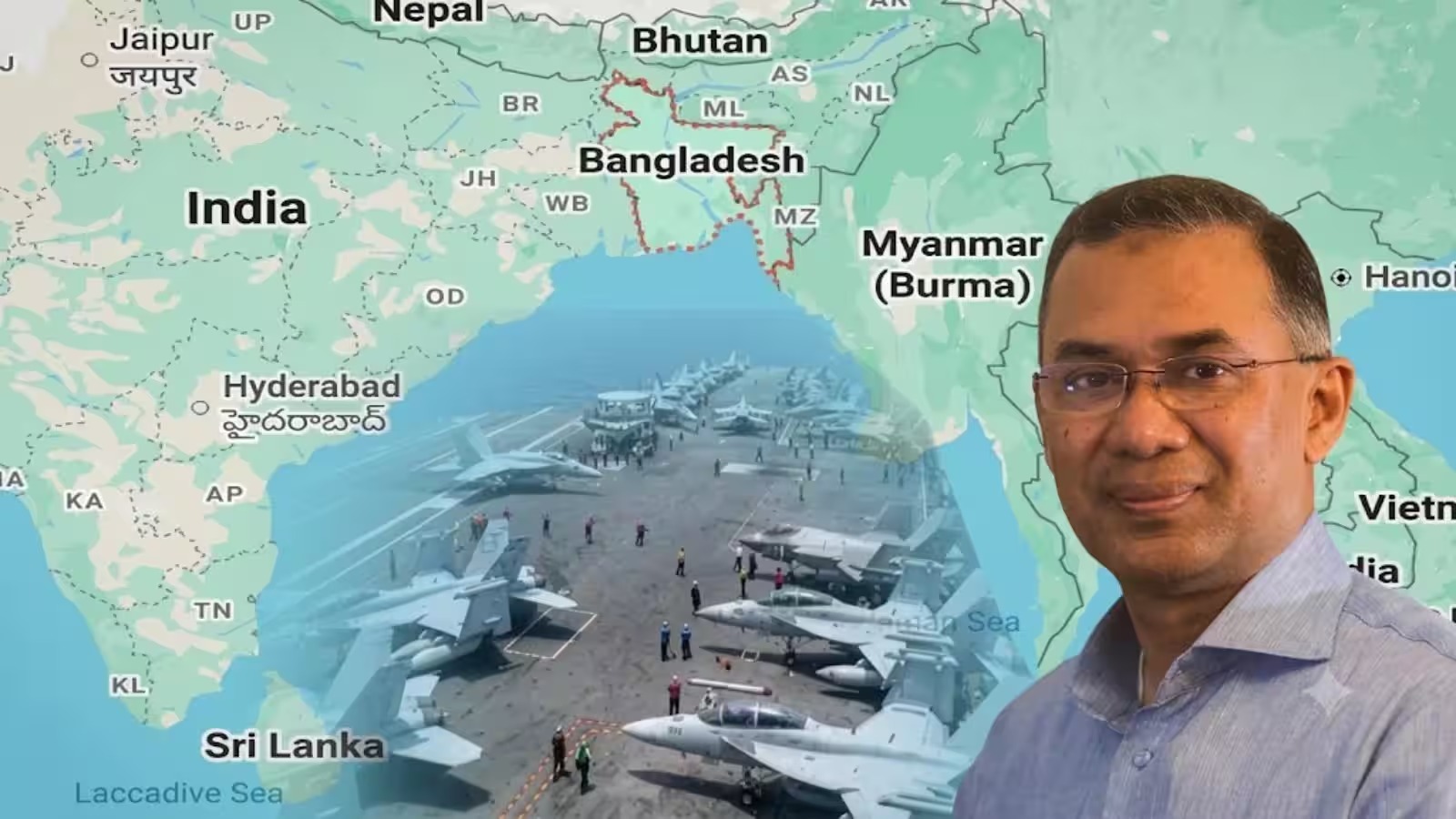
A huge stir has once again intensified in the geopolitics of South Asia, as the US military’s activity and strategic intervention in the Bay of Bengal region is continuously increasing. According to recent diplomatic reports, the United States is putting strong diplomatic pressure on the new government of Bangladesh to accept historic and sensitive defense agreements (such as GSOMIA and ACSA). If Washington is successful in these strategic efforts, the US will get direct and comprehensive access to strategically important ports and regional airbases like Chittagong and Matarbari. After this major development, concerns have increased significantly in the strategic circles of the Indian Defense Ministry and security agencies, because such a permanent or semi-permanent naval presence of America would be very close to the eastern seaboard of India, which creates a new and serious geopolitical equation in terms of the national security of the country.
Why is America expanding its presence in the Bay of Bengal and what is its strategic significance?
Experts in global politics believe that America had been trying to strengthen its hold in the Bay of Bengal for a long time to counter China’s growing aggressive influence and naval expansion in the Indo-Pacific region. Bangladesh is geographically located at a junction that connects South and South-East Asia. America wants to take full advantage of this geopolitical situation and make such basic agreements with the Bangladeshi administration in the name of defense cooperation, so that its navy and intelligence agencies can get unhindered movement in this region. Under these proposed agreements, the avenues for movement of American warships, exchange of military equipment and sharing of classified intelligence will be completely opened, due to which American dominance will be established in this entire aquatic area.
India’s increased concerns: security of the North-East and the problem of China factor
It is natural for India’s strategic planners to lose sleep over this possible entry of the US Army through Bangladesh. India’s security policy has always recognized that excessive and permanent military presence of external superpowers in the Indian Ocean and Bay of Bengal region is not conducive to regional stability. On one hand, China has already been trying to encircle India through the ports of Myanmar, Sri Lanka and Bangladesh under the String of Pearls strategy, while on the other hand, America’s establishment in this region through defense agreements has become a ‘double challenge’ for India. If Chittagong or other ports become centers of US strategic activities, the security sensitivity of India’s eastern seaboard and northeastern states will increase manifold, as this region is located very close to the Indian mainland.
Increasing foreign pressure on Dhaka and challenge of diplomatic balance
At present, there is a heated debate in the political and diplomatic circles of Bangladesh on how the country should strike a balance amid this strategic tug-of-war between the superpowers. Bangladesh’s foreign policy has traditionally been based on the principle of “friendship with all, enmity with none”, but the continuous pressure being exerted by the US administration regarding defense pacts has created major threats to Dhaka’s complete strategic autonomy. Analysts also say that coming under the ambit of these agreements will not only change the relations between America and Bangladesh, but a sharp reaction can also be seen from Beijing, because this strategic breach of America in the midst of China’s economic investment and debt trap is also directly challenging the dragon.
What effect will this have on regional politics and diplomacy in the coming days?
It will be very interesting and important to see in the coming weeks and months what final stance the Bangladeshi leadership takes on the US defense proposals. This is the time for India to take diplomatic steps very carefully. New Delhi will not only have to strengthen its high-level strategic dialogue with the US side, but also deepen its traditional, cultural and bilateral relations with Dhaka in a way that India’s security interests are protected. This new game of balance of power in the Bay of Bengal is going to play the most decisive role in deciding the condition and direction of the future security architecture of South Asia.