 look news india

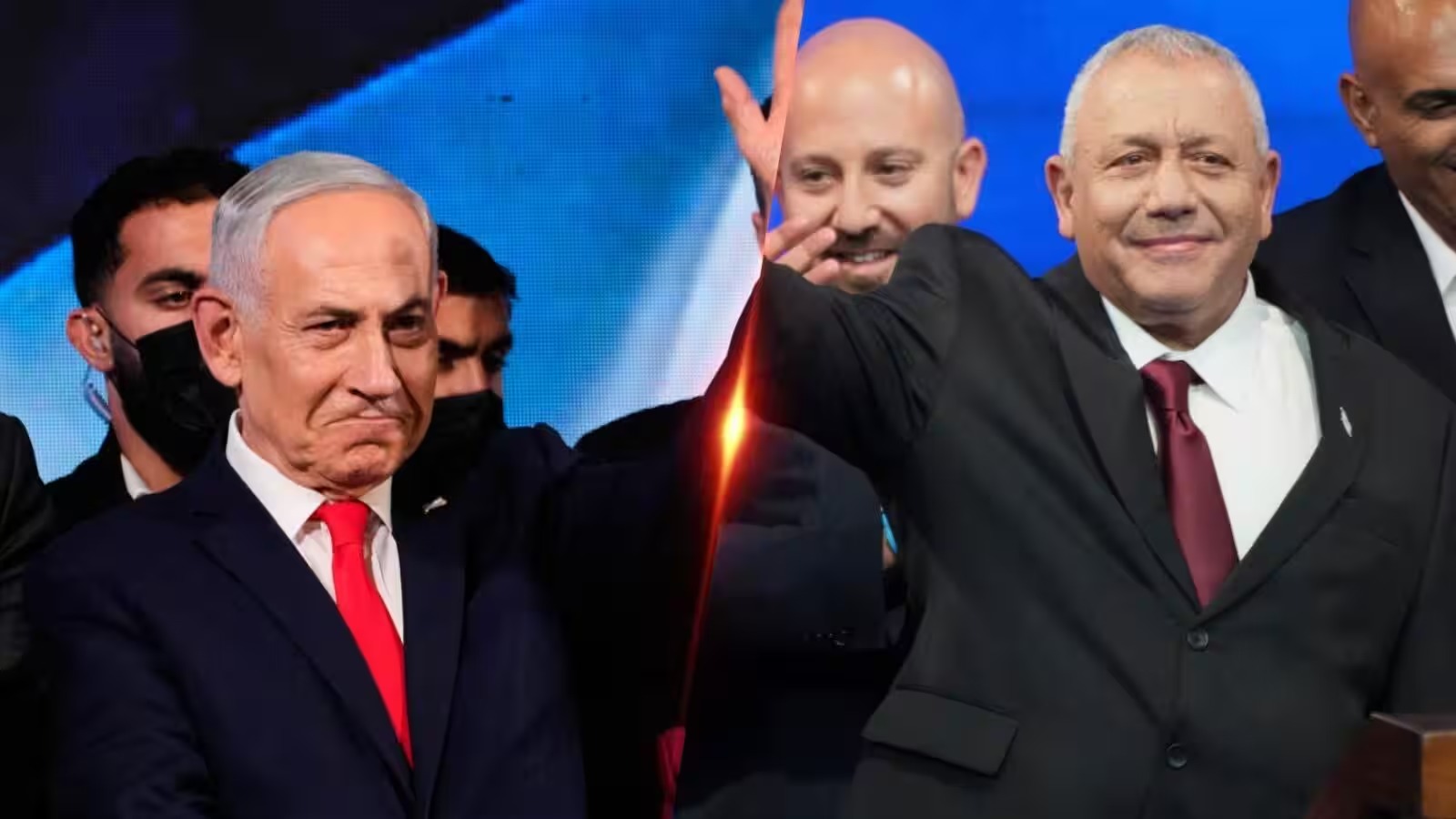
The results and initial trends of the general elections in Israel have once again brought the country’s politics to a major turning point. The magic number of 61 seats required to form the government in the 120-seat Knesset does not seem to be easily achieved by any group, due to which a hung parliament-like situation has arisen in the country. Both current Prime Minister Benjamin Netanyahu (Likud Party) and former army chief Gadi Eisenkot, who is the face of the opposition coalition, are staking claims, but due to lack of a clear majority, the key has now fallen into the hands of small parties and independent groups. Amidst this serious political deadlock, 5 main political options are emerging regarding the future government of Israel.
Leader of opposition parties Gadi Eysenkot has advocated the formation of a new government, claiming a wave of change in the elections. If Eisenkot brings together non-Netanyahu parties like Yashar, Yair Lapid and Naftali Bennett’s B’Yachad, Avigdor Liberman’s Yisrael Beytenu and The Democrats, he may get his first strong chance at forming a government. However, this group also has a tough challenge to complete 61 seats on its own, for which they will have to make peace with other small and radical political factions.
Benjamin Netanyahu, who has been in power in Israel for a long time, has the option of forming a government by keeping his Likud party at the center. Netanyahu is seeking to secure a majority by uniting his old allies—such as ultra-Orthodox (Shas and United Torah Judaism) and hard-right factions (the parties of Itamar Ben-Gvir and Bezalel Smotrich). But, if the total seats of his group remain less than 61, then it will prove very difficult for Netanyahu to sit on the chair of Prime Minister again.
Under the Israeli parliamentary system, forming a government does not always require an absolute majority of 61 seats, but only winning a vote of confidence in the parliament. If the opposition coalition led by Eisenkot becomes the largest faction, they can form a ‘minority government’. In this situation, the Arab-led parties (Ra-Aam and Joint List), which have a large vote bank of 20 seats, can bring Eysenkot to power without being a direct part of the government, either with outside support or by abstaining during voting. However, there will always be clouds of uncertainty looming over the sustainability of such a government.
Whenever the political deadlock in Israel deepens, the idea of a National Unity Government emerges as the most prominent option. Under this model, Netanyahu’s Likud and the main opposition faction of Eysenkot can come together and form a government. In this, a rotation deal for the post of Prime Minister (e.g. 2 years Netanyahu and 2 years Eisenkot) can be agreed upon between the two leaders. However, ideological and personal differences are the biggest hurdle in the way of this alliance due to sharp attacks made by both the parties against each other during the election campaign.
If neither Netanyahu nor Eisenkot can achieve the support of 61 seats by the deadline given by President Isaac Herzog, Israel will once again be plunged into a deep political crisis. In such a situation, Parliament will be dissolved and the country will have to hold fresh elections in the next few months. Until the new government is formed, Benjamin Netanyahu will continue to handle his responsibilities as caretaker Prime Minister.