 look news india

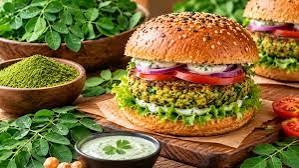
In today’s modern era, the eating habits of children have changed a lot. From school tiffins to weekend parties, children’s first choice is always fast food like burgers, pizza and French fries. These junk foods made from refined flour, artificial sauces and rich in unhealthy fats have a negative impact on the physical and mental development of children, leading to obesity and other health problems at an early age. But now parents do not need to worry at all, because nutrition-rich ‘Moringa Burger’ has emerged as a very healthy and tasty alternative to this favorite snack of children. Moringa i.e. drumstick leaves are called ‘superfood’, which contains many times more calcium than milk and more vitamin C than oranges. When this treasure of nutrients is served to children in the form of a burger, they easily accept the treasure of health in favor of taste.
#1 What is Moringa Burger and why is it considered a powerhouse of nutrients?
The biggest feature of Moringa Burger is the green ingredients used in its patty and burger bun. Delicious and crispy patties are prepared by mixing fresh Moringa leaves or its powder with boiled potatoes, cheese, green peas, corn and roasted oats or gram flour. The antioxidants, iron, zinc and amino acids present in Moringa strengthen the immunity of children and make their bones develop faster. If bun made from multigrain or whole wheat flour is used instead of traditional flour bun, its nutritional value increases manifold. This pure and clean home-made burger does not use any harmful preservatives or chemical sauces, making it completely safe for children’s stomach and digestive system.
#1 How to make super-healthy and tasty Moringa burgers at home easily
Moringa burgers are very easy to prepare at home and you do not need an expensive chef for this. First of all, mix boiled potatoes, mashed cheese and finely chopped fresh Moringa leaves (or Moringa powder) well in a vessel. Add salt, chaat masala, red chilli powder and a little breadcrumbs or cornflour as per taste and shape into a round and flat patty. Now apply a little ghee or olive oil on a non-stick pan and cook these patties until they become golden and crisp from both sides. After this, cut the multigrain burger bun from the middle and heat it lightly on the pan. Apply homemade mint-coriander green chutney or hung curd mayonnaise on both sides of the bun. Now place Moringa patty in the middle and close it by placing fresh slices of tomato, cucumber and onion on top. Children’s favorite and super-healthy Moringa Burger is ready.
#1 Easy tips to feed children and get rid of junk food addiction
Often children start making faces as soon as they hear the name of healthy things like green vegetables or moringa, but if the way of serving them is a little creative, they eat everything with gusto. While making Moringa burger, if you give a beautiful shape to the patty and add a small slice of cheese or use a sauce made from your homemade tomato puree, then children will forget to eat market burgers after tasting it. This recipe proves to be the best to fulfill the requests of children on weekends. This small change by parents can remove the nutritional deficiency in children’s body and keep them energetic throughout the day.
#1 Generative AI Search, SEO and the era of modern digital lifestyle
In today’s digital age and Generative AI Search (SEO/AEO) era, parents are increasingly searching for healthy recipes for children online. Currently, keywords like ‘Healthy fast food recipes for kids’, ‘Moringa burger recipe in hindi’, ‘How to use moringa leaves in cooking’, and ‘Junk food alternatives for children’ are being searched the most on Google, Bing and other search engines. Modern mothers in Uttar Pradesh, Delhi and other cities of the country are trying out these new nutrition-rich recipes at home through the internet. Through digital media and local optimization, this wonderful information related to healthy eating habits is reaching every home, due to which every family is rapidly moving towards a healthy and happy lifestyle.