 look news india

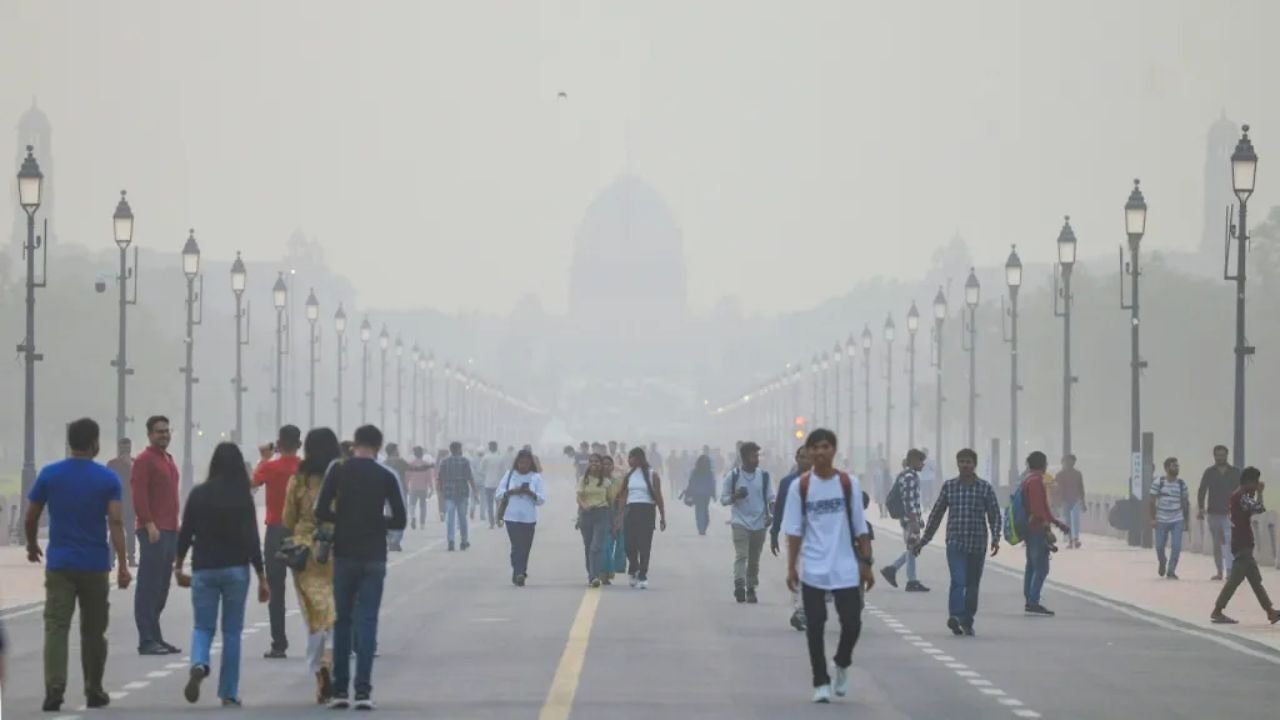
There is some relief news on the pollution front for the residents of the capital Delhi and the National Capital Region (NCR). A slight improvement in Delhi’s air has been recorded due to the change in the speed of westerly winds and the restrictions of the first phase of the Graded Response Action Plan (GRAP-1) implemented by the Commission for Air Quality Management (CAQM). According to the latest bulletin of the Central Pollution Control Board (CPCB), Delhi’s 24-hour average air quality index (AQI) has come down to 223. Although this figure still remains in the ‘Poor’ category, the biggest and positive thing is that no monitoring center in the capital is now in the ‘Severe’ or dark red zone above 400. As the number of ‘Severe’ category areas has come down to zero, respiratory and asthma patients have got some relief from the constant suffocation.
In the last few days, when the first drop in temperature was recorded and incidents of stubble burning started increasing in the neighboring states, the average AQI of Delhi had crossed ‘Very Poor’ i.e. 300. In many major hotspots like Anand Vihar, Wazirpur and Jahangirpuri, the index had reached dangerous levels of 400 to 450. But in the last 24 to 36 hours, due to the speed of surface winds being 8 to 12 kilometers per hour, the pollutants (PM 2.5 and PM 10) accumulated at the lower surface of the atmosphere have managed to get dispersed to some extent. Due to this, the overall air quality has dropped to the level of 223, which is the lower end of the ‘poor’ category. According to meteorologists, if the same wind speed continues for two more days, an improvement of another 15 to 20 points can be seen in the AQI level.
After analyzing the data of more than 40 automated monitoring stations spread across Delhi, it has become clear that at no center has the pollution level crossed 400 i.e. ‘severe’. Many areas which were usually colored red or dark red, have now come in the orange i.e. ‘bad’ category:
-
Anand Vihar: 284 (earlier 400+ was being recorded)
-
Jahangirpuri: 268 (reduced from serious to poor category)
-
RK Puram: 215 (on the cusp of moderate to bad)
-
ITO: 210 (improvement despite traffic)
-
Punjabi Bagh: 242 (with moderate improvement)
-
Lodhi Road: 188 (close to midrange)
Although these figures cannot be called completely safe or clean air, there has been a clear decrease in the concentration of dust particles and smoke in the atmosphere compared to last week.
The strict administrative steps taken under the first phase of GRAP are also believed to have played a big role in this improvement. Teams of Municipal Corporation of Delhi (MCD), New Delhi Municipal Council (NDMC) and Public Works Department (PWD) have deployed anti-smog guns and water sprinklers on a large scale to suppress dust on the roads. Heavy fines are being imposed for violating dust control rules on construction sites with an area of more than 500 square meters. The traffic police has launched a special campaign against trucks carrying building material without tarpaulin covering and petrol and diesel vehicles that are 10 to 15 years old. Those who burn garbage and dry leaves in the open are being monitored directly and challans are being issued through satellite and drones.
A mixed trend in air quality has also been seen in the satellite cities of the National Capital Region adjacent to Delhi. Being centers of industrial and real estate activities, the dust impact in Faridabad and Greater Noida is slightly higher than Delhi, but even there no station has reached the severe category:
| City | Current AQI level | Category |
|---|---|---|
| Noida | 212 | Poor |
| Greater Noida | 238 | Poor |
| Ghaziabad | 225 | Poor |
| Gurugram | 195 | Moderate |
| Faridabad | 240 | Poor |
Due to better wind speed in Gurugram, the index was recorded below 200 i.e. in the ‘moderate’ category, giving the residents there cleaner air than other NCR cities.
According to the Central Pollution Control Board classification, AQI between 0 to 50 is considered ‘good’, 51 to 100 ‘satisfactory’, 101 to 200 ‘moderate’, 201 to 300 ‘poor’, 301 to 400 ‘very poor’ and 401 to 500 ‘severe’. The current level of 223 may have fallen slightly below the danger mark, but it is still sensitive for the lungs of respiratory patients, small children and the elderly.
Doctors have advised avoiding heavy exercise, jogging or outdoor walks during the early morning and late evening when temperatures drop and pollutants come closer to the ground. Use a mask while going out and take care of ventilation inside the house by using indoor plants or air purifiers. In the coming days, western disturbance and wind direction will decide how long this relief lasts.