 look news india

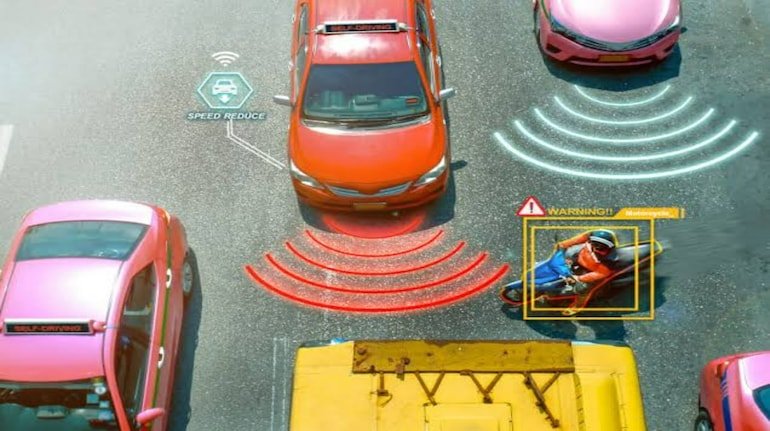
The blueprint for a revolutionary change in the history of the Indian automobile industry and road safety has been prepared. To save the horrific road accidents occurring on the country’s roads and the millions of lives lost in them, the Central Government is now working on the biggest plan to make vehicles ‘smart and proactive’. According to the proposed new roadmap of the Union Ministry of Road Transport and Highways (MoRTH), by the year 2030, all new cars and passenger vehicles sold in India will be Autonomous Emergency Braking System (AEBS) Will be made mandatory. This simply means that if the driver ever blinks, gets distracted or suddenly encounters an obstacle, the car will automatically apply emergency brakes without waiting for the driver’s action and stop the car before it crashes. After the stringent crash test rules of Bharat NCAP 2.0, this decision is being considered as the biggest step towards bringing the Indian auto market at par with global safety standards.
Autonomous Emergency Braking System (AEBS) is the most important and sensitive part of modern Advanced Driver Assistance Systems (ADAS). The system works in conjunction with high-definition cameras installed in the car’s front grille, windshield and bumper, millimeter-wave radar (LiDAR/Radar) and complex computer algorithms.
While the vehicle is moving, this sensor network keeps measuring the distance and relative speed of vehicles ahead on the road, suddenly encountered pedestrians, cyclists and any other obstacles in milliseconds. The functioning of this technology is mainly accomplished in three steps:
-
Forward Collision Warning: As soon as the system senses that the distance to the vehicle ahead is rapidly decreasing and there is a possibility of a collision, it immediately alerts the driver by flashing a red warning light and sounding a loud beep (audio-visual alert) in the digital cluster.
-
Driver response monitoring: If the driver does not press the brakes or does not apply sufficient pressure despite the alert, the system increases braking power by activating brake assist.
-
Autonomous Emergency Braking: At the last moment, if the driver remains completely inactive and a collision appears imminent, the on-board electronic control unit (ECU) takes full control of the car’s brakes and applies emergency brakes at maximum pressure, either bringing the vehicle to a complete stop or reducing the speed of the collision to a level where the risk of fatal injury is negligible.
Instead of suddenly implementing this rule, the government has set a deadline of 2030 so that domestic automobile manufacturers and component suppliers get enough time to prepare their technology and supply chain. Currently, only premium or top-variant vehicles (such as XUV700, Harrier, Safari, Creta or Seltos) from companies like Mahindra, Tata Motors, Hyundai and Kia offer automatic braking under Level-2 ADAS.
This technology is not currently used in the budget and entry-level segments (like hatchbacks priced between Rs 5 to 8 lakh). The government aims to start large-scale local production of radar and camera sensors in India in the next four to five years. Increasing local manufacturing will drastically reduce the cost of these sensors, making it economically viable to provide AEBS even in basic cars like Maruti Alto or WagonR by 2030.
According to official data from the Ministry of Road Transport, more than 4.5 lakh road accidents occur every year in India, in which more than 1.5 lakh people lose their lives. About 65 to 70 percent of these accidents are directly caused by speeding, human carelessness, wrong decisions during overtaking or the driver falling asleep.
The most fatal accidents on highways and expressways occur in the form of rear-end collision, where when the truck or vehicle moving ahead suddenly applies brakes, the car coming behind at a speed of 100 km/h collides with it. Safety experts estimate that if AEBS becomes mandatory in all cars, there could be a direct reduction of 40 to 50 percent in rear-end collision cases. Apart from this, even in the dark of night or fog, radar sensors detect danger before human eyes, which will completely prevent accidents involving dozens of vehicles colliding with each other in the winter season.
Whenever any new safety technology is made mandatory, the first question that comes to the mind of customers is, will buying a car now become more expensive? Currently, if a separate ADAS package is added to a car, its ex-showroom price sees an increase of around ₹ 50,000 to ₹ 80,000.
However, auto experts believe that the situation will completely change by 2030. As semiconductor and radar sensors are manufactured on a large scale within the country, the cost of this system will come down to just in the range of ₹15,000 to ₹25,000 due to economies of scale (bulk production). Apart from this, accident claims will reduce due to safer vehicles, which will directly benefit the drivers in the form of lower car insurance premium (Third-Party & Comprehensive Premium). Overall, this deal of guaranteeing life on the road for a small additional cost will prove to be in the interest of the general public in every respect.