 look news india

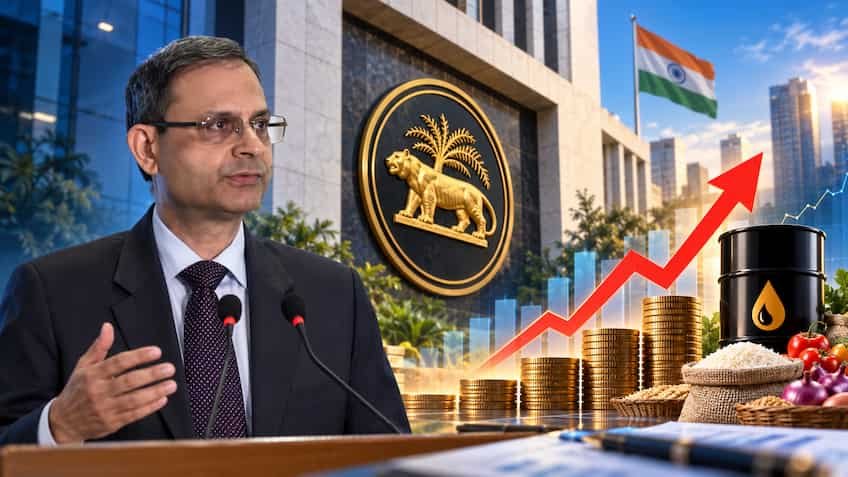
The detailed minutes of the recent bi-monthly review meeting of the Monetary Policy Committee (MPC) of the Reserve Bank of India (RBI) have been released, which has left a mixed impact on the expectations of common consumers, home loan holders and corporates. There are clear indications from the policy minutes of the Central Bank that the common man of the country should not expect any quick relief on the inflation front at present. Bringing down retail inflation sustainably to the target of 4 per cent still remains a major challenge, particularly due to persistent food price pressures and global geopolitical uncertainties. In the minutes, the committee members have bluntly underlined that until the inflation rate is completely stabilized within its target range, there is no scope for any kind of reduction in the policy repo rate. However, amid this tough stance, due to the internal strength of the Indian economy, the GDP growth rate estimate for the current financial year has been increased, which is a positive sign in terms of economic activity.
The biggest emphasis in the comments recorded by the RBI Governor and MPC members was that despite core inflation remaining within control, food inflation continues to impact policy priorities. Seasonal and supply-dependent fluctuations in prices of vegetables, pulses and edible oils are directly impacting the household budget of the common family. According to the minutes, most members of the committee believe that if interest rates are cut at this juncture, additional liquidity may come into the market, which will increase the risk of inflation again spiraling out of control. That is why the committee has kept its focus on ‘bringing inflation in line with the target’ and made it clear that haste in relaxing the rates can prove to be unfavorable for the economy.
This stance of RBI minutes will have a direct impact on the common working class and those borrowers who were waiting for a long time to reduce the EMI of their expensive home loan, auto loan or personal loan. Since the central bank has postponed the possibility of rate cuts for the foreseeable future, banks and housing finance companies are likely to keep interest rates unchanged. This means that customers’ monthly installments on floating rate retail loans will remain high for a few more months. Financial experts say that only if retail inflation remains below 4.5 percent for the next two quarters, the central bank will consider reducing rates in the second half of the year, hence consumers should do financial planning as per their current budget.
In contrast to inflation concerns, MPC members have shown considerable enthusiasm about the internal dynamics of the Indian economy and demand. The country’s growth momentum remains strong on the back of government capital expenditure (capex) in infrastructure sector, strong activity in the manufacturing sector and excellent performance of the services sector. In view of this strength, the Central Bank has revised and increased the estimate of real GDP growth rate for the current financial year. The minutes noted that the improvement in consumption in rural areas and the persistence of urban demand even after the festive season prove that the Indian economy is capable of withstanding external global shocks. The investment cycle of the private sector is also gradually gaining momentum, which is giving impetus to employment generation.
MPC members also considered global factors as a major potential risk to inflation in their analysis. Ongoing tensions in West Asia, increase in global shipping costs due to the Red Sea crisis and uncertainty in the prices of crude oil (Brent crude) are the factors that can give rise to imported inflation at any time. The minutes state that the monetary policies of central banks of developed countries and changes in the exchange rate of the US dollar are also being continuously monitored. Until the international energy and commodity supply chains are fully streamlined, the most practical step is to adopt a defensive monetary stance domestically.
In rapidly developing Tier-2 and Tier-3 cities like Lucknow, Kanpur and Varanasi, the capital of Uttar Pradesh, the real estate and retail automobile sectors are considered very sensitive to interest rates. Local traders and industry bodies believe that due to no rate cut, middle-income home buyers may put their decisions on hold for some time. However, real estate developers are trying to maintain demand through festive offers and subvention schemes. On the other hand, the need for stable prices of food items is being felt in the retail markets of Lucknow, so that the purchasing power of common consumers remains intact and local business activities continue to gain momentum.
On what will be the shape of monetary policy in the coming months, financial market experts are of the opinion that RBI will stick to data-dependent approach only. It is clear from the minutes that the Governor and most of the independent members are unanimous that the priority should be to attack only inflation without harming the pace of economic growth. Bond yields and the stock market have also reacted cautiously to these minutes. Until final arrivals of monsoon crops and concrete data on food inflation emerge, stability in policy rates will remain the new normal.