 look news india

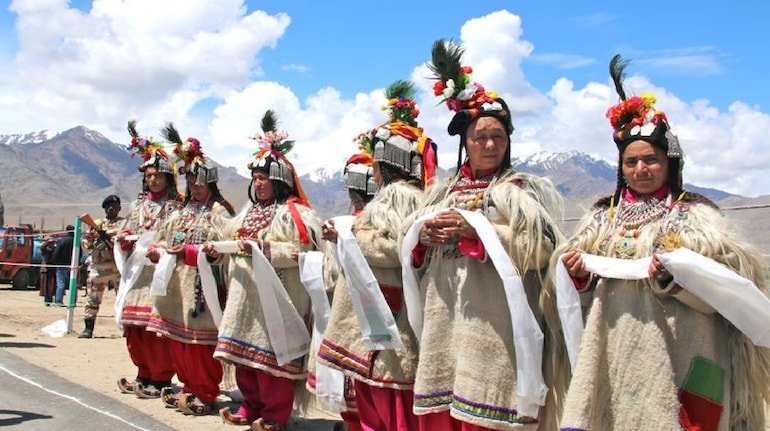
Ladakh, which came into existence as a Union Territory after the abrogation of Article 370 in August 2019, has made historic leaps on the front of development, infrastructure and administrative autonomy in the last seven years. This strategic border area, once cut off from the rest of the country for six months of winter and suffering from lack of basic facilities, has today become the new center of modern connectivity, high-end health services, judicial access and solar energy revolution. The multidimensional schemes launched in both the districts of Ladakh—Leh and Kargil—under the direct coordination of the Central Government and the leadership of the Lieutenant Governor’s administration have significantly improved the quality of life of the local citizens. From the region’s first medical college coming up in Leh to the virtual bench of the Jammu and Kashmir and Ladakh High Court and the strategic Zojila Tunnel, Ladakh has achieved development milestones that were awaited for decades.
Treatment of serious diseases had always been a big challenge for the citizens living in the remote and heterogeneous geographical areas of Ladakh. For any complex surgery, cancer treatment or heart disease, the local people had to travel by air to Chandigarh, Srinagar or Delhi, which proved to be extremely costly financially.
After becoming a Union Territory, the Central Government approved the establishment of the first ‘Government Medical College’ of Ladakh by upgrading SNM Hospital Leh. Under this project worth hundreds of crores of rupees, the construction of modern super-specialty blocks, Critical Care Units (CCU), advanced diagnostic labs and a medical college with 100 MBBS seats has been completed rapidly. Along with this, through tele-medicine services, Primary Health Centers (PHCs) of remote Changthang and Zanskar Valley have been directly linked to big hospitals, making specialist treatment possible at the local level in case of emergency.
Earlier, citizens and advocates of Ladakh had to go to the High Court at Srinagar or Jammu for hearing of judicial cases, which led to huge wastage of time and money. To make the judicial system accessible and transparent, the system of special virtual benches and circuit benches of Jammu and Kashmir and Ladakh High Court was activated in Leh and Kargil.
Now, through high-speed video conferencing and e-court system, lawyers and litigants from Ladakh are arguing cases directly from their home district. Additionally, both the Autonomous Hill Development Councils (LAHDC Leh and LAHDC Kargil) have been made more financially and administratively empowered, thereby eliminating bureaucratic delays in budget allocation and implementation of development plans at the local level.
The biggest backbone of Ladakh’s strategic and economic development is its all-weather connectivity. The Srinagar-Leh National Highway remained closed for months due to heavy snowfall during winter, leading to shortage of logistics and essential commodities.
-
Zojila Tunnel Project: The construction work of 14.15 km long Zojila Tunnel, which is Asia’s longest bi-directional tunnel, is in the final stages. With the commissioning of this tunnel, uninterrupted traffic will be ensured 365 days a year between Srinagar and Ladakh and the travel time will be reduced by 3 to 4 hours.
-
Records Infrastructure of BRO: The Border Roads Organization (BRO) has provided unprecedented strengthening of border security and civilian mobility by developing Shinkun La Tunnel, Umling La (the world’s highest motorable road) and several new strategic corridors.
-
New terminal of Leh Airport: Construction of a new integrated terminal building with modern, eco-friendly and high passenger capacity at Kushok Bakula Rimpoche (KBR) Airport, Leh has been completed, boosting year-round tourism and trade in Ladakh.
As part of the Prime Minister’s pledge of ‘Carbon Neutral Ladakh’, work is underway on a massive 13 gigawatt (GW) renewable energy project in Pang and the surrounding high desert plateaus. Solar irradiance in Ladakh is the highest in the country, which is being used to not only meet the local power needs, but there is a plan to send surplus green power to the northern grid of the country through a 5 GW transmission line. Along with this, to deal with the problem of freezing of water in winter, the complex task of providing tap water to homes even in temperatures below minus 30 degrees has been successfully completed using modern insulated pipelines and under ‘Jal Jeevan Mission’.
In the field of higher education, the establishment of ‘Sindhu Central University’ has given an opportunity to the local youth to get higher and technical education in their own area. Local self-help groups and youth have been linked to self-employment by creating processing units and value chains for local products like pashmina wool, apricots (Ladakhi Raktase Karpo Apricot which has received GI tag) and sea-buckthorn.
This seven-year journey of Ladakh shows that with the right policy, direct budget allocation and strong political will, even the most remote region surrounded by geographical challenges can be made a mainstream leader of development. With complete connectivity and industrial eco-system, Ladakh is all set to touch new heights of self-reliance and modernity in the coming years.