 look news india

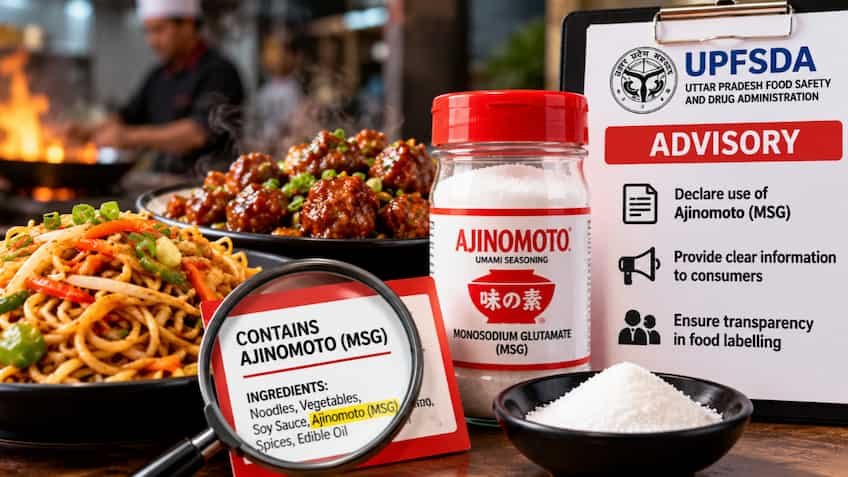
Under the Food Safety and Standards (Food Product Standards and Food Additives) Regulations of the Food Safety and Standards Authority of India (FSSAI), very strict rules have been made regarding the use of monosodium glutamate. UPFSDA reiterates in its advisory that the use of Ajinomoto in any type of food prepared for infants and children below one year of age is 100% prohibited.
Additionally, the amount of Ajinomoto in canned and loose food should be limited to the minimum effective level under ‘Good Manufacturing Practices’ (GMP). The administration has warned that if the presence of MSG is found in the snacks, school canteen meals and tiffin menus consumed in excessive quantities by children, it will be considered a very serious crime. Many studies have revealed that the nervous system of children is highly sensitive to chemical additives, which can have an adverse effect on their development.
The most important point in the advice given by the Food Safety Administration is ‘Mandatory Disclosure’. Until now, most restaurants and street vendors have been adding Ajinomoto secretly, without customers being aware of it. According to the new instructions, every food business will have to clearly mention on its menu card, rate list and main counter of the shop whether Ajinomoto is being used in its food or not.
Under the rules, the following statutory warnings must be printed in large and legible letters on the counter and on packaging:
“This food contains added monosodium glutamate (MSG). It is not suitable for infants under 12 months of age.”
If a restaurant or food stall operator adds ajinomoto to its dishes and does not declare it on the display board or menu, the food safety officials will consider it a case of ‘misbranding’ and cheating customers and issue an immediate challan under various sections of the Food Safety and Standards Act, 2006.
According to medical experts, excessive or regular consumption of ajinomoto poses several serious health risks to the human body. In the medical world, its group of side effects is often called ‘Chinese Restaurant Syndrome’ or ‘MSG symptom complex’.
Excessive consumption of food containing Ajinomoto may cause the following symptoms to appear rapidly:
-
Headache and Migraine: Ajinomoto affects the levels of the neurotransmitter glutamate, which can cause severe headaches and migraine attacks.
-
Increase in blood pressure (High BP): It contains abundant amount of sodium, which proves to be extremely harmful for high blood pressure and heart patients.
-
Heartburn, tightness and sweating: In sensitive people, problems like sweating, redness of the face, numbness and rapid heartbeat (palpitations) are seen immediately after eating food containing Ajinomoto.
-
Obesity and addiction: Ajinomoto affects the ‘satiety center’ (satiety center) of the brain, due to which the person does not have the proper feeling of hunger and he eats more than necessary, which increases obesity and metabolic disorders.
In view of the festive season, special teams of UPFSDA have become active in the entire state including the capital Lucknow (major food streets of Hazratganj, Gomti Nagar, Aminabad etc.), Kanpur, Varanasi, Prayagraj, Noida and Ghaziabad. Departmental officials have been instructed to conduct surprise inspections from roadside fast food stalls to luxury restaurants and collect random samples of the food items being served.
If the quantity of Ajinomoto is found to be more than the prescribed safe limit in the lab test, or inedible and poor grade industrial chemical is found to have been used, then that food item will be declared unsafe food. In such cases, a financial fine of up to ₹ 5 lakh and a minimum of six months to life imprisonment can be imposed on guilty traders under Section 59 of the Food Safety and Standards Act.
The Food Safety Department has also appealed to the general public that while eating out, they should not just run after taste, but should also be conscious of their health. Pregnant women, high blood pressure patients, asthma sufferers and small children are especially advised to completely avoid foods containing Ajinomoto.
Whenever you visit a restaurant or fast food corner, clearly instruct the chef or vendor in advance to prepare ‘No MSG’ (without Ajinomoto) food. If excessive and unsafe use of Ajinomoto is reported at any shop, consumers can lodge their complaint directly on the toll-free number or online portal of the Food Safety Department. This strictness of the administration is an important step towards keeping the street food tasty as well as making it safe and healthy for the general public.