 look news india

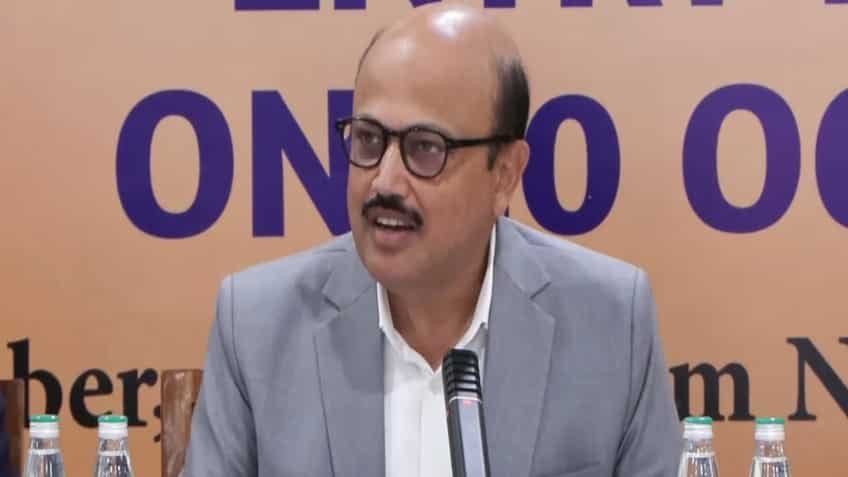
India’s economic diplomacy on the global trade platform has achieved another historic milestone. The much-awaited Free Trade Agreement (FTA) between India and New Zealand is going to be officially implemented from Tuesday, 20 October 2026. This historic agreement, being implemented on the occasion of the holy festival of Vijayadashami, is ready to take the commercial, technological and industrial relations between the two countries into a new era. On this major development, Union Commerce Secretary Rajesh Aggarwal clarified that this bilateral agreement is not just a traditional trade pact or general access to the market, but it is the formal beginning of a deep, long-term and strategic economic partnership between the two democratic countries.
This is the seventh major FTA to be successfully negotiated and implemented by India in the last five years. Earlier, India has signed agreements with major global partners like Mauritius, UAE, Australia, EFTA and Britain. Union Commerce and Industry Minister Piyush Goyal is leading the official implementation ceremony of this agreement. According to the Commerce Ministry, the main goal of this agreement is to double the existing bilateral trade to cross $ 7 billion (approximately more than ₹ 35,000 crore) by the year 2030. This agreement will open unlimited doors of possibilities for India’s labour-intensive industries, small exporters, skilled professionals and youth.
The biggest and historic achievement of this agreement is that New Zealand has committed to completely zero import duty (0% Customs Duty) on 100 percent of the tariff lines (goods) exported from India. This means that almost every product manufactured in India will now be able to be sold in New Zealand markets without any additional customs duty. Its direct and biggest benefit will be to those sectors of India which generate employment on a large scale.
India’s textiles & apparels, leather & footwear, gems & jewellery, engineering goods, pharmaceuticals, auto parts and organic agriculture products will have a direct competitive edge in the Kiwi market. Till now, the hindrance which Indian exporters were facing due to duty exemption given to countries like Vietnam and Bangladesh, has now ended forever. Indian goods will now be available in retail stores in big cities like Auckland, Wellington and Christchurch at much more affordable and competitive prices.
Not limited to the trade of goods only, special priority has been given in this agreement to the movement of services (Services Trade) and human resources. According to Commerce Secretary Rajesh Agarwal, modern economies grow not just by selling goods but by exchanging skilled talents and innovation. Through this FTA, legal pathways to work in New Zealand have been made very easy for Indian software engineers, data professionals, chartered accountants, architects and healthcare workers.
In particular, in recognition of Indian traditional knowledge and skills, New Zealand has agreed to special visa quotas and streamlined work permit rules for Indian Yoga Instructors, Traditional Indian Chefs and AYUSH Practitioners. Additionally, both countries have decided to accelerate work on Mutual Recognition Agreements for academic degrees and professional qualifications, making it easier than ever for thousands of Indian students studying in New Zealand to obtain a post-study work visa and build a career there after completing their studies.
In the framework of FTA, both the countries have placed a big bet on strengthening supply chain integration. Under the agreement, New Zealand’s leading sovereign wealth funds and private enterprises have committed to direct investment (FDI) of approximately $20 billion in India’s manufacturing, infrastructure, logistics and clean technology sectors over the next 15 years.
New Zealand has world-class expertise in modern dairy processing technology, cold chain infrastructure, post-harvest management and forestry. By taking advantage of this technology, Indian industry will be able to prevent wastage in food processing at the domestic level and will be able to do value addition as per global standards. Together, both the countries are creating a supply chain that works smoothly without any interruption in any global geopolitical crisis or tension.
Whenever there was talk of a trade agreement with New Zealand, there was a fear among Indian dairy farmers and rural cattle herders that New Zealand’s cheap milk, butter and cheese might overwhelm the Indian market. In this agreement, the Government of India has completely protected the interests of more than 8 crore dairy farmers and small agricultural producers of the country.
India has completely kept its sensitive domestic dairy sector (like liquid milk, butter, ghee, cheese) and poultry sector out of duty concessions (in the Exclusion List). This means that protective duties will continue to be applicable on dairy products coming from New Zealand as before, due to which the livelihood of local farmers will not be affected. India has provided duty relief only to select agricultural products that are not produced or are limited in production in India, such as kiwi fruit and certain specific varieties of apple, which are also subject to minimum import prices and quota based conditions.
Apart from the economic benefits, the India-New Zealand FTA also has an extremely important geopolitical aspect. This agreement will act as a strategic glue in strengthening the rules-based order, free maritime trade and mutual trust between democratic countries in the Indo-Pacific region. New Zealand is an important link in the Pacific region, and deepening its economic engagement with India will create new trade corridors between Eurasia and the Pacific Ocean.
In the words of the Commerce Secretary, this new chapter starting from October 20 is not limited to just increasing the trade figures between the two countries, but it is writing a new chapter of technological partnership, respect for talent and economic resilience between South Asia and Oceania. This gift of Vijayadashami for Indian exporters will prove to be a milestone in giving a new identity to Make in India products on the global stage in the coming years.