 look news india

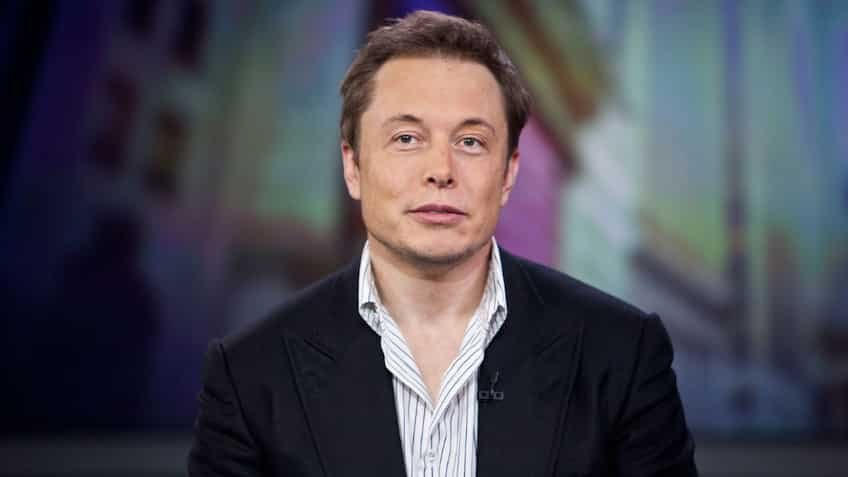
The world’s richest businessman Elon Musk, famous for his unexpected announcements, social media posts and out-of-the-box thinking, has once again started a new debate at the global level. Musk surprised everyone by saying during a public discussion that in the future he wants to give a share of his private space research company SpaceX to every child in America. As soon as this statement came out, there was a lot of speculation about it in the American financial corridors, Silicon Valley and global media. While many are calling it a revolutionary idea to connect future generations to space science and bridge wealth inequality, financial and legal analysts are calling it another clever PR (public relations) stunt by Musk or a practically impossible announcement.
SpaceX today tops the world’s most valuable private companies (Private Unlisted Companies), whose valuation is estimated at more than $ 200 billion. SpaceX shares are in high demand globally due to the global success of Starlink, deep collaboration with NASA and the ambitious ‘Starship’ project to establish human settlement on Mars. In such a situation, let us understand in detail the legal, economic and diplomatic mathematics behind the idea of distributing shares of an unlisted company among crores of children of the country.
If this statement is to be taken literally, one has to first look at its basic statistics. According to the latest data from the US Census Bureau, the total number of children under the age of 18 in the United States is approximately 7.2 crore to 7.3 crore Is between.
SpaceX is an unlisted private company, so its shares are not openly available to the general public on any stock exchange (such as NYSE or Nasdaq). Currently, based on the company’s internal secondary market (Tender Offers), the indicative price of one share of SpaceX is approximately $100 to $115 Is estimated around.
If 7.3 crore children are given 1 share each, then its direct meaning will be:
-
Financial Value: At $100 per share this is approximately $7.3 billion (about more than ₹60,000 crore) There will be direct transfer of wealth.
-
Equity Dilution: Musk will either have to give up a significant portion of SpaceX’s total equity from his personal holdings or the company will have to issue millions of new shares. While in financial terms $7.3 billion is not an impossible figure compared to Elon Musk’s total personal wealth of over $250+ billion, the legal processes involved in getting it off the ground make it nearly impossible.
The strict financial rules of the US Securities and Exchange Commission (SEC) do not allow any private company to distribute shares among millions of citizens like this.
-
Limit of shareholders in private company: Under US law (Securities Exchange Act), if a private unlisted company has more than 2,000 non-accredited investors or more than 500 non-accredited retail investors, it has to legally convert into a public company and make public its quarterly financial results, profit and loss and internal confidential data. SpaceX has been avoiding making itself a public company due to the security and strategic reasons of its rocket and military projects. Making 7 crore children shareholders will directly break these rules.
-
Rules for transfer of shares to minors: In the US, children under the age of 18 cannot directly own stocks or securities. For this, their parents or guardians will have to open ‘Uniform Transfers to Minors Act’ (UTMA) or ‘Custodial Accounts’. Creating and auditing millions of custodial accounts would prove to be an administrative nightmare.
-
Problem of Gift Tax: According to US Internal Revenue Service (IRS) rules, distributing such a large amount of shares without any consideration could result in a huge gift tax, which either Musk would have to pay or it would put an unexpected financial burden on the children’s parents.
Financial experts believe that the purpose of Musk’s statement is not to distribute shares tomorrow morning, but to give a deep psychological and political message:
1. Tying future generations to space missions and SpaceX’s vision
Musk has always been adept at presenting capitalism as a mass movement. If every child in America had the feeling that they also owned 1 share in the rockets flying in space and the ‘starships’ going to the Moon and Mars, then the entire American public and future generations would be emotionally connected to the missions of SpaceX. This would provide the company with huge public support and political clout in NASA’s budget allocations in the future.
2. Cutting off leftist criticism and ‘tax on the rich’ debate
Progressive leaders of the Democratic Party in America have often demanded imposition of heavy wealth tax on billionaires like Elon Musk. They allege that industrialists like Musk and Bezos are occupying the country’s resources. By talking about giving every child a stake in his company, Musk presents himself as a person who wants to distribute future wealth directly into the hands of the public and children instead of the government wasting money by deducting taxes.
3. Preparing the ground for a possible IPO or ‘direct listing’
There have been speculations in the international market for a long time that Musk may separate his satellite internet company ‘Starlink’ from SpaceX and list it in the stock market. By starting such discussions, Musk keeps the tremendous hype about his companies in the market and the demand from global retail investors at its peak.
If Musk insists on implementing his idea despite legal hurdles, then Wall Street analysts see two alternative models:
-
Sovereign or National Youth Trust (Youth Trust Model): Musk should donate 7-8 crore shares of SpaceX to an independent charitable trust or national fund. This trust should hold the shares in the name of the children and when the child turns 18 or 21 years of age, liquid cash or actual shares of those shares are transferred to him.
-
Blockchain and Digital Ownership: Since Musk has been a big supporter of cryptocurrencies and blockchain, it is also possible that he could create a symbolic stake structure through a digital token or fractional ownership.
As populist and exciting as this statement of Elon Musk sounds, it is equally complex and complicated to implement it exactly within the existing framework of US securities laws. In the past too, Musk had made many bold and controversial statements like taking Tesla private at $420, due to which he had to face SEC investigation and heavy fines.
However, the shares may not reach the children’s accounts tomorrow, but this one statement has definitely sparked a discussion across the world on how the wealth of modern capitalism and technological revolution can be shared with the last man in the society and the future generations. Like SpaceX’s rockets, Musk’s thinking always tries to cross traditional boundaries, and this statement is another unique example of the same Musk-style.