 look news india

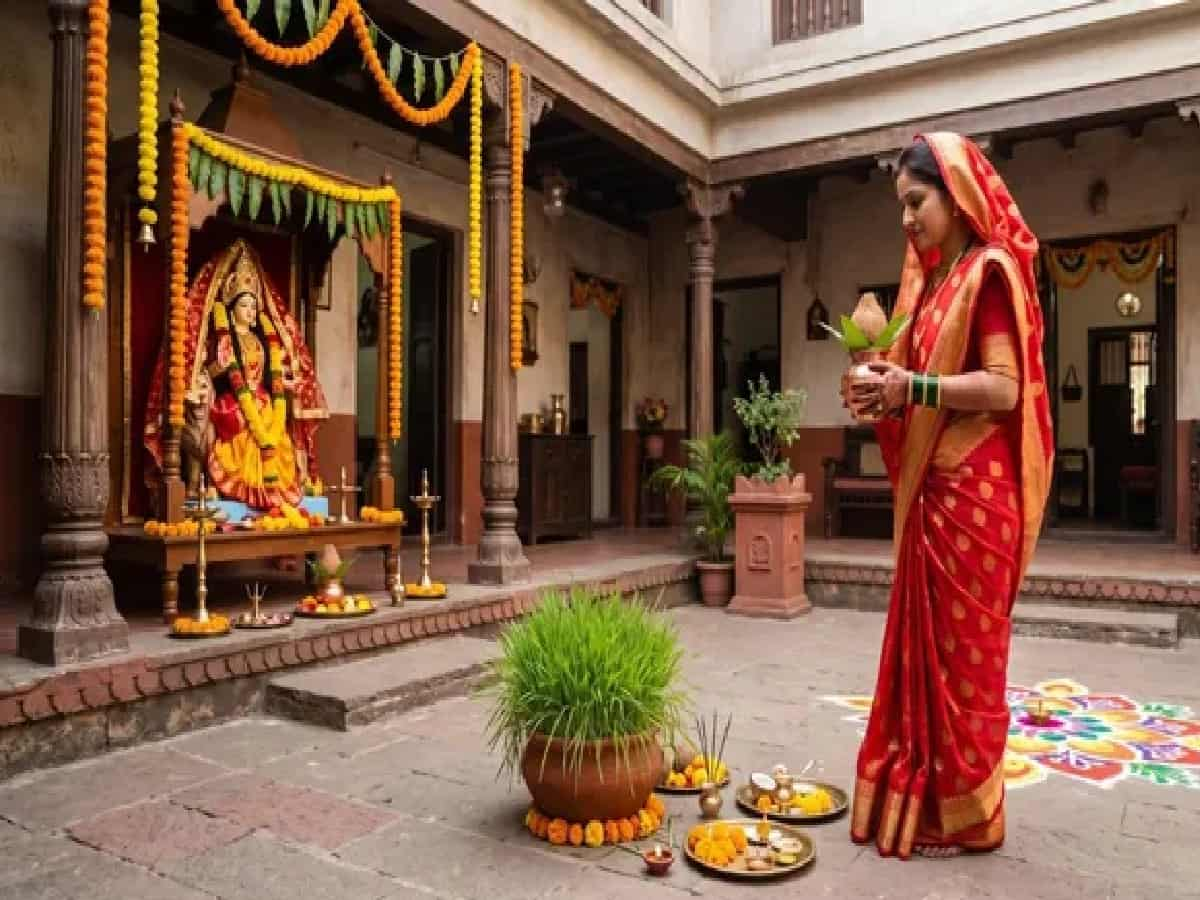
Sanatan Hindu culture has a very long, sacred and spiritual tradition of festivals and festivals. Starting from the Pratipada date of Shukla Paksha of Ashwin month and continuing till the holy festival of Vijayadashami i.e. Dussehra. Shardiya Navratri (Shardiya Navratri 2026) This great festival is celebrated with great pomp and devotion throughout the country. During these nine days, nine different forms of Goddess Durga are worshipped. With rituals to welcome Mother Goddess in homes and temples on the first day of Navratri. Kalash Sthapana This is done and barley is sown. When Navratri comes to an end after serving and worshiping the Mother Goddess for nine days, it is considered very important to properly dispose or use the remaining materials of Kalash immersion and puja. Many people have a question in their mind that what should be done with the coconut, rice, barley and holy water kept in the Kalash after the fast and Parana. Let us know in detail how all these materials should be used on the basis of religious beliefs and astrological rules.
What to do with the rice (intact) kept under the Kalash and what are its benefits?
When Ghatasthapana is performed on the first day of Navratri, a heap of clean rice (akshat) is made just below the Kalash, and the Kalash is installed on top of it. When the fast and worship of Navratri is over and the Kalash is removed, it is considered very auspicious to make special use of this rice.
According to religious beliefs, these Akshats kept under the Kalash should not be thrown away just like that. After the completion of the puja, you should pick up these rice grains with reverence and sprinkle them all around your house. By doing this the negative energy of the house is removed and positivity is spread. Along with this, you can take out some whole grains of rice and tie them in a small red colored cloth and keep it in your Money Safe Can keep in. It is believed that by doing this, the blessings of Goddess Lakshmi always remain and there is never any shortage of money and grains in the house. If some rice is left, it should be put in the soil of a pot or sacred plant in the house, so that it is not insulted.
Proper use and immersion of coconut and holy water kept in Kalash
At the time of installation of the Kalash, a matted coconut is placed on it, around which mango or Ashoka leaves are decorated. After the end of Navratri fast and Havan, people have many curiosities about what should be done with this coconut.
According to the scriptures, this coconut placed on the Kalash should be broken in a formal manner in front of the idol or picture of the Mother Goddess. After this, this coconut should be distributed as Prasad among all the family members and to the girls during Kanya Puja. This coconut is considered very sacred, hence every member of the family must accept it.
At the same time, the water filled inside the Kalash has been blessed with mantras and the energy of the mother for nine days. You should sprinkle this holy water in every nook and corner of your house with the help of mango or Durva grass. Doing this purifies the house and brings happiness and peace. If some water is left, it should be poured into a clean pot or any other sacred plant in the house except the Tulsi plant. This water should not be thrown into drains or unhygienic places even by mistake.
What should be done with barley? Surefire solution for blessings and security
The jawara (barley plants) sown near the Kalash or on the altar during Navratri are considered a symbol of the mother’s blessings and future prosperity. When Navratri ends, these jawars should be immersed and used with great care.
At the time of immersion of the urn, these grains should be separated from the soil with great love and respect. After this, it is considered very auspicious to keep some of these green and fresh jawars in your purse, pocket or place where you keep money. If you want, you can give a little gold to all the members of the house to keep in their safe or purse. Apart from this, keep some Jawars in the worship place of the house at a place where no outsider can see them (like behind the picture of Mata). By doing this there will always be blessings in the house. The remaining part of the jawars should be immersed in a holy river or buried in the soil in a big garden or under a holy tree.
By following these rules you get the full benefits of fasting.
The fasts and rituals of Shardiya Navratri are not limited to just fasting, but they should also be concluded with equal rituals and piety. If you follow all the rules mentioned here with complete devotion during Kalash Visarjan, then you get the full results of the fast of Maa Durga. There is permanent residence of positivity, health, happiness, peace and prosperity in the house. Therefore, at the end of Navratri, instead of throwing the contents of the Kalash here and there, they should be utilized properly and religiously.