 look news india

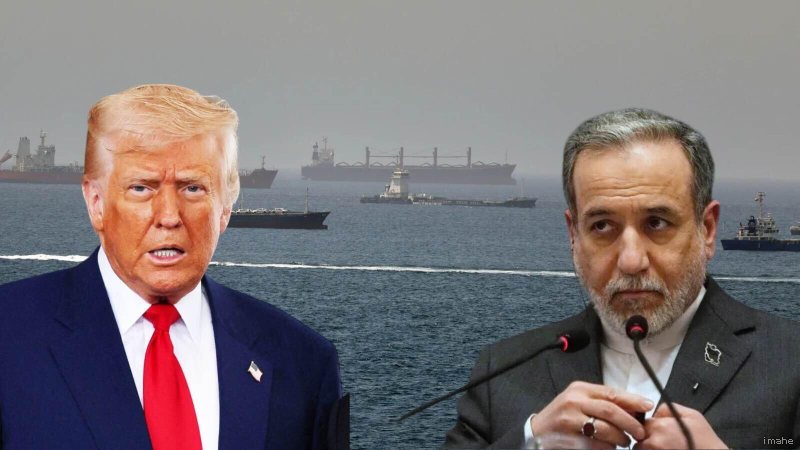
A very shocking news is coming out from the Middle East regarding the global economy and crude oil supply. In the Middle East, which has been facing severe military tension and trade deadlock for a long time, Iran has presented a big and new peace formula to America and President Donald Trump. This proposal, made public by Iran’s Foreign Minister Abbas Araghchi, has suddenly created a huge stir in global politics, global oil markets and diplomatic corridors.
This time Iran has directly put a diplomatic roadmap on the table of America with a deadline of seven days. Tehran claims that if Washington accepts all its conditions, then within just six days the world’s most strategically important oil route, the Strait of Hormuz, will be completely reopened to all commercial and trade vessels. Exactly on the seventh day, official nuclear talks and security talks between the two countries can be resumed.
Mainly seven major conditions have been laid down in this proposal sent by Iran to America through Qatar and intermediary countries. Iran’s first demand is that America completely remove the naval blockade from its major sea ports with immediate effect. Along with this, the stringent economic sanctions imposed by the US administration on the export of Iranian crude oil should be relaxed and they should be officially withdrawn.
The second major condition is that the US permanently ceases all ongoing hostile and aggressive military actions on all military fronts in the Middle East and the Gulf region. In this resolution, the issue of implementing ceasefire in Lebanon and regional conflict areas has also been raised prominently. Iran argues that the eight-month long tensions have severely affected the global oil market and its own internal economics. Opening a trade corridor has become extremely important for the region struggling with food inflation and medicine shortage.
After this proposal came forward, a strong statement has come from US President Donald Trump. Trump has said that America is ready for a better deal, but Iran’s current proposal is one-sided and not completely acceptable to America. US Vice President JD Vance and senior military officials of US CENTCOM have made it clear that if Iran wants to end the tension, it will have to make a huge and meaningful reduction in its uranium enrichment capacity.
The US administration believes that Iran’s economy has collapsed due to the economic sanctions and naval blockade, so Tehran now wants to make this agreement quickly. Despite this, Washington has sent its response to Iran through intermediaries, which is currently being closely studied by the Iranian Security Council and Foreign Ministry.
About 20 percent of the world’s crude oil and liquefied natural gas (LNG) trade passes through the narrow sea route of the Strait of Hormuz alone. Due to the halt of trade in this waterway due to wars and attacks, the prices of petrol, diesel and energy have increased rapidly around the world. This is why the eyes of the entire world including India, China and European countries are fixed on the final results of this 7-day proposal.
On the other hand, Iran’s new Defense Minister Mehrdad Akhlaki has also issued a strict warning after getting the approval of the Parliament. He said that Iran’s 7-day proposal is still on the table, but if the US or its allies choose the path of military attack instead of peace talks, the entire West Asia region and the US will suffer unprecedented losses. Now it remains to be seen whether Donald Trump accepts this historic deal before the elections or whether the crisis in the Strait of Hormuz will deepen further.