 look news india

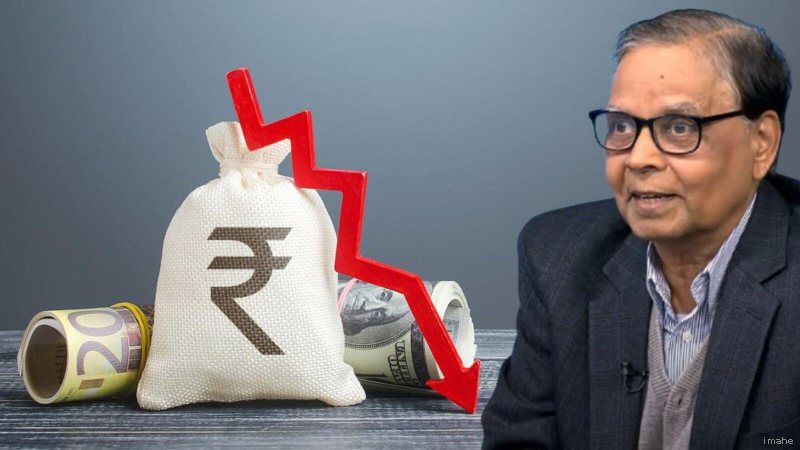
Whenever the Indian Rupee weakens against the US Dollar in the global financial markets and the domestic economy, there is an earthquake across the country. From opposition parties to the common man, everyone starts expressing concern considering this as a major reason for the weakness of the country’s economy and inflation. But contrary to this common belief, the country’s well-known and reputed economist Arvind Panagariya has given a statement which has started a new debate in the financial circles. He has clearly said that the fall of the rupee or its weakening against the dollar is not always bad, but it also has many positive aspects which give impetus to the country’s exports and overall economic growth. After his statement, efforts are being made to understand what currency devaluation means in the eyes of an economist.
Generally people believe that if the dollar is strengthening and the rupee is weakening, it means that the country’s economy is lagging behind. But the basic principles of economics testify that exchange rate fluctuations are a natural process. Arvind Panagariya, in one of his recent analysis, has emphasized that when the rupee weakens, Indian goods and services become cheaper in the international market. This directly benefits the country’s exporters, who are able to sell goods to foreign buyers at more competitive rates, thereby increasing the country’s total exports and strengthening foreign exchange reserves. Additionally, it also protects domestic industries from competing with cheaper foreign goods, which can prove beneficial for initiatives like ‘Make in India’.
Speaking only on exchange rates, Arvind Panagariya also underlined that today India is among the fastest growing major economies in the world. The kind of resilience and resilience that the Indian economy has shown despite the global recession and uncertainty is commendable. The country’s strong infrastructure, digital public infrastructure, growing investment opportunities in the manufacturing sector and domestic consumption are strong pillars that are capable of withstanding any external financial shock. The economist believes that instead of panicking over small things, we should focus on the country’s real growth rate and long-term economic reforms, which are rapidly moving towards making India the world’s third largest economic superpower in the coming times.
However, every aspect of economics is a double-edged sword. While on one hand the exporters are in trouble due to falling rupee, on the other hand the imports within the country become expensive. India imports most of its crude oil and electronic goods from abroad, for which payment has to be made in dollars. When the rupee weakens, the oil import bill increases, creating a risk of rising fuel prices and ultimately inflation within the country. Economists like Arvind Panagariya are also fully aware of this challenge, but their argument is that this balance can be managed wisely if priority is given to long-term national interest and export promotion. The policies of the government and the Central Bank (RBI) always work to maintain this balance.
This statement of Arvind Panagariya has come at a time when economies around the world are struggling with inflation and geopolitical tensions. This message is clear for the policy makers of India that there is no need to panic about the daily fluctuations of the exchange rate, but instead focus should be on strengthening the country’s manufacturing base and employment generation. When the country’s exports strengthen and industrial production increases, such minor currency fluctuations will not be able to stop the pace of the economy. The way India is increasing its self-reliance and its role in the global supply chain, it is clear that the economic future of the country is in safe hands and such intellectual discussions serve to show the right direction to the country.