 look news india

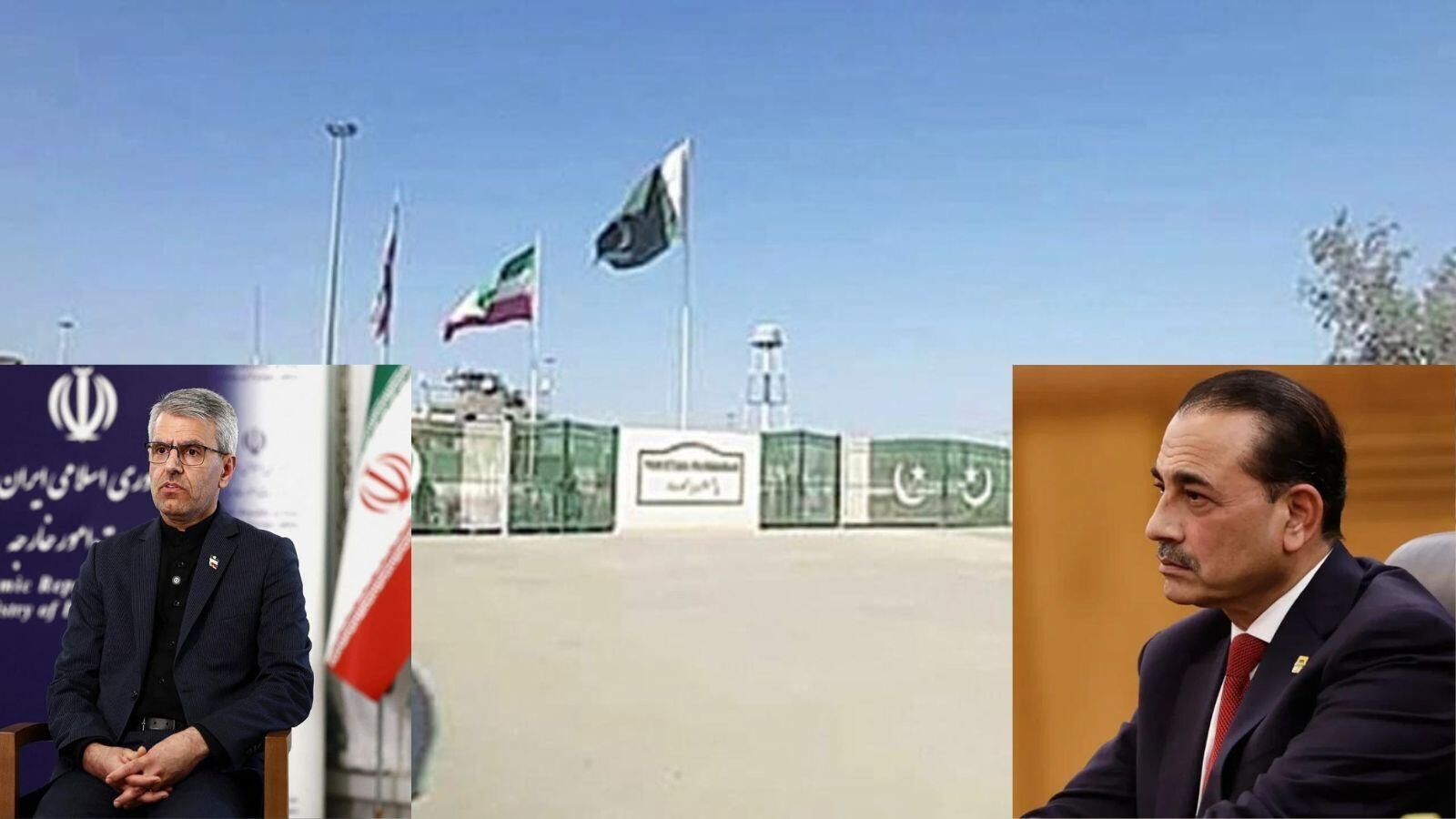
There has once again been a huge upheaval in the geopolitics of South Asia and West Asia, as Pakistan has taken a very big and aggressive economic step against its neighbor and strategically important country Iran. Following direct pressure and secret signals from Washington i.e. America, the Government of Pakistan has completely closed all its major land trade and movement borders with Iran. After this decision, the border trade worth billions of dollars between the two countries has completely come to a standstill. This step of Pakistan is being considered as a well-planned and tough economic attack against Tehran, which has deepened the possibility of further pressure on Iran’s economy which is already facing the brunt of American and Western sanctions. The discussion has intensified in the international diplomatic circles whether this action of Pakistan will really bring Iran’s economy to the verge of bankruptcy or it will have other consequences.
Bitterness had been increasing in the bilateral relations between Pakistan and Iran for some time, but this latest decision to seal the border is said to be completely inspired by American geopolitical interests. It has always been the effort of the US and its Western allies to completely isolate Iran from the international financial system and regional markets so that its nuclear and regional programs can be controlled. Pakistan, which is deeply dependent on US and Western financial institutions to bail out its ailing economy and IMF debt trap, has sacrificed its traditional trade relations with Iran to please Washington. Defense and foreign affairs experts believe that due to the closure of this land border, along with Iran, the local traders and common citizens of Pakistan’s Balochistan province are also suffering huge economic losses who were surviving on cheap Iranian fuel, LPG and food items.
The question being raised is whether Iran will really go bankrupt due to border sealing by Pakistan? The analysis of economic experts presents a completely opposite picture. Even though Pakistan’s move may have caused an immediate blow to Iran’s border provinces and small traders, Iran has long been accustomed to living under the shadow of American and Western sanctions. To keep its economy alive, Iran trades oil and gas on a large scale with countries like China, Russia, Iraq and Turkey, on which Pakistan’s decision is not going to have any significant impact. Moreover, the steps Iran has taken in the past few years to make its domestic economy self-reliant and to increase regional cooperation have proven to be largely effective in overcoming Western and US sanctions. However, there is no doubt that this hostile action of Pakistan has further increased the diplomatic distance between the two countries, which can have far-reaching consequences on the security of the entire Central Asia and South Asia.
Due to the sealing of the borders of Pakistan and Iran, not only has the relations between the two neighboring countries gone into the abyss, but it has also created a serious threat to the future of regional stability and trade corridors. The gas pipeline project (IP Gas Pipeline) between Iran and Pakistan, which was already in cold storage, is now on the verge of being completely buried after this incident. Apart from this, the ongoing strategic tug of war between Iran’s Chabahar Port and Pakistan’s Gwadar Port is also expected to intensify further. It has also become extremely important for large Asian economies like India to keep a close eye on this geopolitical turmoil, as the rising tensions in West Asia directly affect global energy security and the direction of maritime trade. In the coming days, it will be interesting to see what and what kind of befitting reply Tehran gives diplomatically or economically to this unexpected and tough economic attack by Islamabad.