 look news india

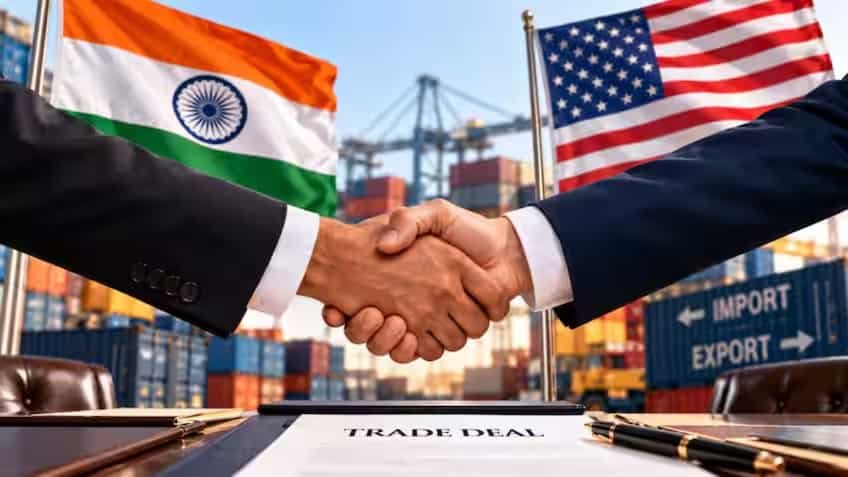
There has been a stir in diplomatic and economic circles regarding the proposed Bilateral Trade Agreement between India and America. The exercise to finalize the first phase of the trade agreement between the two countries has now reached its final stage. Between US Secretary of State Marco Rubio’s visit to India and high-level talks, there are indications that both global partners are very close to reaching a mutual consensus on tariff reduction and market access. Under this agreement, while India wants preferential and duty-free access to the huge US market worth $ 30 trillion for its textiles, generic drugs, auto components, spices and IT products, Washington has its eyes set on the Indian agricultural and consumer markets. However, despite the possibility of concessions on commodities like fruits, nuts, soybean oil and wine, the interests of the Indian dairy sector and cattle farmers still remain the most sensitive and thorny issue in this entire negotiation.
Under the draft trade agreement, India is considering a phased reduction or complete elimination of basic customs duty on select American agricultural and processed products. In this, fruits like apple, premium cherry, almond, tree nut and cranberry of Washington state of America are prominent. Additionally, talks are underway to ease import rules for US soybean oil and Distillers Dried Grains (DDGS) used for animal feed. If tariffs are reduced, premium American fruits and packaged dry fruits will be available at more competitive prices in India’s metropolitan and retail markets. Also, the poultry and animal feed industry is expected to get high protein feed at concessional rates, which may help in cost control.
There has also been a long-running debate about the entry of American California wine and bourbon whiskey into the Indian market. Currently, India charges a hefty import duty of up to 150 percent on foreign liquor. The proposed trade framework includes a proposal to reduce tariffs on American wines and spirits, but the Indian government has created a strict ‘Minimum Import Price’ (MIP) safeguard for it. This simply means that the tariff concession will be applicable only to high value premium wines and spirits. With this balancing formula, India aims to protect domestic wine producers in Nashik, Maharashtra and Karnataka from dumping of cheap foreign imports, thereby safeguarding the business structure of the local wine and spirits industry.
Dairy products remain the biggest barrier in this historic trade deal between India and America. America has been pressing for full opening of the Indian market for its cheese, butter, skimmed milk powder and whey products. On the other hand, the Government of India has made it clear that it will not make any compromise on the livelihood of crores of its small and marginal milk producing farmers.
There are two major and non-negotiable reasons behind this impasse:
-
Cultural and Religious Sensitivity: India has a strict rule that only those dairy products can be allowed to be imported into the country, which are obtained from dairy animals that have never been fed blood meal, offal or ruminant feed / blood meal. Since the use of such ingredients in animal feed is common in American dairy farming, India is completely adamant on its certification.
-
Livelihood of millions of rural families: India is the world’s largest milk producer and the sector rests on the backbone of cooperatives like Amul, Parag, Nandini and rural women. Allowing unfettered entry of subsidy-based giant American dairy companies could lead to a crash in domestic milk prices, which would directly hurt the Indian rural economy. For this reason, India has kept dairy, main cereals (wheat-rice) and GM crops in its strict ‘negative list’.
Amidst the news of the trade agreement, soybean farmers and farmer organizations from Madhya Pradesh, Maharashtra, Rajasthan and Karnataka have also expressed concerns. In America, soybean cultivation is done on a large scale with the help of modern machines and heavy government subsidies, due to which the production cost there is very low. Indian farmer organizations argue that if American soybean oil or processed soybean products are allowed to enter India on a large scale without adequate safeguard duty, the oilseed crop in local markets could collapse. The Commerce Ministry, however, has clarified that direct import of genetically modified (GM) soybean grains will not be allowed and the regulatory mechanism will always be active to protect domestic prices.
This trade dialogue is not limited to agricultural products only, but it is also linked to energy security and strategic geopolitics. Amid global tariff pressures and changing oil supply equations, India is moving towards balancing the trade deficit by increasing purchases of oil, natural gas (LNG) and high-tech data center components from the US. The primary goal of the negotiators from the Ministry of External Affairs and the Ministry of Commerce is to ensure that India has a better or equal competitive advantage in the US market compared to regional competitors such as Vietnam, China or Bangladesh.
Bilateral meetings to be held in Mumbai and New Delhi in the coming weeks will decide whether the two superpowers formally seal the first phase of the interim deal by resolving the dairy issue or keeping it aside. India’s message is very clear—trade cooperation is welcome, but any deal that sacrifices the interests of the country’s farmers and livestock farmers will not be acceptable.