 look news india

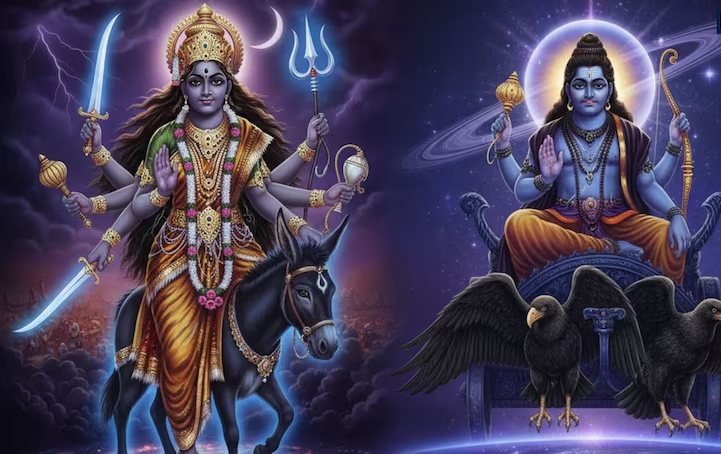
Every day and every moment of Shardiya Navratri, the holy festival of worship of Shakti, is considered very special and energetic from the spiritual point of view. But when it comes to Mahasaptami Tithi of Navratri and its midnight i.e. ‘Nisha Kaal’, its importance increases manifold for the Sadhaks, Aghoris and Tantriks. According to the Hindu calendar, on the night of Mahasaptami, there is a tradition of famous ‘Nisha Puja’, in which special worship of Mata Kalratri, the seventh form of Mata Durga, is done. Maa Kalratri is considered to be the goddess who destroys time, destroys evil people and removes all kinds of fear, obstacles and negative energy from the life of the seeker. There has always been a deep curiosity in the minds of the common people regarding this puja that takes place in the silence of midnight and the traditions followed in it, what is the secret of this night and what is the ritual of sacrifice in it.
This seventh form of Goddess Durga is considered extremely terrifying but extremely beneficial for its devotees. Maa Kalratri’s complexion is black like darkness, her hair is disheveled and there is a garland around her neck that shines like electricity. Her three eyes are as vast and mysterious as the universe, from which she continuously radiates energy. According to mythology, when all three worlds were in terror due to the terror of a demon named Raktabeej and millions of new demons were being born from every drop falling from his body, then Mother Parvati took the form of superpower Kalratri. The mother killed Raktabeej in her monstrous form and caught the blood falling from its drops in her mouth before it fell on the ground. This is the reason why Maa Kalratri is called the goddess who solves problems and destroys enemies. By worshiping him on the night of Mahasaptami, the seeker attains all the siddhis like anima, glory etc. and the effect of any kind of fear or tantra-mantra gets eliminated.
Nisha Puja itself means ‘night worship’. On normal days, there is a rule to perform the puja between sunrise to sunset or in the evening, but there are some special festivals of Shakti Sadhana where the worship has special significance in the middle of the night i.e. when there is complete solitude and deep darkness all around. On the night of Mahasaptami, when the second or third quarter of the night begins, rituals are performed in front of Maa Kalratri in Tantric method. Red clothes, red flowers, nightshade flowers, hibiscus garlands, and vermillion are especially used in this puja. On this night, devotees concentrate and chant tantric mantras to please their favorite deity and mother Kalratri. During this time, black sesame seeds, mustard and jaggery are sacrificed in the havan, due to which all the negative powers of the house and mind are destroyed forever.
During Nisha Puja, many misconceptions and curiosities are spread in the society regarding the word ‘Bali’. In Sanatan Dharma and Tantra Sadhana, sacrifice does not just mean killing any living being, but it has many deep spiritual and symbolic meanings. According to the experts of Tantric traditions, the sacrifice given in Nisha Puja symbolizes the evil qualities hidden within a person, such as ego, jealousy, anger, greed and lust. When the seeker surrenders his weaknesses at the feet of the Mother, he attains inner purification. However, in some places ancient and traditional Tantric rituals involve the symbolic offering of fruits, such as pitha, lemon, pumpkin, or coconut, also known as Kushmanda Bali. Its purpose is to express gratitude towards nature and to give up the negative animal feelings within oneself so that one can receive the blessings of the Goddess with a pure conscience.
Sadhana of Maa Kalratri should not be done without proper guidance and rules, because her mantras are very intense and effective. During Nisha Puja, the seeker should sit on the seat of Kusha and chant these mantras with the Rudraksh rosary, facing north or south. The basic mantra of Maa Kalratri is: ‘Om Ain Hreem Kleem Kalratrai Namah.’ Apart from this, reciting his Beej Mantra and Stotra removes fear and untimely death. Lighting a lamp of pure ghee at the time of chanting and offering jaggery or sweets made from jaggery to the Mother Goddess is considered extremely auspicious. After offering the food, distributing it among the family brings health and prosperity to the house.
Nisha Puja of Mahasaptami may be the biggest opportunity for the seekers to attain Siddhi, but it requires mental discipline and restraint the most. Aghor and Tantra practices are different from normal worship, where special care has to be taken of concentration and purity. If any ordinary householder also wants to worship Maa Kalratri on this night, then instead of getting into any complicated tantric method, he should simply meditate on this form of Maa, chant her mantras with a calm mind and pray for the happiness and peace of his family. Mata Kalratri is always a well-wisher for her devotees, she is pleased with even a small prayer made with a true heart and protects her devotees.
After this midnight of Mahasaptami ends, the devotees ask for forgiveness from the Mother Goddess for the mistakes committed knowingly or unknowingly and wear the remaining ashes of Havan i.e. Vibhuti on their forehead. It is believed that on the night of Mahasaptami, the person on whom the blessings of Mother Kalratri are showered, all the troubles are averted from his life forever. This night teaches us that the true path to knowledge and light is hidden in the deepest darkness of life (night). If we want to eradicate the darkness of ignorance and fear within us, then this Nisha puja of Maa Kalratri infuses us with courage, strength and new confidence in life.