 look news india

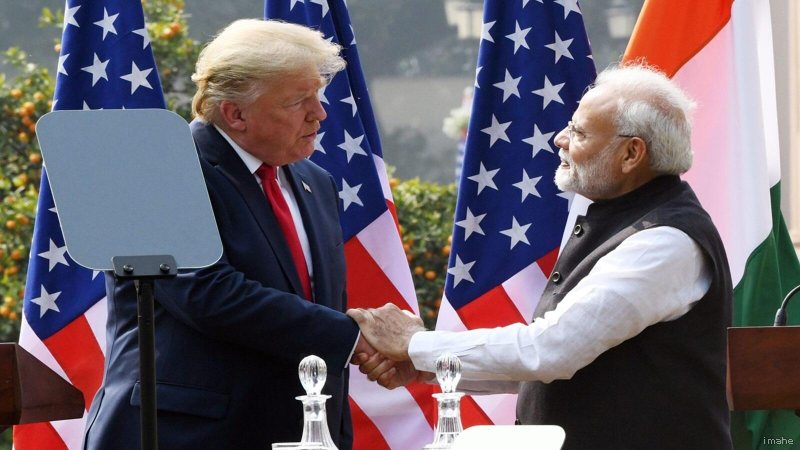
In the current era of global geopolitics, relations between India and America stand at a crossroads where on one side there is a deep strategic partnership, and on the other side there are their respective national interests. From Washington to New Delhi, the message has become completely clear that India wants strong economic and defensive relations with America, but is never ready to bow down to anyone at the cost of its self-respect and national interest. In recent times, differences have emerged between the two superpowers on global issues such as trade, tariff policies and the Russia-Ukraine crisis. These global movements have shown the world that the new India of the 21st century gives priority to ‘multi-alignment’ and its sovereignty rather than being a part of any one group.
Partnerships between the world’s oldest and largest democracies have not always flowed in a straight line. On the defense and security front, while both the countries seem united in the Indo-Pacific region through the ‘Pax Silica’ initiative, Critical Minerals Framework and ‘QUAD’, India’s stance in policy decisions has been completely self-reliant and independent. America has always wanted that India should stop importing energy from Russia under the pressure of western countries and follow American policies in letter and spirit. But Indian diplomacy has time and again proved at global forums that providing affordable energy to the country’s citizens and keeping the domestic economy stable is a priority. This is the reason that despite American sanctions and pressure, India maintained diversity in its energy sources and did not compromise with its national interests.
On the economic front, trade tensions between the two countries have also been the main reason for ups and downs in relations. The policies of imposing tariffs and duties on Indian goods by the US administration have many times created deadlock in the negotiations of bilateral trade agreements. However, keeping in mind the broader economic interests, both sides have taken steps towards controlling tariff rates through mutual negotiations and achieving the bilateral trade target of $500 billion. India has made it clear that it will not make any concessions in trade deals while protecting its farmers, local industries and intellectual property rights. Indian electronics, pharmaceuticals and IT services have a huge dominance in the American market, due to which even America cannot ignore India completely.
Despite tensions, military relations between the two countries have reached a new high. The 10-year framework of defense cooperation, co-production deals and modern technology collaborations like semiconductors and artificial intelligence (AI) have given new strength to this relationship. The joint space mission of ‘NASA-ISRO’ (NISAR) and transfer of critical defense technologies shows that despite differences, strategic needs bring the two closer. Instead of relying on America for its defense needs, India has emphasized on manufacturing weapons and technology transfer in India under ‘Make in India’, which is part of its long-term strategy.
Today’s India understands very well that in international relations there are neither permanent friends nor permanent enemies, only permanent interests. India-America relations are based on this reality. The US sees India as a strong counterbalance to China, while India sees the US as a major source of technology and capital. Amidst this mutual dependency, India is moving forward on its own terms. Cooperation between the two countries will continue in the times to come, but the basic premise of India’s foreign policy will remain the same – “Friendship has its place, but national interest is paramount.”