 look news india

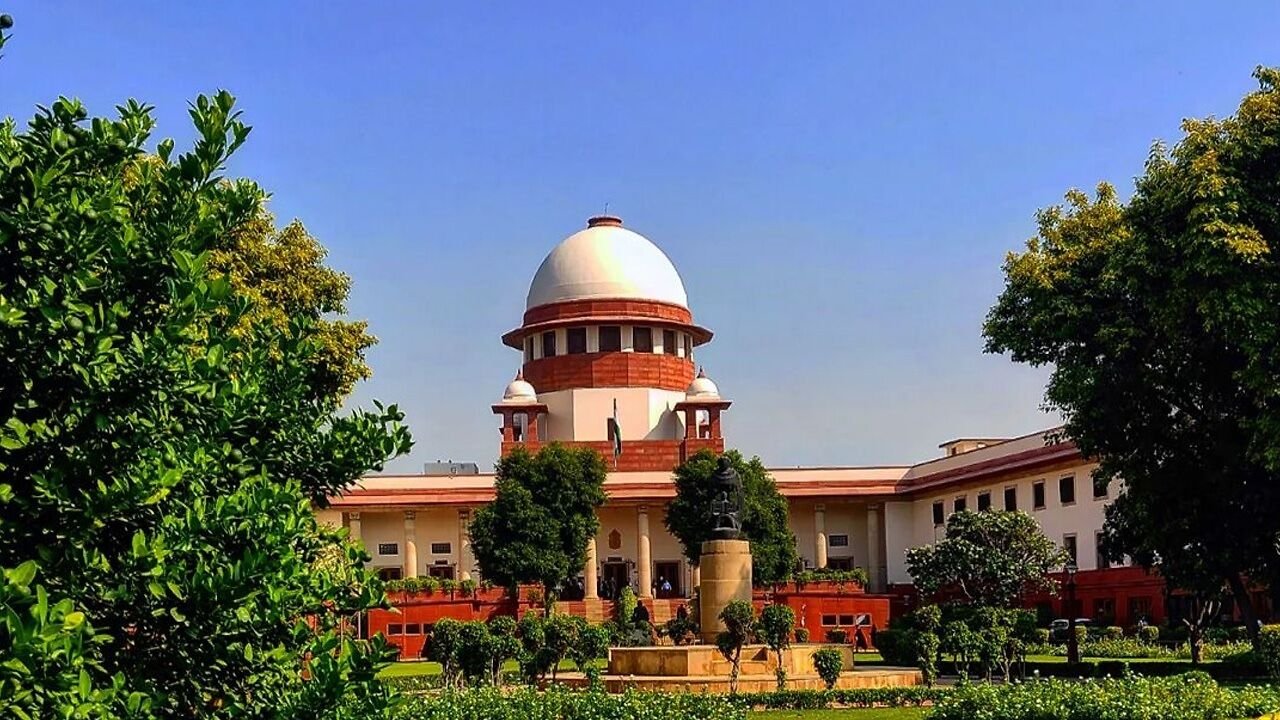
The Supreme Court has taken a very strong and strict stance on the controversy related to the recent protests in the country’s capital Delhi, extensive police action, restrictions on movement and alleged misbehavior with journalists. The special bench of Chief Justice Surya Kant and Justice Joymalya Bagchi has given a historic and detailed order in view of the pile of dozens of petitions in different parts of the capital. The apex court has made it clear that political issues related to the right to protest, alleged arbitrary use of police force, safety of journalists and the Election Commission cannot be weighed in the same scale, hence the court will divide all these related cases into different categories and hear them in depth on different dates. In the legal and administrative corridors from Lucknow to Delhi, this stand of the Supreme Court is being considered very important from the point of view of civil rights and police accountability.
More than 45 petitions and applications related to the Delhi protests and prohibitory orders were filed before the Supreme Court. During the hearing, the bench acknowledged that the nature, constitutional aspects and legal relief of each case are different, hence it would not be practical to club all the petitions and hear them together. The court has appointed nodal lawyers on behalf of both the petitioners and the Central government and has directed them to classify all the petitions into different groups based on their subject matter by October 28. Under this, the hearing of the main cases related to the protests in Delhi, use of police force, detained protesters and restrictions at Jantar Mantar has been scheduled on November 3. At the same time, the political cases related to the Voter List Revision (SIR) of the Election Commission will be heard on October 27, while the petitions challenging the constitutional validity of Section 163 and Section 172 of the Indian Civil Security Code (BNSS) will be heard in detail on November 19.
During the hearing, the apex court gave strict orders to all the investigating agencies and Delhi Police to preserve the entire raw diary of the protests. The court directed that all CCTV footage and digital records around the protest sites, metro stations, barricading points and police stations should be completely preserved. These digital evidence should not be tampered with or deleted under any circumstances. Along with this, the court has also given liberty to private parties, journalists and protesters that if they have any mobile video or digital evidence related to police action, lathi charge or unfair detention, they can submit them directly in the court record along with an affidavit. The court has also asked the Central Government to produce on record copies of all prohibitory orders issued under Section 163 of the BNSS in Delhi.
The issue of police misbehavior with the journalists covering this entire episode and the cases registered against them was also raised very loudly. Taking strong cognizance of the SC/ST Act FIR lodged against a woman journalist by a senior police officer, the court has granted major interim protection. The Supreme Court ordered that at present no coercive action will be taken against the said female journalist. The bench said that in a democracy, any kind of undue administrative surveillance on the freedom of media and the right to report cannot be accepted. On this specific matter, the court has issued notice to the Central Government and Delhi Police asking them to file their reply within two weeks and has fixed its next hearing on November 5.
The Delhi Police’s decision to remove Jantar Mantar from the list of main protest sites and identify alternative venues like Ramlila Maidan, Burari and East Delhi’s CBD Ground has also been strongly challenged in the court. The petitioners argued that fixing the protest site in remote areas and near landfill areas of the city amounts to limiting the fundamental right of citizens to hold peaceful protests. The apex court has also asked the police and administration to clarify the situation on this matter. The court has made it clear that it is definitely the responsibility of the police to maintain law and order in the capital, but in its name, converting the city into a cantonment, stopping public transport and obstructing the access of lawyers and common citizens to the courts cannot be justified under any circumstances.