 look news india

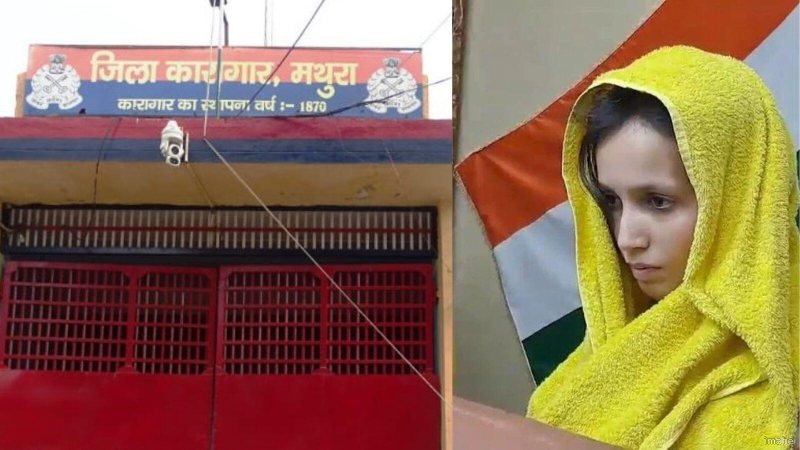
In the Indian justice system, the provision of death penalty i.e. hanging is considered to be the harshest punishment. There are hanging houses for hanging male convicts in various jails of different states of the country, but when it comes to hanging female criminals, only one name comes to the fore across the country – the historic Mathura District Jail of Uttar Pradesh. There is no provision of a separate hanging house for women in any other corner of the country. This is the reason that whenever there is a discussion about a woman being given death sentence in the country, this mysterious and isolated hanging house of Mathura jail comes into the headlines. During the rejection of the mercy petition of the famous Amroha accused Shabnam and before that, during the case of Ramshree, this question had become the center of debate across the country as to why and how this special system of hanging for women prisoners was started only in Mathura.
This women’s hanging house located inside the Mathura District Jail is not a modern structure, rather its history is linked to the British period of about one and a half decade. During their rule, the British expanded this special jail complex in 1870 and constructed a separate hanging house for women. Under the prison manuals and colonial laws of that era, it was decided that female prisoners should be executed in a separate and isolated complex from the men. From then till today, no other hanging house for women has been built in Uttar Pradesh or any other part of the country. However, the most interesting and surprising truth is that since independence, no woman has been actually hanged even once in this 150-year-old historical women’s hanging house, and it is waiting for the neck of its first prisoner.
This was the second time after independence when this hanging woman of Mathura Jail came into the center of discussions. Before this, about two decades ago (around 1998), complete preparations were made for the hanging of a woman named Ramshree in another sensational case in Uttar Pradesh. Even at that time, this dilapidated hanging house of the British era was cleaned overnight, its frame and lever were repaired. But at the very last moment, Ramshree’s death sentence was commuted to life imprisonment on the basis of humanitarian approach, heavy opposition from women’s organizations and mercy petition. After this, the case of Shabnam, a resident of Bawankhedi village of Amroha district, came to light across the country, who along with her lover had brutally murdered seven members of her own family by cutting them with an axe. When Shabnam’s mercy petition was rejected by the President, once again the locks of this closed women’s hanging house of Mathura Jail were opened and the work of cleaning and repairing it started rapidly.
Since legally and administratively in the whole of India, the authorized and safe structure for hanging women exists only in Mathura Jail, therefore, if the mercy petition of a female convict is rejected by the court of any other state and a death warrant is issued, then under the rules, there is a provision for her to be transferred to Mathura Jail only. The structure of this hanging house is such that it has the capacity to hang three prisoners simultaneously, however, due to the high walls built around it and being located at a distance of about 200 meters from the main premises of the jail, complete secrecy is maintained here. Well-known executioners of the country have also visited this place from time to time and given instructions to correct the technical deficiencies like wooden frames and iron levers.
This female hanging house of Mathura Jail is a unique symbol of the strict rules of the Indian judiciary and the colonial history which has stood silent for decades. However, from time to time, questions have been raised by human rights organizations and jurists whether such special and old provisions still have the same relevance in modern India, or whether they should be changed. Despite this, until there is any amendment in the law, this jail of Mathura remains the only place in the country which is linked with the history of women’s crimes and their ultimate punishment. This place testifies that in the eyes of the law, whether a man or a woman commits a crime, how serious and well-planned its consequences can be.