 look news india

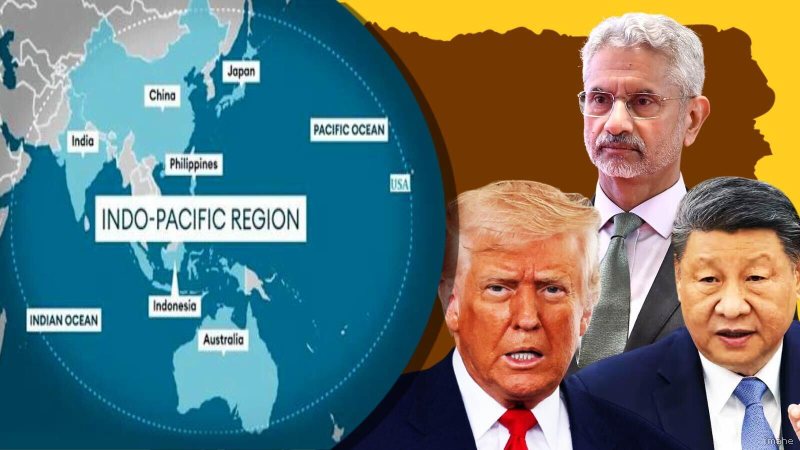
International politics is currently witnessing a huge change on the land revenue and diplomacy front, where the recent G2 equations and meetings between US President Donald Trump and Chinese President Xi Jinping have left countries around the world in a tizzy. Amidst this changing global environment, India’s Foreign Minister Dr. S. Jaishankar has given such an outspoken and visionary statement, which has attracted the attention of the entire world. Jaishankar has bluntly said that India has now learned to live amidst uncertainties without the ‘umbrella’ of American security and has kept its strategic autonomy above all. His formula has now become a new lesson for all those countries who are scared of the new G2 agreements and polarization being made between America and China and are trying to understand what will be their own place in this game of superpowers.
The recent intensification of diplomatic movements between Washington and Beijing and the G2 discussions that have come to the surface have put the countries traditionally dependent on the US security umbrella in a dilemma. Small and middle class countries are scared about what will happen to the sovereignty of other countries if the world’s two largest superpowers start taking global trade, technology and geopolitical decisions together. History is witness to the fact that whenever big powers join hands or change the equation, the pressure on regional powers and developing countries increases. In the present scenario, when America is adopting a tough stance regarding its trade policies, aggressive duties and tariff wars, many countries of the world have been forced to think whether they too will be able to run their foreign and economic policy independently without any external security cover like India or not.
Foreign Minister S. Jaishankar has made it clear on global forums that today’s new India is not a country that follows the dictates of any one superpower. Terming the global uncertainties and geopolitical shocks as ‘rain’, he explained that India has now adopted such a self-reliant and strong policy that it does not need anyone’s ‘umbrella’ i.e. crutches. The way India kept its national interests paramount and took independent decisions despite heavy pressure from Western countries regarding oil import from Russia, is the biggest proof of this. According to Jaishankar, the world is changing and there is a big change in the ways of Washington too. In such a situation, every country will have to reassess its relations with America and other superpowers. This stance of India offers a strong blueprint for those countries who want to avoid getting crushed between the mutual agreements of the superpowers.
Today, geopolitics is not limited to diplomatic statements only, but is determined by control over ‘chokepoints’ such as global supply chains, energy security and critical minerals. India has based its diplomacy on this reality. India’s position in the global economy has now gone beyond being a ‘middle power’ to that of an indispensable and decisive player. While America and China are busy expanding their sphere of influence, India has established its independent presence from the Indo-Pacific region to the Global South. Experts believe that to counter the economic pressure and tariff threats coming from America under the leadership of Trump, other countries are also studying India’s ‘Strategic Autonomy’ model, because they have understood that instead of living in fear, standing on one’s own feet is the only option.