 look news india

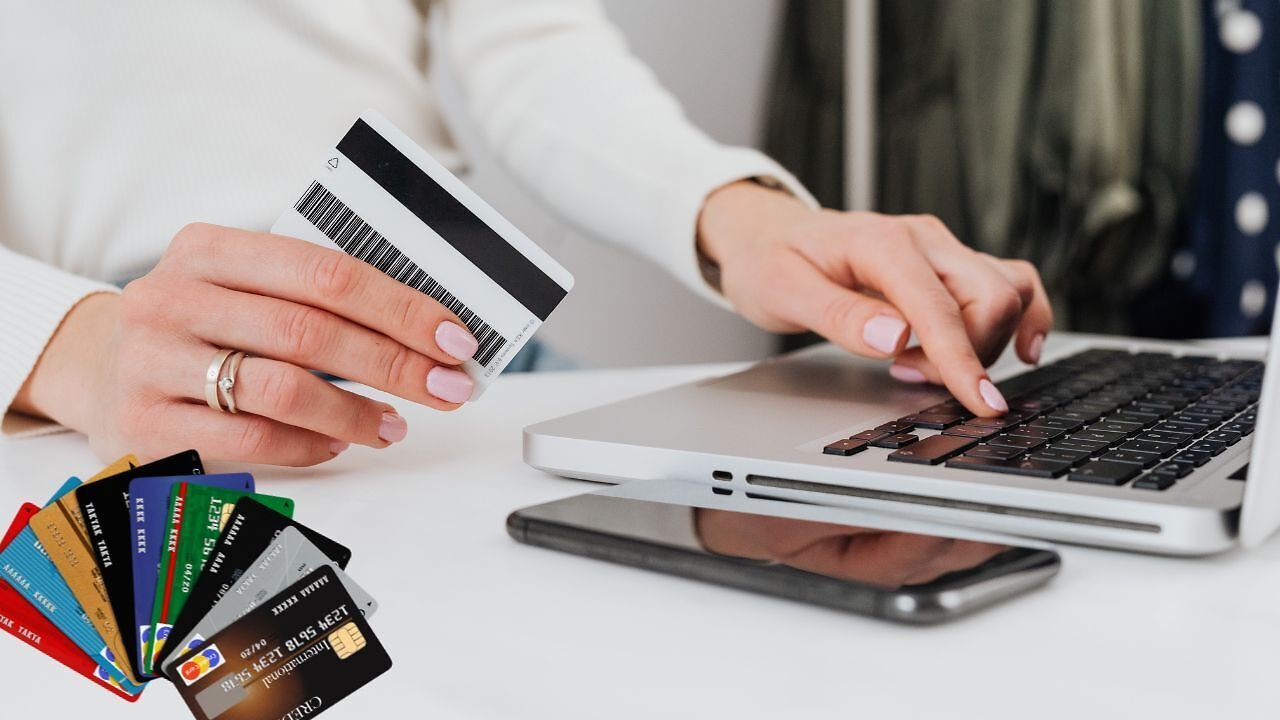
Most consumers are left frustrated when their credit card bills end up being higher than expected at the end of the month due to excessive shopping during the festive season, unexpected medical expenses or poor budget planning. Banks often send attractive offers through mobile apps and SMS at such times—“Convert your ₹1 lakh bill into an easy EMI of just ₹9,200.”
At first glance this seems to be an immediate relief as the pressure of paying a huge lump sum amount is removed. But does it really improve your financial situation or push you into a long spiral of debt? The simple answer depends on what you are comparing it with: EMI is a better option than the dreaded trap of ‘Minimum Amount Due’ (MAD), but choosing it without thinking puts a heavy burden on your pocket in extra interest and GST.
Let’s say on your credit card Outstanding bill of ₹1,00,000 And you don’t have the money to pay it off in one lump sum:
| Scenario | Interest Rate (APR) | monthly payment | payback time | Total interest and additional expenses | total money lost |
| 1. Filling Minimum Due (5%) | 36% – 42% annually | Decreasing (initially ₹5,000) | 10 to 14 years | ₹1.8 lakh to ₹2.2 lakh | ₹2.8 lakh to ₹3.2 lakh |
| 2. Converting to 12 month EMI | 14% – 18% p.a. | Fixed (~₹9,100/month) | 1 year (12 months) | ₹8,500 – ₹10,500 + GST | ₹1.10 lakh – ₹1.12 lakh |
| 3. Personal Loan/Balance Transfer | 11% – 13% p.a. | Fixed (~₹8,850/month) | 1 year (12 months) | ₹6,100 – ₹7,200 + charges | ₹1.06 lakh – ₹1.07 lakh |
When you pay only the minimum part of the bill (about 5%), the bank does not just charge you a late payment penalty, but:
-
Interest-free grace period ends immediately: The free credit period of 45-50 days available on the card ends.
-
Daily Compound Interest: Interest starts accruing on the outstanding ₹95,000 at the rate of 3.5% per month (i.e. 42% per annum) from day one.
-
Instant interest on new expenses: After this, whenever you refill tea or petrol worth ₹ 100 from the card, an interest meter of 42% starts functioning from the date of swipe.
In this context, if you compare minimum due and EMI, then Converting bills into EMIs is definitely 10 times better and cheaper.
Despite the seeming relief, credit card EMIs are not completely free. In this, banks charge many types of hidden charges:
-
Processing Fee: Banks charge a one-time processing fee of 1% to 2.5% (or a minimum of ₹199 to ₹999) on converting the bill into EMI.
-
18% GST on interest: The government separately adds 18% GST on the interest component of EMI deducted every month. If the monthly interest is ₹1,200, then additional GST of ₹216 will be deducted by the bank from your account.
-
Credit limit blocked: If your total credit limit is ₹1.5 lakh and you convert ₹1 lakh into EMI, your available limit will reduce to just ₹50,000. As you keep paying EMIs, the limit will gradually be restored.
-
Foreclosure/Pre-payment Charges: If after 3 months you get the money from somewhere and you want to close the entire EMI outright, then banks charge a preclosure charge of 2% to 3% on the outstanding principal amount.
-
Avoidance of Default: If you do not make payments at all, the bank will declare your account ‘overdue’ or ‘NPA’ in 30 to 90 days, which may cause the CIBIL score to drop by 100 to 150 points. By getting EMI, your account remains ‘standard’ and the score is saved from crashing.
-
Pressure on Credit Utilization Ratio (CUR): Since your credit limit remains locked for a longer period due to EMIs, your credit utilization may cross 60-80%, which may depress CIBIL score by 15-20 points in the short term.
If you are currently struggling with huge credit card bills, immediately follow these steps in sequence:
-
Stop using the card immediately: First of all, stop online shopping, auto-debit and swiping from that card completely. Keep the card locked in the cupboard until the old debt is reduced to zero.
-
Choose shorter tenure: If you are making EMI, then instead of 24 or 36 months 6 to 12 months Select the option. The longer the tenure, the more money you will lose in the form of interest and GST.
-
Find Cheapest Personal Loan or Gold Loan: If your credit score is 750+, reduce your credit card bill to zero in a single day by taking a pre-approved personal loan at 11-12% interest rate from your salary account bank. This will save 18% on both credit card EMI and GST.
-
0% Balance Transfer Card Option: Some banks offer the facility to transfer credit card dues of other banks to their cards at 0% or nominal interest for 60 to 90 days. Use this period to repay the principal amount faster.