 look news india

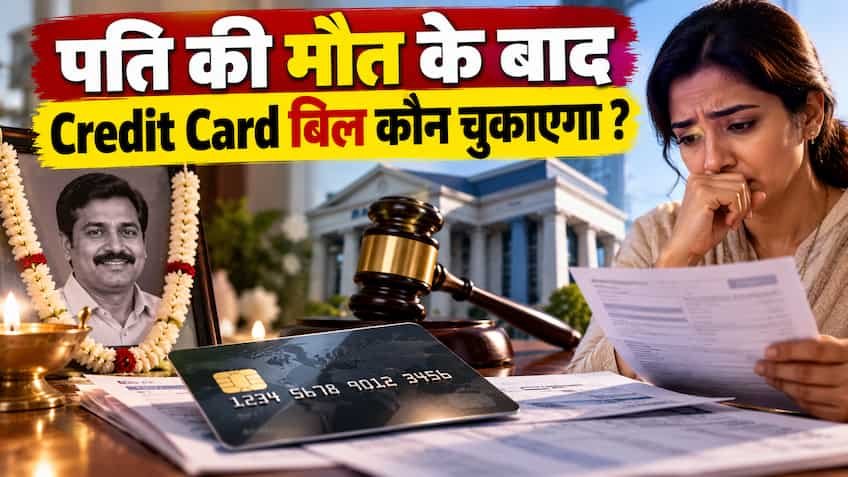
When the house is going through grief and mental trauma after the sudden demise of the head of the family or the husband, many times the recovery agents of banks and credit card companies start calling on the phone or at the house and pressurizing them to pay the huge outstanding bills, late fees and interest. Agents often scare family members by saying that being a wife, it is their legal duty to pay the bills, otherwise legal action will be taken.
According to Indian law and the guidelines of the Reserve Bank of India (RBI), this claim is completely misleading. Credit card comes under the category of unsecured debt. Under normal circumstances, the wife is not personally liable for the husband’s personal liabilities to pay the bills from her personal savings, stridhan or her own earnings. However, there are certain legal and contractual situations where liability arises.
| Scenario | Is the wife liable? | Legal basis / rules |
| 1. Personal card in husband’s name | not personally | Recovery is possible only to the extent of the estate left by the husband. |
| 2. Joint Cardholder or Co-Applicant | Yes, 100% full bill | ‘Joint and Several Liability’ principle; The bank can recover directly from the wife. |
| 3. Add-on Card User | No | The add-on card is linked only to the primary account, the legal debtor being the primary account holder. |
| 4. Card used after death | yes + criminal case | Swiping after the death of the cardholder is considered fraud by law. |
| 5. Secured Card issued in lieu of FD | Bank will deduct from FD | The bank has a lien on the fixed deposit, the bank will deduct the money directly. |
Sections 50 and 52 of the Indian Code of Civil Procedure (CPC) make it clear that after the death of a person, his unsecured debts can be recovered only from the estate of the deceased:
-
Limit of Scope (Limited to Inherited Assets): If the wife has inherited ancestral property, bank balance or shares worth ₹1,00,000 from the husband and the credit card bill is ₹1,50,000, the maximum liability of the wife is only ₹1,00,000 Will be limited to.
-
Zero assets = zero liabilities: If there was no property in the husband’s name or he did not leave behind any wealth, the liability of the wife or children Zero It happens. The bank is forced to write-off the outstanding amount (Bad Debt).
-
Women’s wealth and personal property are completely safe: The bank can never forcibly recover even a single rupee from the wife’s jewelery (Stridhan), the house purchased in her own name or her own job/pension.
Often recovery agents insist that the credit card bill be paid with the claim money received from the husband’s life insurance policy (Term Plan or Life Insurance).
-
under the law Insurance Proceeds are the nominee’s own propertyit is not considered part of the deceased’s estate.
-
Bank or any moneylender cannot claim the insurance claim money. The wife can make the payment as per her wish, but the bank cannot legally compel her.
While issuing many premium and standard credit cards, bank cards have an in-built ‘Credit Shield’ or accident insurance cover Provide:
-
If this insurance was active on the card and the cardholder dies in an accident or unexpected event, the insurance company pays the outstanding bill directly to the bank.
-
Therefore, the first thing the family should do is check the card statement and welcome kit to see if there was any insurance cover on the account.
If such a tragic event happens in a family, these legal and administrative procedures should be completed without delay so that the bank does not keep adding penalties or compound interest:
-
Immediate written notice to the bank (Notify & Freeze): Inform the bank’s credit card branch of the death through email and written letter along with Death Certificate Attach a copy of.
-
Block the card immediately: Request the bank to ‘freeze’ the account immediately. The Bank cannot add any late payment charge, overdue penalty or finance charge (interest) on that account after the date of intimation.
-
Do not swipe the card after death: Many times family members continue to use the deceased’s card or UPI for everyday expenses or funeral rites. By law, even a single card transaction after the date of death is considered a serious financial crime and fraud (under BNS), which can personally implicate the next of kin.
-
Updation to CIBIL: After giving the death certificate to the bank, ensure that the account is marked as ‘Deceased’ in the credit bureau, so that identity theft does not take place in the name of the deceased.
RBI has clear guidelines that banks or their third-party recovery agents cannot threaten the legal heirs of any deceased person, use rude language and cannot call or visit the house before 8 am or after 7 pm:
-
If a recovery agent threatens the wife or family member with confiscation of personal property, preserve call recording or written proof of the conversation.
-
First of all send the complaint to the Principal Nodal Officer of the bank.
-
If resolution is not received within 30 days, file an online complaint of unlawful harassment with RBI Banking Ombudsman (cms.rbi.org.in) without any fee. Heavy damages can be imposed on the bank.