 look news india

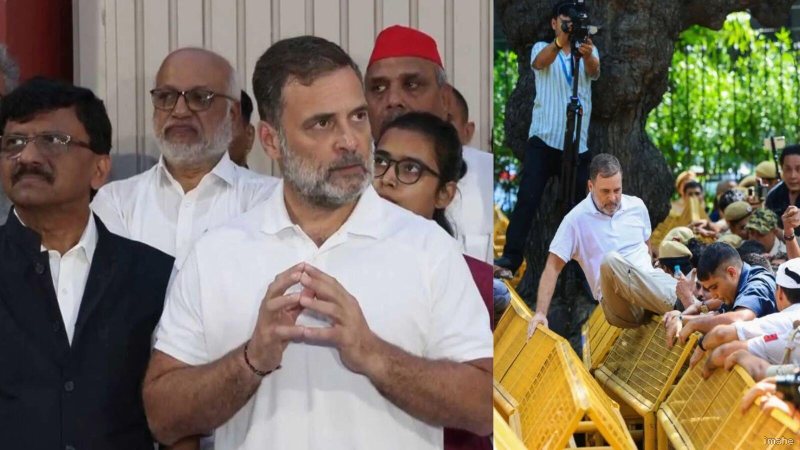
The movement launched by ‘India’, a coalition of opposition parties, in the corridors of Indian politics over alleged irregularities in voter lists, electronic voting machines and the impartiality of the Election Commission has now entered a new phase. After the recent massive protests and marches taken out from the streets of Delhi to the Supreme Court, the opposition leaders have taken a big decision to put a temporary break on their ground protest march in view of the upcoming major festivals. The opposition parties have shown this sensitivity with the aim of saving the general public from any kind of movement or traffic inconvenience during the upcoming religious and cultural festivals across the country. However, the leaders of the alliance clearly say that the halt of the march does not at all mean that their movement against the government or the Election Commission has weakened, rather it has been strategically changed in the methods of protest so that direct communication among the people can be made more effective.
Even though the massive street march amid festivals has been put on hold for some time, the opposition’s legal and political war against Chief Election Commissioner (CEC) Gyanesh Kumar and the top leadership of the Election Commission continues in full force. Opposition parties, especially the Congress Party, have alleged that the Election Commission is acting under pressure from the ruling party rather than protecting free and fair democratic processes. Rahul Gandhi and other senior opposition leaders have repeatedly raised tough questions before the Chief Election Commissioner and demanded a transparent election system. This tough stance of the opposition symbolizes that they are in no mood to make any compromise on the autonomy of electoral institutions and this issue will be raised more aggressively inside and outside the Parliament in the coming days.
Amidst all this development, senior Congress leader and leader of opposition in the Lok Sabha, Rahul Gandhi, in a meeting with his colleagues, has put forward the new political action plan of the ‘India’ alliance before the country. Rahul Gandhi has clarified that even though the big march in Delhi has been put on hold, the series of dialogue rallies, street meetings and press conferences will continue at the district and state level to make the public aware at the grassroots level. The opposition’s strategy is no longer limited to just protests, rather they are engaged in creating a broad mass movement to protect democracy through digital mediums, meetings of legal experts and by going among the public. Rahul Gandhi has instructed the party workers and all the components of the alliance to connect with the public in this festive atmosphere and take this demand for electoral reforms to every household.
This strategic step of ‘India’ alliance can prove to have very far reaching consequences in the current scenario of Indian democracy. On one hand, the government is terming these protests as political stunts, on the other hand, this adamant stand of the opposition is creating pressure to fix the accountability of constitutional institutions like the Election Commission. After the festivals, there is every possibility of this movement returning once again in a more militant and organized form. The opposition is not going to give up this issue until satisfactory answers are found to the questions related to transparency and fairness of voter lists. In the times to come, this will prove to be most decisive in determining the country’s electoral politics, public trust and the balance of power between political parties.