 look news india

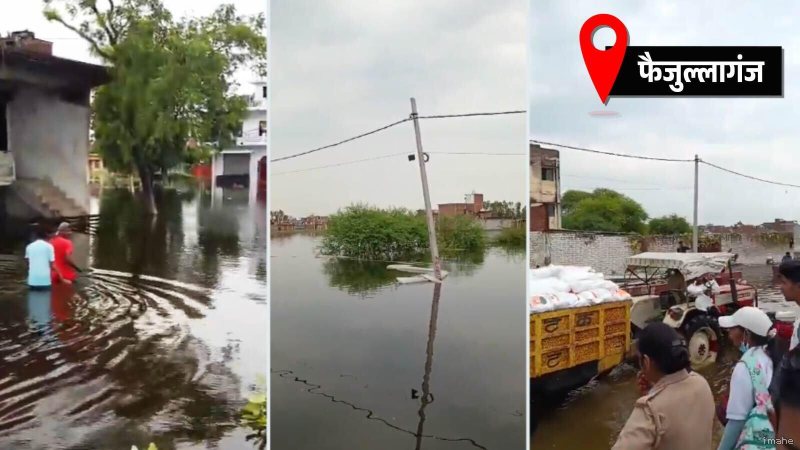
The spate of Gomti River in Faullaganj area, which is one of the densely populated and low lying areas of Lucknow, the capital of Uttar Pradesh, showed such a monstrous form that it broke the records of the last several years. Due to continuous heavy rains and water released from barrages, the water level of Gomti river crossed the danger mark, which had a direct and most devastating impact on various wards of Faizullaganj. More than 50,000 houses in this area were completely submerged in water, more than half of them. People’s vehicles, valuables from homes, and ration water, everything was submerged. The situation became so dire that local citizens had to take shelter on rooftops to save their lives and people were evacuated safely through administration boats and motorboats.
Although there has been a decline in the water level of Gomti River to some extent in the last few days, the situation on the ground still remains very worrying. As water flows out of houses and streets, the sight of pain and devastation left behind is making people cry. Two feet thick mud, garbage and rotting debris has accumulated inside the houses and on the roads. After the water receded, moisture and dampness on the walls and floors of the houses has made life difficult for people. Due to electrical transformers and poles being submerged in water, the power supply to the entire area has come to a standstill for several days, due to which people have to spend the night in darkness and there is also a huge crisis of pure drinking water.
Amidst this hellish situation created after the flood, the biggest threat has now arisen from epidemics and infectious diseases (Waterborne Diseases). Due to the foul smell emanating from rotten water and garbage heaps accumulated at various places, the infestation of mosquitoes has increased rapidly. The number of patients suffering from diarrhoea, typhoid, jaundice and skin infections has suddenly started increasing in local hospitals. Although claims are being made by the district administration, municipal corporation and local public representatives of sending relief material, chlorine tablets, bleaching powder and mobile medical vans, but local residents allege that the relief work on the ground is still proving inadequate and people are having to face this disaster on their own.
The desperate and homeless victims of Faizullaganj say that every year during the rainy season they have to face the horrors of waterlogging and floods, but no permanent solution has been found till date at the administrative level. The drainage system in this area is very poor, due to which even with a little rain the entire area turns into a pond. People have demanded from the government and the municipal administration that the sewer and drainage system of this area should be immediately repaired, proper compensation should be given to the victims and health teams should be sent door-to-door to do fogging and sanitization work on a war footing so that any major loss of life can be prevented.