 look news india

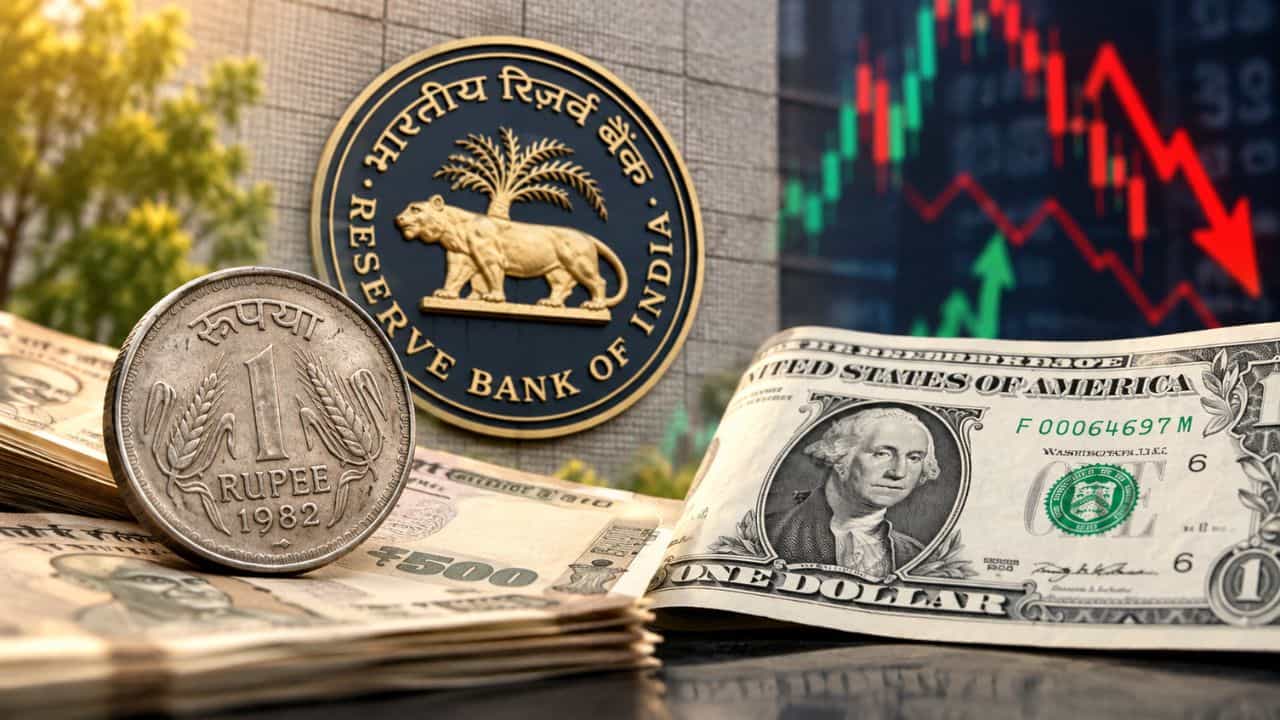
Amidst global uncertainties and increasing aggression of the US dollar in the foreign exchange market, the Reserve Bank of India (RBI) has taken out its most lethal weapon for the safety and stability of the rupee. In order to control the growing pressure on the Indian currency (INR) and strong demand for the dollar, the central bank has formally announced the opening of a ‘Special Dollar Window’ for three major public sector oil marketing companies (OMCs)—Indian Oil Corporation (IOCL), Bharat Petroleum Corporation (BPCL) and Hindustan Petroleum Corporation (HPCL). This special facility, which will be effective from October 12, 2026, will directly exclude the huge dollar demand of oil companies from the spot forex market, which will curb the chaos in the spot market and provide strong support to the rupee.
India imports more than 85 percent of its crude oil needs from abroad. To pay for these imports, the country’s government oil companies have to pay billions of US dollars in the international market every day. On normal days, these companies buy dollars from the open market of foreign exchange (Spot Forex Market). Whenever international crude oil prices rise or foreign investors withdraw money from the domestic stock market, the demand for the dollar suddenly increases and the Indian Rupee starts depreciating rapidly due to limited supply.
Under this new mechanism announced by RBI, oil companies will no longer need to go to the open market and buy dollars and place bids. Instead, the Reserve Bank of India will meet the entire daily dollar requirements of these three companies directly from its own foreign exchange reserves through designated banks. This is exactly the same strategic move that the RBI tried during the ‘Taper Tantrum’ crisis of 2013, which immediately controlled the dollar shortage in the market.
Indian Oil, Bharat Petroleum and Hindustan Petroleum together have a combined share of about 90 percent in the country’s domestic fuel and petroleum products market. This means that 90 per cent of the total dollar requirement for India’s total crude oil imports is purchased by these three companies alone. When such large buyers exit the open foreign exchange market, the daily demand for dollars in the interbank forex market will fall drastically overnight. When demand decreases and supply remains stable, the artificial shortage of dollars in the spot market will automatically end.
This strategic step of RBI can have an all-round positive impact on the foreign exchange market and the movement of rupee:
-
Immediate stop on volatility: There will be an immediate brake on the sudden and sharp fluctuations in the rupee, which will curb the arbitrariness of currency traders and speculators.
-
Expectation of strengthening of rupee: As soon as the dollar demand of oil companies is removed from the open market, the rupee will get immediate support in the spot market and it can recover from the recent low levels and come into a strong position.
-
Relief to importers and industries: Indian industries importing other essential goods like electronics, chemicals and machinery will not have to face excessive dollar inflation, which will reduce their costs.
-
Impact on foreign exchange reserves: However, this arrangement may lead to an immediate reduction in the foreign exchange reserves of the RBI as the inflow of dollars will come directly from the reserves. But experts believe that India has sufficient forex reserves, which is capable of easily absorbing such short-term shocks.
Not just opening a special window for oil companies, the RBI has also implemented a comprehensive dual strategy to crack down on speculation in the currency market. The central bank has reduced the limit for trading in exchange-traded currency derivatives (ETCD) without proving underlying exposure from $100 million to $5 million. Additionally, repeated rebooking of canceled foreign exchange contracts has been banned and it has been made mandatory to maintain 20 per cent Foreign Exchange Risk Reserve (FERR) on select derivative deals above $2 million. The simple objective of these stringent rules is to ensure that only genuine importers and exporters transact in the market and that conspiracies to depress the rupee through unnecessary speculative trading are foiled.
If the rupee stabilizes, its direct benefit falls on the pockets of the common people of the country. Depreciation of rupee increases imported inflation in the country, which has a direct impact on the prices of petrol and diesel, international flights, foreign education and edible oils. This bold and timely decision of the Reserve Bank will not only help in limiting inflationary pressure, but will also send a strong and positive message among the domestic stock market and foreign investors about the stability of the Indian economy.